THE CLASSIC COLLECTION✦Thorns of regretCLASSIC FREE BOOKS
Thorns of regret
Alex. McVeigh, Mrs. Miller
THE CLASSIC COLLECTION · 1883
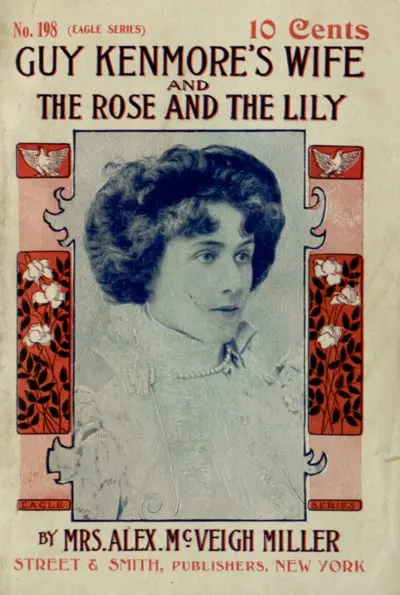
"Guy Kenmore's Wife, and The Rose and the Lily" by Mrs. Alex. McVeigh Miller is a romantic novel written in the late 19th century. The narrative revolves around the central character, Irene Brooke, who is caught in the complexities of family pressures, societal expectations, and her emerging feelings for Guy Kenmore amid her family's turmoil. The novel unfolds within a domestic setting, highlighting themes of love, rebellion, and family secrets that could impact Irene's destiny. At the start of the book, the scene is set on a moonlit night, where Irene is distraught over being denied the opportunity to attend a ball with her family. Despite her father's promise to take her, he is unexpectedly called away to business, prompting Irene to concoct a plan to attend the ball with her sister's suitor, Guy Kenmore. This decision leads to a series of events, including a mock wedding that spirals into a real and binding commitment, unveiling devastating family secrets about her lineage and the repercussions of their actions. The opening chapters throw Irene into a whirlwind of emotions as she grapples with her individuality against the backdrop of her family's pressures and secrets, setting the stage for the dramatic unfoldings to come.
Introduction adapted from the source catalogue; source summaries may be automatically generated.
Free to read · English · 105,266 words · No account needed
MAKE TIME FOR A GOOD BOOK
On by default. Untick to stop anonymous reading totals. Each page counts after 10 seconds in view. How this works.
Anonymous counting is on unless you have switched it off.
A delicate, dainty, seductive note. With a start, Vane remembers the elegant house on ---- avenue, which had been Mr. Langton's property. Here it is that his heiress had pitched her tent, figuratively speaking, and opened the campaign, for she is determined not to lose the delights of the winter wholly, although in ostensible mourning.
Vane is roused to indignation at first. Why should she ask him to call? Does she take him for a simpleton? He has forgiven her for Reine's sake. That is enough.
He stays away, and in three days an elegant private carriage sets Maud down in front of his office. She rustles across the threshold in a costly costume, designed to represent slight second mourning--a black silk with jetted trimmings, white crepe lisse at throat and wrists, a jetted bonnet with white lisse strings, a dress that is marvelously becoming to the pearl-fair beauty, framed in soft waves of golden hair.
"Perhaps you think I have come to scold you," she says, with infinite tact, as he comes forward, visibly embarrassed; "but I have not. Of course you had a right to decline my invitation, if it did not please you to come. I shall not trouble you long now. I am here on a matter of business."
Mr. Charteris bows and hands her a chair. She seats herself, making moonlight, not "sunlight," "in a shady place," with her cold, white beauty.
Then her large, light-blue eyes turn scrutinizingly on his worn,
handsome face.
"You are not looking well," she pronounces. "Business, perhaps, is
driving you too hard?"
Vane smiles rather grimly.
"I cannot make any complaint of that nature," he responds.
The blue eyes light, unmistakably, with pleasure.
"Then you are not busy," she says; "I am rather glad to hear it. Perhaps you will have time to manage my property for me?"
He looks inquiringly at the beautiful, smiling face.
"I have quarreled with my lawyer," she explains. "I intended to take the management of my affairs out of his hands. Will you take his place, Vane?"
A dark, red flush creeps up to his temples at her air of condescending
patronage.
"Excuse me, I must decline," he answers.
"You decline--surely not!" says the proud beauty, with incredulous
surprise.
"Why should I not decline?" Vane Charteris asks, with a certain
haughtiness, before which Maud lowers her proud tone of patronage
visibly.
"I thought you could not afford to decline," she falters. "Are you
not--not poor?"
"Granted," he answers, with a slight, cold smile. "I am not yet poor enough to barter my self-respect. For the rest, you know, Miss Langton--
"'Man wants but little here below,
Nor wants that little long.'"
Your reading position is saved on this browser. Take it to another device with a library code. Reading pages adapt to text, rather than matching a printed edition.
Alex. McVeigh, Mrs. Miller
Alex. McVeigh, Mrs. Miller

Alex. McVeigh, Mrs. Miller

Alex. McVeigh, Mrs. Miller
BEHIND THE BOOK
This eBook is for the use of anyone anywhere in the United States and most other parts of the world at no cost and with almost no restrictions whatsoever. You may copy it, give it away or re-use it under the terms of the Project Gutenberg License included with this eBook or online at www.gutenberg.org. If you are not located in the United States, you will have to check the laws of the country where you are located before using this eBook. Read the source licence.
The original source file, including credits and licence, is retained by this library. Request an original-format copy at no charge. Please include the book title and Project Gutenberg identifier #43037.
KEEP YOUR CURIOSITY GOING
Coulson Kernahan

Maurice Baring
Frances Wright
Cécile Tormay

Frederic Jesup Stimson

W. H. P. (William Henry Pope) Jarvis