THE CLASSIC COLLECTION✦Thorns of regretCLASSIC FREE BOOKS
Thorns of regret
Alex. McVeigh, Mrs. Miller
THE CLASSIC COLLECTION · 1883
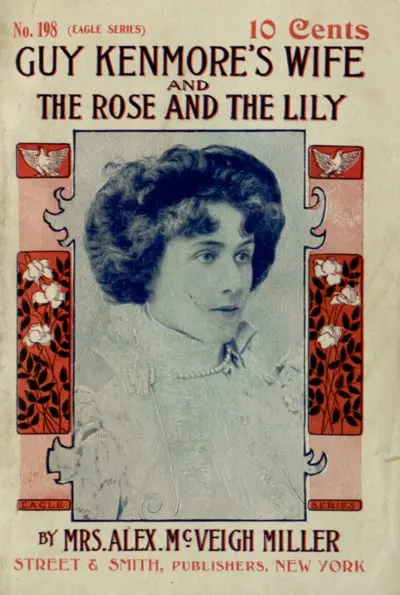
"Guy Kenmore's Wife, and The Rose and the Lily" by Mrs. Alex. McVeigh Miller is a romantic novel written in the late 19th century. The narrative revolves around the central character, Irene Brooke, who is caught in the complexities of family pressures, societal expectations, and her emerging feelings for Guy Kenmore amid her family's turmoil. The novel unfolds within a domestic setting, highlighting themes of love, rebellion, and family secrets that could impact Irene's destiny. At the start of the book, the scene is set on a moonlit night, where Irene is distraught over being denied the opportunity to attend a ball with her family. Despite her father's promise to take her, he is unexpectedly called away to business, prompting Irene to concoct a plan to attend the ball with her sister's suitor, Guy Kenmore. This decision leads to a series of events, including a mock wedding that spirals into a real and binding commitment, unveiling devastating family secrets about her lineage and the repercussions of their actions. The opening chapters throw Irene into a whirlwind of emotions as she grapples with her individuality against the backdrop of her family's pressures and secrets, setting the stage for the dramatic unfoldings to come.
Introduction adapted from the source catalogue; source summaries may be automatically generated.
Free to read · English · 105,266 words · No account needed
MAKE TIME FOR A GOOD BOOK
On by default. Untick to stop anonymous reading totals. Each page counts after 10 seconds in view. How this works.
Anonymous counting is on unless you have switched it off.
The dark eyes are not so free and glad as they were of old.
They have grown larger and vaguely sad, the peachy cheek, rounded daintily like a child's, is pale to-day, the crimson lips have a slight, pathetic droop. Something in the softened loveliness of the brilliant face goes to his heart like a wordless reproach.
For a moment he regrets the arch, daring, sparkling face that used to flash defiance at him and his opinions.
"You are changed, too, Reine," he says, unconsciously putting his thought into words. "You used to scold me when I was naughty. I hope you are not afraid of me now because you are my wife?"
A great wave of color surges into her cheek at his words. She turns on him the half-shy gaze of the frank, dark eyes.
"Afraid of you--oh, no, it is not that," she says. "But you disliked my wild ways so much that I have tried to be more what you wished me, more dignified, more gentle."
He looks at her with a half question in his blue eyes, a flush on his
handsome face.
"Like Maud," she explains, further.
"Like Maud--why, really," he begins, with supreme anger and sarcasm, but she interrupts him, somewhat incoherently:
"I thought--I was told, I mean that--that I was to stay with Uncle Langton a year, and be formed over into a woman like Maud."
His blue eyes darken with shame and anger.
"So you have heard that!" he says, with self-contempt. "I was a fool, a dolt. Give over the attempt, Reine. You can never be like Maud any more than--than a rose is like a lily!"
"So I thought," she answers, visibly abashed. "Maud is so grand, and white, and queenly, and I am so little, and dark, and ugly."
"That is not true," he answers, hastily. "You are beautiful, Reine. I am sure you know that. You are like a beautiful 'queen-rose,' all sweetness, color and dew, 'set round with little willful thorns.' Maud is like a grand white calla lily, beautiful, but devoid of sweetness and perfume."
"The lily is the most beautiful of all flowers," the girl answers,
sighing.
"But the rose is the emblem of love," he replies, smiling as the swift
color floods her cheeks.
She has no answer ready, and he goes on with some embarrassment:
"Do not try to be like Maud, Reine. Though so beautiful and stately, she was mercenary and treacherous. Perhaps a less perfect manner is preferable with a heart free from guile. Do you not think so?"
Your reading position is saved on this browser. Take it to another device with a library code. Reading pages adapt to text, rather than matching a printed edition.
Alex. McVeigh, Mrs. Miller
Alex. McVeigh, Mrs. Miller

Alex. McVeigh, Mrs. Miller

Alex. McVeigh, Mrs. Miller
BEHIND THE BOOK
This eBook is for the use of anyone anywhere in the United States and most other parts of the world at no cost and with almost no restrictions whatsoever. You may copy it, give it away or re-use it under the terms of the Project Gutenberg License included with this eBook or online at www.gutenberg.org. If you are not located in the United States, you will have to check the laws of the country where you are located before using this eBook. Read the source licence.
The original source file, including credits and licence, is retained by this library. Request an original-format copy at no charge. Please include the book title and Project Gutenberg identifier #43037.
KEEP YOUR CURIOSITY GOING
Coulson Kernahan

Maurice Baring
Frances Wright
Cécile Tormay

Frederic Jesup Stimson

W. H. P. (William Henry Pope) Jarvis