THE CLASSIC COLLECTION✦Thorns of regretCLASSIC FREE BOOKS
Thorns of regret
Alex. McVeigh, Mrs. Miller
THE CLASSIC COLLECTION · 1883
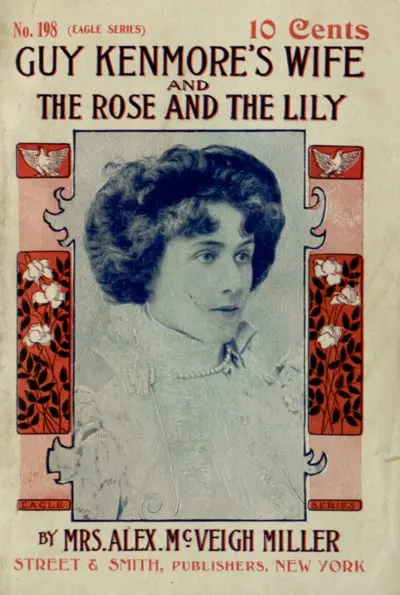
"Guy Kenmore's Wife, and The Rose and the Lily" by Mrs. Alex. McVeigh Miller is a romantic novel written in the late 19th century. The narrative revolves around the central character, Irene Brooke, who is caught in the complexities of family pressures, societal expectations, and her emerging feelings for Guy Kenmore amid her family's turmoil. The novel unfolds within a domestic setting, highlighting themes of love, rebellion, and family secrets that could impact Irene's destiny. At the start of the book, the scene is set on a moonlit night, where Irene is distraught over being denied the opportunity to attend a ball with her family. Despite her father's promise to take her, he is unexpectedly called away to business, prompting Irene to concoct a plan to attend the ball with her sister's suitor, Guy Kenmore. This decision leads to a series of events, including a mock wedding that spirals into a real and binding commitment, unveiling devastating family secrets about her lineage and the repercussions of their actions. The opening chapters throw Irene into a whirlwind of emotions as she grapples with her individuality against the backdrop of her family's pressures and secrets, setting the stage for the dramatic unfoldings to come.
Introduction adapted from the source catalogue; source summaries may be automatically generated.
Free to read · English · 105,266 words · No account needed
MAKE TIME FOR A GOOD BOOK
On by default. Untick to stop anonymous reading totals. Each page counts after 10 seconds in view. How this works.
Anonymous counting is on unless you have switched it off.
Some of the brightness that came into her face at his entrance has faded from it. She has quietly seated herself again, her long lashes droop to the shells in her lap, which she fingers rather at random.
"So the baronet helped you gather shells," he remarks, condescendingly.
She looks up, with returning smiles.
"Yes," she returns, spreading the pretty collection out to view. "Will you look at them? Some are quite pretty."
"Reine has been telling me about your friend," put in Mr. Langton. "He
was very kind."
"Not my friend, a mere acquaintance," Vane replies with acerbity. "I saw him a few times in London; he is wild, rather."
"Indeed! and I thought him so nice," Reine says, with dismay.
"So he is nice; wildness, a little, you know, doesn't count," Vane hastens to say, ashamed of the spirit in which he has spoken a moment before. "Sir George is unexceptionable, rich, titled, and all that. He is what the ladies term a most desirable parti. A pity you are a-a-already married, Reine."
"Were I free he could be nothing to me," Reine retorts, a crimson flame
coming to her cheeks.
Mr. Langton, struck by something in Vane's tone, looks from one to the other of the flushed faces, and says, laughingly:
"O-ho, my fine young lad, jealous, are you?"
Mr. Charteris is positively indignant.
"Don't tease, if you please, Mr. Langton," he retorts, with immense dignity. "Jealousy only exists with love, you know. And I haven't pretended to fall in love with my wife yet!"
With this most ungenerous stab, he flies out of the room in a passion.
The rosy-lipped shells fall unheeded from Reine's lap to the floor as she rises and stands before her uncle, the bitter tears of shame crowding into her eyes.
"Oh, Uncle Langton, how could you--how could you?" she cries, in
bitter distress. "It--it is too--too absurd. He never could, you
know----"
"There--there, don't cry, dear," he soothes, gently. "I am an old bungler, I know, and I shouldn't have said it so plain, but the fact remains. Vane Charteris, whether he knows it or not, is falling in love with you, my dear, and is correspondingly jealous of the baronet's attentions to you."
The beautiful dark eyes looked at him incredulously. She shakes her
head.
"You are mistaken," she answers, decidedly. "Your hopes mislead you. Confess now," smiling pensively through her tears, "that 'the wish was father to the thought.'"
"Perhaps so," he answers, willing to drop the subject and sorry he had
agitated it.
Vane goes home rather ruefully, without breakfasting with Mr. Langton, as he had promised himself.
Your reading position is saved on this browser. Take it to another device with a library code. Reading pages adapt to text, rather than matching a printed edition.
Alex. McVeigh, Mrs. Miller
Alex. McVeigh, Mrs. Miller

Alex. McVeigh, Mrs. Miller

Alex. McVeigh, Mrs. Miller
BEHIND THE BOOK
This eBook is for the use of anyone anywhere in the United States and most other parts of the world at no cost and with almost no restrictions whatsoever. You may copy it, give it away or re-use it under the terms of the Project Gutenberg License included with this eBook or online at www.gutenberg.org. If you are not located in the United States, you will have to check the laws of the country where you are located before using this eBook. Read the source licence.
The original source file, including credits and licence, is retained by this library. Request an original-format copy at no charge. Please include the book title and Project Gutenberg identifier #43037.
KEEP YOUR CURIOSITY GOING
Coulson Kernahan

Maurice Baring
Frances Wright
Cécile Tormay

Frederic Jesup Stimson

W. H. P. (William Henry Pope) Jarvis