THE CLASSIC COLLECTION✦Thorns of regretCLASSIC FREE BOOKS
Thorns of regret
Alex. McVeigh, Mrs. Miller
THE CLASSIC COLLECTION · 1883
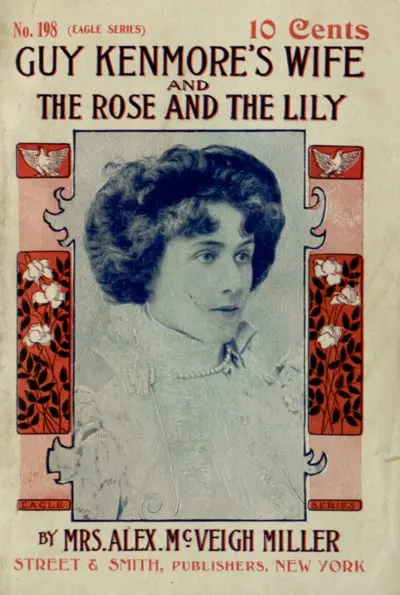
"Guy Kenmore's Wife, and The Rose and the Lily" by Mrs. Alex. McVeigh Miller is a romantic novel written in the late 19th century. The narrative revolves around the central character, Irene Brooke, who is caught in the complexities of family pressures, societal expectations, and her emerging feelings for Guy Kenmore amid her family's turmoil. The novel unfolds within a domestic setting, highlighting themes of love, rebellion, and family secrets that could impact Irene's destiny. At the start of the book, the scene is set on a moonlit night, where Irene is distraught over being denied the opportunity to attend a ball with her family. Despite her father's promise to take her, he is unexpectedly called away to business, prompting Irene to concoct a plan to attend the ball with her sister's suitor, Guy Kenmore. This decision leads to a series of events, including a mock wedding that spirals into a real and binding commitment, unveiling devastating family secrets about her lineage and the repercussions of their actions. The opening chapters throw Irene into a whirlwind of emotions as she grapples with her individuality against the backdrop of her family's pressures and secrets, setting the stage for the dramatic unfoldings to come.
Introduction adapted from the source catalogue; source summaries may be automatically generated.
Free to read · English · 105,266 words · No account needed
MAKE TIME FOR A GOOD BOOK
On by default. Untick to stop anonymous reading totals. Each page counts after 10 seconds in view. How this works.
Anonymous counting is on unless you have switched it off.
"A compatriot, I take it," pursues Sir George.
Vane nods affirmatively.
"You'll introduce me, then?"
"With her permission," Vane responds, a trifle stiffly.
"That, of course," laughs Sir George.
A little later Vane goes to her to proffer his request. She stands for the moment alone in the embrasure of a window, her dark eyes turned from the giddy dancers out upon the mystic, lonely sea, with the moon and stars asleep upon its breast. He tells her, watching the bright face narrowly, that an English baronet has been so attracted by her beauty that he desires an introduction. Will she accord it?
The laughing, dark eyes, a spice of mischief in their starry depths,
glance up into his own.
"A baronet!" she says, making a little round O of her rosy mouth. "Do you think, Mr. Charteris, I could really bear the burden of such an honor without being crushed by it?"
"You can but try," he retorts, lightly. "England expects every man and every woman to do their duty."
"Then I am ready for the sacrifice," she laughs, as lightly.
He looks at her a moment in thoughtful silence.
"Well?" she asks, interpreting a question in his look.
"It is this, then, Reine: I am placed in an awkward position. How shall I introduce you--as Miss Langton, or as--as Mrs. Charteris?"
He flushes uncomfortably as the words leave his lips. His bride's face reflects the crimson glow. After a minute she replies, with outward indifference:
"Better, perhaps, as--Miss Langton, according to our agreement this
morning."
Some slight feeling of pique rises in his heart. He will not own to himself that when he condescended to ask her the question he had thought to give her pleasure, and had felt, too, that he should not be ashamed to see this peerlessly-lovely girl wearing his name.
"Perhaps she does not really care for me as she pretended," he thinks to himself, and the first spark of jealousy is lighted in his heart when he sees her long lashes fall before Sir George's admiring gaze, and sees with what calm and graceful self-possession she acknowledges the introduction to the handsome, titled nobleman. "Who would have thought, when she first came to Langton Villa, that the wild little 'school ma'am' had so much dignity?" he thinks. "Is it, after all, a new phase of her character, or was I simply blinded then by my admiration for Maud? It seems that Sir George is irresistibly attracted by her graces. What can he see in the girl that I was blind to?"
Your reading position is saved on this browser. Take it to another device with a library code. Reading pages adapt to text, rather than matching a printed edition.
Alex. McVeigh, Mrs. Miller
Alex. McVeigh, Mrs. Miller

Alex. McVeigh, Mrs. Miller

Alex. McVeigh, Mrs. Miller
BEHIND THE BOOK
This eBook is for the use of anyone anywhere in the United States and most other parts of the world at no cost and with almost no restrictions whatsoever. You may copy it, give it away or re-use it under the terms of the Project Gutenberg License included with this eBook or online at www.gutenberg.org. If you are not located in the United States, you will have to check the laws of the country where you are located before using this eBook. Read the source licence.
The original source file, including credits and licence, is retained by this library. Request an original-format copy at no charge. Please include the book title and Project Gutenberg identifier #43037.
KEEP YOUR CURIOSITY GOING
Coulson Kernahan

Maurice Baring
Frances Wright
Cécile Tormay

Frederic Jesup Stimson

W. H. P. (William Henry Pope) Jarvis