THE CLASSIC COLLECTION✦Thorns of regretCLASSIC FREE BOOKS
Thorns of regret
Alex. McVeigh, Mrs. Miller
THE CLASSIC COLLECTION · 1883
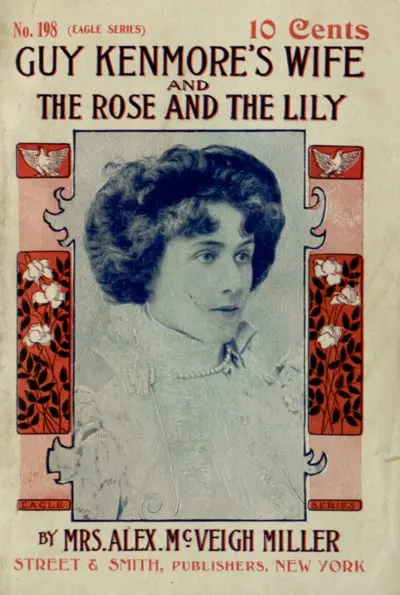
"Guy Kenmore's Wife, and The Rose and the Lily" by Mrs. Alex. McVeigh Miller is a romantic novel written in the late 19th century. The narrative revolves around the central character, Irene Brooke, who is caught in the complexities of family pressures, societal expectations, and her emerging feelings for Guy Kenmore amid her family's turmoil. The novel unfolds within a domestic setting, highlighting themes of love, rebellion, and family secrets that could impact Irene's destiny. At the start of the book, the scene is set on a moonlit night, where Irene is distraught over being denied the opportunity to attend a ball with her family. Despite her father's promise to take her, he is unexpectedly called away to business, prompting Irene to concoct a plan to attend the ball with her sister's suitor, Guy Kenmore. This decision leads to a series of events, including a mock wedding that spirals into a real and binding commitment, unveiling devastating family secrets about her lineage and the repercussions of their actions. The opening chapters throw Irene into a whirlwind of emotions as she grapples with her individuality against the backdrop of her family's pressures and secrets, setting the stage for the dramatic unfoldings to come.
Introduction adapted from the source catalogue; source summaries may be automatically generated.
Free to read · English · 105,266 words · No account needed
MAKE TIME FOR A GOOD BOOK
On by default. Untick to stop anonymous reading totals. Each page counts after 10 seconds in view. How this works.
Anonymous counting is on unless you have switched it off.
There is a curious, restrained pride in her every look and movement now. And, strange to say, he does not feel disgusted at her pathetic admission of her love for him.
"She loves me," he repeats over and over to his heart, looking at the lissome, daintily rounded figure, and the brilliant face, bright and rich like a tropical flower, with the softness of emotion lying on it like dew. "She loves me," and there is a certain masculine vanity in the thought that he, Vane Charteris, is the lode-star of her girlish dreams.
But before he can think of anything to say, she goes back, pertinacious,
to the old theme:
"But we have digressed from the original subject. Once more, Mr. Charteris, will you give me the note?"
And he answers, bluntly, almost angrily:
"No, I will not."
And for the first time since their interview, Reine shows a sign of
weakness. She reels unsteadily, and throws up her white hands in the
air.
"I have failed, I have failed," she cries, despairingly. "Oh, you are merciless; you are a veritable Shylock. Nothing will sate your thirst for vengeance but a pound of flesh!"
He catches the falling figure in his arms. For one moment the white, anguished face rests against his breast, then she opens her eyes and struggles from his clasp.
"Do not touch me," she says, with indignant scorn. "You are a monster!"
And his own conscience, knocking loudly at the door of his heart, echoes
the words.
"Reine, Reine," he falters, hurriedly, "do not be hasty. Give me a little time. I will answer you to-morrow."
"You take back your refusal?" brightening so swiftly that you think of the sun coming out from under a cloud.
"Until to-morrow--yes," he says, feeling a sort of relief at his own words. "You can wait until then?"
"Yes, for I cannot go until to-morrow. Did I forget to tell you that
Uncle Langton is with me?"
"Is he, really?"
"Yes, and I fear the trip has been too much for him, poor old dear," with loving compassion. "He feels worn and tired. He is lying down this morning. Will you go to him?"
"I shall be very glad. Does he--does he know why you came?"
"No," quietly; then, flushing: "You will not mind if he is a little cross, and--and fault finding? He is so old, you know, and then he is tired and half sick."
"I shall not mind," he answers, a little grimly, as he follows her through a small suite of rooms to Mr. Langton's own especial one.
"Mr. Charteris is here, uncle," she says, quietly ushering the visitor in, and sensitively withdrawing.
Your reading position is saved on this browser. Take it to another device with a library code. Reading pages adapt to text, rather than matching a printed edition.
Alex. McVeigh, Mrs. Miller
Alex. McVeigh, Mrs. Miller

Alex. McVeigh, Mrs. Miller

Alex. McVeigh, Mrs. Miller
BEHIND THE BOOK
This eBook is for the use of anyone anywhere in the United States and most other parts of the world at no cost and with almost no restrictions whatsoever. You may copy it, give it away or re-use it under the terms of the Project Gutenberg License included with this eBook or online at www.gutenberg.org. If you are not located in the United States, you will have to check the laws of the country where you are located before using this eBook. Read the source licence.
The original source file, including credits and licence, is retained by this library. Request an original-format copy at no charge. Please include the book title and Project Gutenberg identifier #43037.
KEEP YOUR CURIOSITY GOING
Coulson Kernahan

Maurice Baring
Frances Wright
Cécile Tormay

Frederic Jesup Stimson

W. H. P. (William Henry Pope) Jarvis