THE CLASSIC COLLECTION✦Thorns of regretCLASSIC FREE BOOKS
Thorns of regret
Alex. McVeigh, Mrs. Miller
THE CLASSIC COLLECTION · 1883
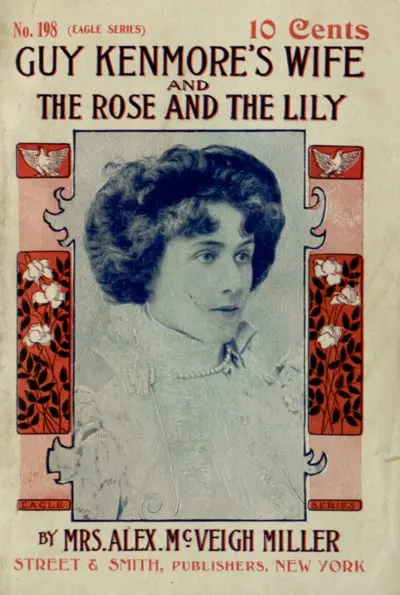
"Guy Kenmore's Wife, and The Rose and the Lily" by Mrs. Alex. McVeigh Miller is a romantic novel written in the late 19th century. The narrative revolves around the central character, Irene Brooke, who is caught in the complexities of family pressures, societal expectations, and her emerging feelings for Guy Kenmore amid her family's turmoil. The novel unfolds within a domestic setting, highlighting themes of love, rebellion, and family secrets that could impact Irene's destiny. At the start of the book, the scene is set on a moonlit night, where Irene is distraught over being denied the opportunity to attend a ball with her family. Despite her father's promise to take her, he is unexpectedly called away to business, prompting Irene to concoct a plan to attend the ball with her sister's suitor, Guy Kenmore. This decision leads to a series of events, including a mock wedding that spirals into a real and binding commitment, unveiling devastating family secrets about her lineage and the repercussions of their actions. The opening chapters throw Irene into a whirlwind of emotions as she grapples with her individuality against the backdrop of her family's pressures and secrets, setting the stage for the dramatic unfoldings to come.
Introduction adapted from the source catalogue; source summaries may be automatically generated.
Free to read · English · 105,266 words · No account needed
MAKE TIME FOR A GOOD BOOK
On by default. Untick to stop anonymous reading totals. Each page counts after 10 seconds in view. How this works.
Anonymous counting is on unless you have switched it off.
"It is no such thing, pray do not say so," he retorts, fibbing unblushingly, in that he feels himself, to use his own graphic inward phrase, "cornered." "Of course you had a perfect right," dejectedly, "to come after me."
"Not at all," she says, decidedly. "No right that I would presume upon thus far. Oh, Mr. Charteris," with a sudden transition from shame and self-pity to irrepressible mirth, "pray, pray, do not look so dejected and forlorn. I have not come after you, indeed; that is, not as you think. I hope to leave here for America to-morrow."
"Leading me as a captive in your train?" he inquires, not feeling half so bad at the prospect as he could have imagined ten minutes ago.
"Certainly not," she replies, in her frank, decisive way; then, a little frigidly, "pray be seated, sir, and I will unfold to you the business upon which I have followed you to England."
He bows silently, turning a little pale beneath his healthy, florid
tinge.
What an ominous sound that dull, prosaic word, "business," has from her lovely, heart-shaped, crimson lips. Besides, he feels, to use his own inward thought again, "wilted." She does not want him, as he has vainly imagined, and ridiculously resented in secret. She is come on a mere matter of business. She makes him understand that thoroughly by her pretty, dignified manner that has stiffened into ice.
"I should not have come--nothing could have induced me to," she goes on, with sensitive deprecation and lowered eyelids, "only for the sake of Maud."
"Of Maud!" he starts, and his pallor grows death-like. "What has she to do with you and me, Reine?"
She looks up silently, and their glances meet and hold each other a moment; the velvety black orbs, swimming in golden light, hold a mute and stern reproach before which the proud, defiant blue ones waver and shrink, pained and ashamed.
"I do not understand," he says, sullenly, answering her look against his
will.
"Oh, yes, you do, you know," she returns with airy frankness. "You remember poor Mr. Clyde wrote Maud a note, swearing he would kill himself if she didn't marry him. And Maud lost the note that day she was in the hammock-chair under the tree. You, Mr. Charteris, found it, and tucked it into your vest pocket, thinking it of no consequence. But in that you were mistaken, as you learned the day of the inquest. Oh, Mr. Charteris, will you give up that note, and pray God to pardon your wicked revenge?"
Your reading position is saved on this browser. Take it to another device with a library code. Reading pages adapt to text, rather than matching a printed edition.
Alex. McVeigh, Mrs. Miller
Alex. McVeigh, Mrs. Miller

Alex. McVeigh, Mrs. Miller

Alex. McVeigh, Mrs. Miller
BEHIND THE BOOK
This eBook is for the use of anyone anywhere in the United States and most other parts of the world at no cost and with almost no restrictions whatsoever. You may copy it, give it away or re-use it under the terms of the Project Gutenberg License included with this eBook or online at www.gutenberg.org. If you are not located in the United States, you will have to check the laws of the country where you are located before using this eBook. Read the source licence.
The original source file, including credits and licence, is retained by this library. Request an original-format copy at no charge. Please include the book title and Project Gutenberg identifier #43037.
KEEP YOUR CURIOSITY GOING
Coulson Kernahan

Maurice Baring
Frances Wright
Cécile Tormay

Frederic Jesup Stimson

W. H. P. (William Henry Pope) Jarvis