THE CLASSIC COLLECTION✦Thorns of regretCLASSIC FREE BOOKS
Thorns of regret
Alex. McVeigh, Mrs. Miller
THE CLASSIC COLLECTION · 1883
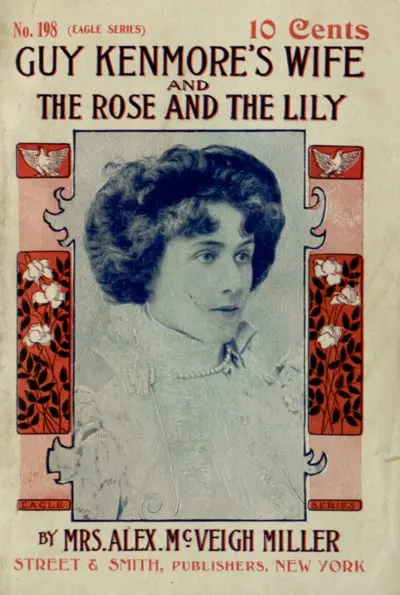
"Guy Kenmore's Wife, and The Rose and the Lily" by Mrs. Alex. McVeigh Miller is a romantic novel written in the late 19th century. The narrative revolves around the central character, Irene Brooke, who is caught in the complexities of family pressures, societal expectations, and her emerging feelings for Guy Kenmore amid her family's turmoil. The novel unfolds within a domestic setting, highlighting themes of love, rebellion, and family secrets that could impact Irene's destiny. At the start of the book, the scene is set on a moonlit night, where Irene is distraught over being denied the opportunity to attend a ball with her family. Despite her father's promise to take her, he is unexpectedly called away to business, prompting Irene to concoct a plan to attend the ball with her sister's suitor, Guy Kenmore. This decision leads to a series of events, including a mock wedding that spirals into a real and binding commitment, unveiling devastating family secrets about her lineage and the repercussions of their actions. The opening chapters throw Irene into a whirlwind of emotions as she grapples with her individuality against the backdrop of her family's pressures and secrets, setting the stage for the dramatic unfoldings to come.
Introduction adapted from the source catalogue; source summaries may be automatically generated.
Free to read · English · 105,266 words · No account needed
MAKE TIME FOR A GOOD BOOK
On by default. Untick to stop anonymous reading totals. Each page counts after 10 seconds in view. How this works.
Anonymous counting is on unless you have switched it off.
"Do you believe that he really killed himself?"
"Yes; how else should he have met his death?" she inquired, fixing a look of grave wonder upon him.
A slight whisper goes through the crowd again--some shrug their
shoulders.
The coroner pursues without answering her question:
"Was Mr. Clyde in the habit of making such suicidal threats?"
"He had done so on several occasions."
"In the presence of witnesses?" the question is asked with strange
gravity.
Maud looks at him with a grave wonder on her fair, proud face.
"No, of course not," she answers, a little annoyance in her clear tone.
"Then you cannot prove that the deceased made those threats against his own life?" the coroner asked in a troubled tone. It is very plain to him that she cannot see the cloud of distress and suspicion gathering around her.
"Cannot prove it!" she says, indignantly. "You have my word under
oath."
"Other evidence would make it all the stronger," he replies, evasively.
The officer who has brought her goes forward and whispers something in the coroner's ear. He starts and looks at the girl fixedly a moment from head to foot, then proceeds with the examination.
"When you left your uncle's house last night, did you return to your trysting-place with your discarded lover?"
She stares at him with strangely dilated eyes, and parted lips.
"Why should I?" she says. "I had dismissed him, and parted from him. I supposed he had gone away."
"Please answer, yes or no, to the question," he urges.
"What question?" a little shortly.
"The one I asked you just now. Did you return to your discarded lover at this place when you left Langton Villa the second time? Yes, or no."
"No, then," with a slight touch of defiance.
A minute of dead silence. The coroner resumes, almost irrelevantly, it
would seem:
"Is the dress you wear now the same one you had on last night, Miss
Langton?"
"Yes, the same. I have not slept all night, she replies, wearily.
"Please observe that on the front breadth of your dress there are some dark, reddish-looking splashes and stains that resemble blood. Can you account for them?"
A cry of mingled horror and fear comes from her lips. All eyes turn on the stylish, dark-gray silk that clings so gracefully to the tall, finely molded figure. True enough, there are some dark red stains on the middle breadth between the lower frills and the upper drapery.
"Can you account for them?" the coroner repeats.
But after one swift glance at the tell-tale marks, Maud crimsons, and the tears start into her eyes.
Your reading position is saved on this browser. Take it to another device with a library code. Reading pages adapt to text, rather than matching a printed edition.
Alex. McVeigh, Mrs. Miller
Alex. McVeigh, Mrs. Miller

Alex. McVeigh, Mrs. Miller

Alex. McVeigh, Mrs. Miller
BEHIND THE BOOK
This eBook is for the use of anyone anywhere in the United States and most other parts of the world at no cost and with almost no restrictions whatsoever. You may copy it, give it away or re-use it under the terms of the Project Gutenberg License included with this eBook or online at www.gutenberg.org. If you are not located in the United States, you will have to check the laws of the country where you are located before using this eBook. Read the source licence.
The original source file, including credits and licence, is retained by this library. Request an original-format copy at no charge. Please include the book title and Project Gutenberg identifier #43037.
KEEP YOUR CURIOSITY GOING
Coulson Kernahan

Maurice Baring
Frances Wright
Cécile Tormay

Frederic Jesup Stimson

W. H. P. (William Henry Pope) Jarvis