THE CLASSIC COLLECTION✦Thorns of regretCLASSIC FREE BOOKS
Thorns of regret
Alex. McVeigh, Mrs. Miller
THE CLASSIC COLLECTION · 1883
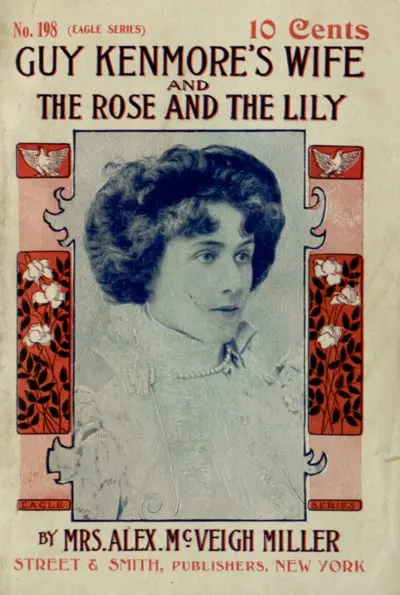
"Guy Kenmore's Wife, and The Rose and the Lily" by Mrs. Alex. McVeigh Miller is a romantic novel written in the late 19th century. The narrative revolves around the central character, Irene Brooke, who is caught in the complexities of family pressures, societal expectations, and her emerging feelings for Guy Kenmore amid her family's turmoil. The novel unfolds within a domestic setting, highlighting themes of love, rebellion, and family secrets that could impact Irene's destiny. At the start of the book, the scene is set on a moonlit night, where Irene is distraught over being denied the opportunity to attend a ball with her family. Despite her father's promise to take her, he is unexpectedly called away to business, prompting Irene to concoct a plan to attend the ball with her sister's suitor, Guy Kenmore. This decision leads to a series of events, including a mock wedding that spirals into a real and binding commitment, unveiling devastating family secrets about her lineage and the repercussions of their actions. The opening chapters throw Irene into a whirlwind of emotions as she grapples with her individuality against the backdrop of her family's pressures and secrets, setting the stage for the dramatic unfoldings to come.
Introduction adapted from the source catalogue; source summaries may be automatically generated.
Free to read · English · 105,266 words · No account needed
MAKE TIME FOR A GOOD BOOK
On by default. Untick to stop anonymous reading totals. Each page counts after 10 seconds in view. How this works.
Anonymous counting is on unless you have switched it off.
"There, now, Uncle Langton," she cries, with pretty triumph. "You see my
husband sides with me."
"Sides with Maud, you mean," Mr. Langton mutters, between his teeth.
"He will always be on the side of justice, I hope," Reine says, with a
smile at her husband, that he does not see, consequently does not
return.
But Mr. Langton frowns at the pert little lady.
"See here, Reine," he says. "I won't be set at naught by a child like you, if you were fifty times my niece. Have your way this time, but don't begin your rule too soon. Remember, I haven't made my will yet."
"That does not frighten me one bit," she laughs; then she rises on tiptoe to put her rosy lips to his ear. "You cannot take my husband from me," she whispers, archly. "I do not care for the rest."
He looks at her half-pityingly, and turns away without a word.
But something born of that pitying thought makes him say to Vane Charteris, as they pass from the room:
"There is no reason you should regret Maud. Reine is quite as charming and beautiful, though in a different way from her cousin."
And Vane answers, readily enough:
"She is beautiful, certainly no one can deny that. She has the brilliant beauty of the rose. But one must beware the thorns. She is a perfect contrast to Maud, who always reminded me of a tall, white, stately lily."
"The rose is the sweeter, to my thinking," Mr. Langton replies. "Besides, the rose is the true emblem of love."
They pass through the hall, and out into the soft light of the early day. The cool, dewy breath of the morning, freighted with the scent of countless flowers, blows in their faces, the matin songs of myriad birds make music in their ears. Roses, honeysuckles, jessamines and lilies, open their perfumed chalices to greet the rising sun that begins to color the eastern sky with tints of purple and rose and gold.
And up the graveled path came a trio of young men who had left the house but a little while ago, laughing and jesting in the light-heartedness of youth. They come silently now, with blanched and solemn faces, and heavily-beating hearts.
"Something dreadful has happened," they tell Mr. Langton. "We have found a dead man in the woods. It is Mr. Clyde. He is cold and stiff--has certainly been dead several hours. And, worst of all, he has most probably been murdered. There is a bullet-hole through his heart."
Found murdered! With what an icy chill the words strike upon the senses in that beautiful, peaceful summer dawn.
Your reading position is saved on this browser. Take it to another device with a library code. Reading pages adapt to text, rather than matching a printed edition.
Alex. McVeigh, Mrs. Miller
Alex. McVeigh, Mrs. Miller

Alex. McVeigh, Mrs. Miller

Alex. McVeigh, Mrs. Miller
BEHIND THE BOOK
This eBook is for the use of anyone anywhere in the United States and most other parts of the world at no cost and with almost no restrictions whatsoever. You may copy it, give it away or re-use it under the terms of the Project Gutenberg License included with this eBook or online at www.gutenberg.org. If you are not located in the United States, you will have to check the laws of the country where you are located before using this eBook. Read the source licence.
The original source file, including credits and licence, is retained by this library. Request an original-format copy at no charge. Please include the book title and Project Gutenberg identifier #43037.
KEEP YOUR CURIOSITY GOING
Coulson Kernahan

Maurice Baring
Frances Wright
Cécile Tormay

Frederic Jesup Stimson

W. H. P. (William Henry Pope) Jarvis