THE CLASSIC COLLECTION✦Thorns of regretCLASSIC FREE BOOKS
Thorns of regret
Alex. McVeigh, Mrs. Miller
THE CLASSIC COLLECTION · 1883
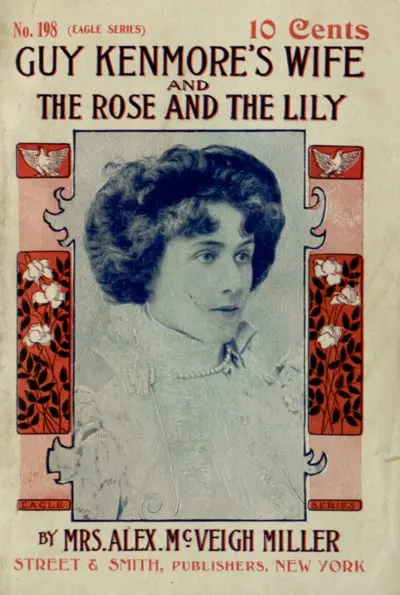
"Guy Kenmore's Wife, and The Rose and the Lily" by Mrs. Alex. McVeigh Miller is a romantic novel written in the late 19th century. The narrative revolves around the central character, Irene Brooke, who is caught in the complexities of family pressures, societal expectations, and her emerging feelings for Guy Kenmore amid her family's turmoil. The novel unfolds within a domestic setting, highlighting themes of love, rebellion, and family secrets that could impact Irene's destiny. At the start of the book, the scene is set on a moonlit night, where Irene is distraught over being denied the opportunity to attend a ball with her family. Despite her father's promise to take her, he is unexpectedly called away to business, prompting Irene to concoct a plan to attend the ball with her sister's suitor, Guy Kenmore. This decision leads to a series of events, including a mock wedding that spirals into a real and binding commitment, unveiling devastating family secrets about her lineage and the repercussions of their actions. The opening chapters throw Irene into a whirlwind of emotions as she grapples with her individuality against the backdrop of her family's pressures and secrets, setting the stage for the dramatic unfoldings to come.
Introduction adapted from the source catalogue; source summaries may be automatically generated.
Free to read · English · 105,266 words · No account needed
MAKE TIME FOR A GOOD BOOK
On by default. Untick to stop anonymous reading totals. Each page counts after 10 seconds in view. How this works.
Anonymous counting is on unless you have switched it off.
"If I thought I could," she begins, with a questioning glance, and a delicious thrill at her heart. Something whispers to her that he would wed her to spite Maud, yet her instinct prompts her to take him at his word. In time her tender love must win a return from him.
"You must not stop to think," the strange wooer says, impatiently. "Everyone is waiting, and your uncle is most impatient. I have his permission to win you if I can."
"Uncle Langton wishes it?" she asks, wondering.
"Yes. What is your answer, Reine?"
"It is yes," she answers, simply, frankly, and happily.
"Thank you," he says; "come, then, Mr. Langton is waiting for us."
Then, softened by her gentle mood and the sparkling beauty he cannot help but acknowledge, he says, with a dash of mischief:
"You are changed from this morning Reine. So you do not hate me after
all?"
A spark of the morning's diablerie flashes into the bright eyes again.
"Yes, I do," she retorts, "and I am only taking you that I may torment
you to death."
He checks the impatient sigh, and leads her to Mr. Langton.
"Sensible girl," he chuckles, beaming upon her. "Knew better than to refuse uncle's fortune, didn't you, Reine?"
She stares at him, her rosy cheeks grow pale.
"I don't understand," she falters.
"Didn't you tell her?" Mr. Langton demands of Vane.
"No, I forgot. After all, it wasn't necessary," he answers.
"Cunning dog," the old man laughs. "So she took you for yourself alone? Well, I told you so. She has a true heart in spite of her wild ways."
But Reine stares from one to the other, vaguely troubled.
Mr. Langton bends and kisses the fair, low brow.
"Reine, you are my heiress now," he says. "I shall cut Maud off with a shilling. You and Vane will have all my money when I am dead."
"Oh, if you please, Uncle Langton, I'd rather not," she cries, breathlessly, then she looks at Vane. "Is he taking me for the money?" she says, with a flash of disdain in her great, black eyes.
Vane flushes an angry crimson, but his old friend interferes.
"No, you little goose," he replies, severely, "He's taking you because you're a deuced pretty girl, and worth a dozen disobedient Mauds. Now will you put on that wedding-veil there, and go down-stairs with him and show those gaping, gossiping simpletons that there's a bride after all, and the wedding-feast will not be spoiled by the groom's sorrow?"
He rings the bell with the words. A trim maid appears with a quickness that would argue that she had been listening outside the door.
Your reading position is saved on this browser. Take it to another device with a library code. Reading pages adapt to text, rather than matching a printed edition.
Alex. McVeigh, Mrs. Miller
Alex. McVeigh, Mrs. Miller

Alex. McVeigh, Mrs. Miller

Alex. McVeigh, Mrs. Miller
BEHIND THE BOOK
This eBook is for the use of anyone anywhere in the United States and most other parts of the world at no cost and with almost no restrictions whatsoever. You may copy it, give it away or re-use it under the terms of the Project Gutenberg License included with this eBook or online at www.gutenberg.org. If you are not located in the United States, you will have to check the laws of the country where you are located before using this eBook. Read the source licence.
The original source file, including credits and licence, is retained by this library. Request an original-format copy at no charge. Please include the book title and Project Gutenberg identifier #43037.
KEEP YOUR CURIOSITY GOING
Coulson Kernahan

Maurice Baring
Frances Wright
Cécile Tormay

Frederic Jesup Stimson

W. H. P. (William Henry Pope) Jarvis