THE CLASSIC COLLECTION✦Thorns of regretCLASSIC FREE BOOKS
Thorns of regret
Alex. McVeigh, Mrs. Miller
THE CLASSIC COLLECTION · 1883
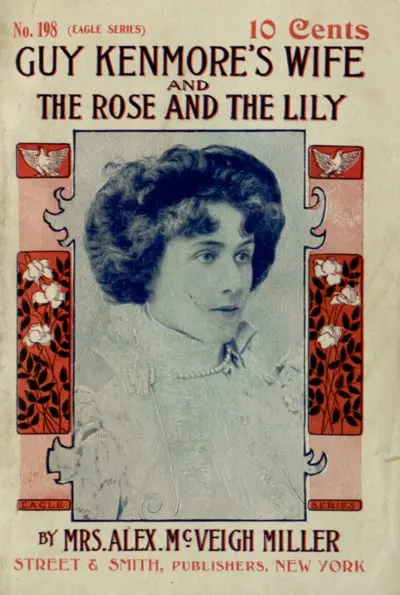
"Guy Kenmore's Wife, and The Rose and the Lily" by Mrs. Alex. McVeigh Miller is a romantic novel written in the late 19th century. The narrative revolves around the central character, Irene Brooke, who is caught in the complexities of family pressures, societal expectations, and her emerging feelings for Guy Kenmore amid her family's turmoil. The novel unfolds within a domestic setting, highlighting themes of love, rebellion, and family secrets that could impact Irene's destiny. At the start of the book, the scene is set on a moonlit night, where Irene is distraught over being denied the opportunity to attend a ball with her family. Despite her father's promise to take her, he is unexpectedly called away to business, prompting Irene to concoct a plan to attend the ball with her sister's suitor, Guy Kenmore. This decision leads to a series of events, including a mock wedding that spirals into a real and binding commitment, unveiling devastating family secrets about her lineage and the repercussions of their actions. The opening chapters throw Irene into a whirlwind of emotions as she grapples with her individuality against the backdrop of her family's pressures and secrets, setting the stage for the dramatic unfoldings to come.
Introduction adapted from the source catalogue; source summaries may be automatically generated.
Free to read · English · 105,266 words · No account needed
MAKE TIME FOR A GOOD BOOK
On by default. Untick to stop anonymous reading totals. Each page counts after 10 seconds in view. How this works.
Anonymous counting is on unless you have switched it off.
"Yes, for this once, love," answered Elaine, tremblingly. "I'll try to make it up to you, indeed I will, some other time, dear," and drawing Irene further into the shadow of the lace curtain, she bent down and kissed the fresh young lips.
"But here comes Mr. Kenmore, now. What shall I say to him about our dances?" asked the girl, with a sigh of disappointment.
"Oh, I'll make your excuses," Elaine answered, readily, as Mr. Kenmore came toward them, not looking very eager, certainly, over the dances he was fated to lose.
His handsome brown eyes lighted with admiration as they fell upon Elaine Brooke, and she was well worthy of it, for in her maturer style she was as lovely as the girlish Irene.
The family Bible registered the eldest Miss Brooke as thirty-two years old, and she had all the repose and dignity of the age, with all the charms of ripe loveliness. Men called her a "magnificent woman," envious girls sneeringly dubbed her an old maid. This latter was her own fault, certainly, for she had admirers by the score who went wild over her rare blonde beauty. But Miss Brooke, unknown to all, treasured a broken dream in her heart like her hapless namesake:
"Elaine the fair, Elaine the lovable;
Elaine, the lily maid of Astolat."
So the years went and came, and Elaine answered no to all her suitors, though her mother frowned and her father sighed, while deep down in her heart she echoed the "Lily Maid's" song:
"Sweet is true love, though given in vain, in vain, And sweet is death who puts an end to pain."
But none of this pain was visible on Elaine's face as she looked up at Guy Kenmore with that calm, sweet smile, softly bright, like the moonlight that shone on the outer world.
"Mr. Kenmore, I know you will excuse Irene from her dances," she said sweetly. "She wants to go and play games with the other children in the parlor."
"The other children," Irene muttered ominously, and before Mr. Kenmore could murmur his ready assent, she exclaimed, in a tone of witching diablerie:
"Yes, but I'm not going to desert my partner! Come along, Mr. Kenmore, and you shall be my play-fellow with the children."
With a gay little laugh and a triumphant glance at her sister, Irene slipped her hand in his arm, and led her captive away, leaving Elaine gazing after them in silent dismay and despair. Irene had outwitted her after all, and her artful scheme for keeping her apart from Bertha's lover was an ignominious failure.
Your reading position is saved on this browser. Take it to another device with a library code. Reading pages adapt to text, rather than matching a printed edition.
Alex. McVeigh, Mrs. Miller
Alex. McVeigh, Mrs. Miller

Alex. McVeigh, Mrs. Miller

Alex. McVeigh, Mrs. Miller
BEHIND THE BOOK
This eBook is for the use of anyone anywhere in the United States and most other parts of the world at no cost and with almost no restrictions whatsoever. You may copy it, give it away or re-use it under the terms of the Project Gutenberg License included with this eBook or online at www.gutenberg.org. If you are not located in the United States, you will have to check the laws of the country where you are located before using this eBook. Read the source licence.
The original source file, including credits and licence, is retained by this library. Request an original-format copy at no charge. Please include the book title and Project Gutenberg identifier #43037.
KEEP YOUR CURIOSITY GOING
Coulson Kernahan

Maurice Baring
Frances Wright
Cécile Tormay

Frederic Jesup Stimson

W. H. P. (William Henry Pope) Jarvis