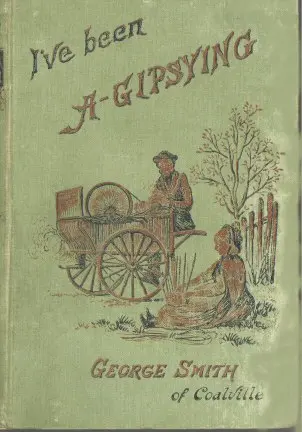
I’ve been a Gipsying or, Rambles among our Gipsies and their children in their tents and vans
George Smith
THE CLASSIC COLLECTION · 1880
"Gipsy Life" by George Smith is an account written in the late 19th century that examines the lives, origins, and social conditions of the Gipsy population in England. The book delves into the challenges faced by Gipsies, particularly women and children, highlighting themes of neglect and societal misunderstanding. The opening reveals the author's dedication to raising awareness about the plight of Gipsies and the need for educational intervention in their lives. Smith outlines the historical treatment of Gipsies across Europe, touching on their origins and the stigma associated with their lifestyle. He paints a vivid picture of the struggles they have endured, from persecution in various countries to their current state in England, emphasizing the importance of understanding their story to foster compassion and potential improvement in their circumstances.
Introduction adapted from the source catalogue; source summaries may be automatically generated.
Free to read · English · 108,927 words · No account needed
MAKE TIME FOR A GOOD BOOK
On by default. Untick to stop anonymous reading totals. Each page counts after 10 seconds in view. How this works.
Anonymous counting is on unless you have switched it off.
"On the winds
A voice came murmuring, 'We must work and wait';
And every echo in the far-off fen
Took up the utterance: 'We must work and wait.'
Her spirit felt it, 'We must work and wait.'"
No one heeded the warning. No one listened to the cries of the poor Gipsy children as they glided into eternity. No one put out their hands to save them as they kept disappearing from the gaze of the bystanders, among whom were artificial Christians, statesmen, and philanthropists. All was as still as death, and the poor black wretches passed away.
Whether His Majesty George III. had ever read Grellmann's or Hoyland's works on Gipsies has not been shown. The following interesting account will show that royal personages are not deaf to the cries of suffering humanity, be it in a Gipsy's wigwam, a cottage, or palace. It is taken from a missionary magazine for June, 1823, and in all probability the circumstance took place not many years prior to this date, and is as follows:--"A king of England of happy memory, who loved his people and his God better than kings in general are wont to do, occasionally took the exercise of hunting. Being out one day for this purpose, the chase lay through the shrubs of the forest. The stag had been hard run; and, to escape the dogs, had crossed the river in a deep part. As the dogs could not be brought to follow, it became necessary, in order to come up with it, to make a circuitous route along the banks of the river, through some thick and troublesome underwood. The roughness of the ground, the long grass and frequent thickets, gave opportunity for the sportsmen to separate from each other, each one endeavouring to make the best and speediest route he could. Before they had reached the end of the forest the king's horse manifested signs of fatigue and uneasiness, so much so that his Majesty resolved upon yielding the pleasures of the chase to those of compassion for his horse. With this view he turned down the first avenue in the forest and determined on riding gently to the oaks, there to wait for some of his attendants. His Majesty had only proceeded a few yards when, instead of the cry of the hounds, he fancied he heard the cry of human distress. As he rode forward he heard it more distinctly. 'Oh, my mother! my mother! God pity and bless my poor mother!' The curiosity and kindness of the king led him instantly to the spot. It was a little green plot on one side of the forest, where was spread on the grass, under a branching oak, a little pallet, half covered with a kind of tent, and a basket or two, with some packs, lay on the ground at a few paces distant from the tent. Near to the root of the tree he observed a little swarthy girl, about eight years of age, on her knees, praying, while her little black eyes ran down with tears. Distress of any kind was always relieved by his Majesty, for he had a heart which melted at 'human woe'; nor was it unaffected on this occasion. And now he inquired, 'What, my child, is the cause of your weeping? For what do you pray?' The little creature at first started, then rose from her knees, and pointing to the tent, said, 'Oh, sir! my dying mother!' 'What?' said his Majesty, dismounting, and fastening his horse up to the branches of the oak, 'what, my child? tell me all about it.' The little creature now led the king to the tent; there lay, partly covered, a middle-aged female Gipsy in the last stages of a decline, and in the last moments of life. She turned her dying eyes expressively to the royal visitor, then looked up to heaven; but not a word did she utter; the organs of speech had ceased their office! the silver cord was loosed, and the wheel broken at the cistern. The little girl then wept aloud, and, stooping down, wiped the dying sweat from her mother's face. The king, much affected, asked the child her name, and of her family; and how long her mother had been ill. Just at that moment another Gipsy girl, much older, came, out of breath, to the spot. She had been at the town of W---, and had brought some medicine for her dying mother. Observing a stranger, she modestly curtsied, and, hastening to her mother, knelt down by her side, kissed her pallid lips, and burst into tears. 'What, my dear child,' said his Majesty, 'can be done for you?' 'Oh, sir!' she replied, 'my dying mother wanted a religious person to teach her and to pray with her before she died. I ran all the way before it was light this morning to W---, and asked for a minister, but no one could I get to come with me to pray with my dear mother!' The dying woman seemed sensible of what her daughter was saying, and her countenance was much agitated. The air was again rent with the cries of the distressed daughters. The king, full of kindness, instantly endeavoured to comfort them. He said, 'I am a minister, and God has sent me to instruct and comfort your mother.' He then sat down on a pack by the side of the pallet, and, taking the hand of the dying Gipsy, discoursed on the demerit of sin and the nature of redemption. He then pointed her to Christ, the all-sufficient Saviour. While the king was doing this the poor creature seemed to gather consolation and hope; her eyes sparkled with brightness, and her countenance became animated. She looked up; she smiled; but it was the last smile; it was the glimmering of expiring nature. As the expression of peace, however, remained strong in her countenance, it was not till some little time had elapsed that they perceived the struggling spirit had left mortality.
Your reading position is saved on this browser. Take it to another device with a library code. Reading pages adapt to text, rather than matching a printed edition.
George Smith
George Smith
BEHIND THE BOOK
This eBook is for the use of anyone anywhere in the United States and most other parts of the world at no cost and with almost no restrictions whatsoever. You may copy it, give it away or re-use it under the terms of the Project Gutenberg License included with this eBook or online at www.gutenberg.org. If you are not located in the United States, you will have to check the laws of the country where you are located before using this eBook. Read the source licence.
The original source file, including credits and licence, is retained by this library. Request an original-format copy at no charge. Please include the book title and Project Gutenberg identifier #28548.
KEEP YOUR CURIOSITY GOING
Cécile Tormay

Moritz Busch
John L. Ransom
Frances Wright
Cécile Tormay

Mabel Potter Daggett