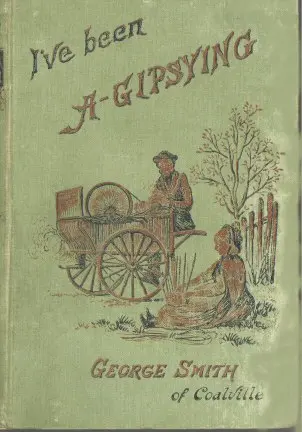
I’ve been a Gipsying or, Rambles among our Gipsies and their children in their tents and vans
George Smith
THE CLASSIC COLLECTION · 1880
"Gipsy Life" by George Smith is an account written in the late 19th century that examines the lives, origins, and social conditions of the Gipsy population in England. The book delves into the challenges faced by Gipsies, particularly women and children, highlighting themes of neglect and societal misunderstanding. The opening reveals the author's dedication to raising awareness about the plight of Gipsies and the need for educational intervention in their lives. Smith outlines the historical treatment of Gipsies across Europe, touching on their origins and the stigma associated with their lifestyle. He paints a vivid picture of the struggles they have endured, from persecution in various countries to their current state in England, emphasizing the importance of understanding their story to foster compassion and potential improvement in their circumstances.
Introduction adapted from the source catalogue; source summaries may be automatically generated.
Free to read · English · 108,927 words · No account needed
MAKE TIME FOR A GOOD BOOK
On by default. Untick to stop anonymous reading totals. Each page counts after 10 seconds in view. How this works.
Anonymous counting is on unless you have switched it off.
The social history and improvements of our own country seem to have gone by irregular leaps and bounds. The Parliament, like the Times, follows upon the heels of public opinion in all measures concerning the welfare of the nation; and it is well it should be so. An Englishman will be led by a child; but it requires a strong hand and a sharp whip to drive him. One hundred and forty years ago the Wesleys and Whitfield caused a commotion in the religious world. Upwards of a century ago the first canal in this country was opened for the conveyance of goods upon our silent highways, and trade began in earnest to show signs of life and activity. A century ago Robert Raikes, of Gloucester, opened his first Sunday-school--the beginning of a system ever widening and expanding, carrying with it blessings incomprehensible to finite minds, and only to be revealed in another world. Nearly a century ago Raper's translation of Grellmann's "Dissertation on the Gipsies" was published, and which caused no little stir at the time, being the first work of any kind worth notice that had appeared. Seventy years ago an interesting correspondence took place in the Christian Observer upon the condition of the Gipsies, and various lines of missionary action were suggested; but no plan was adopted, and all words blown to the wind. Then, as now, people would look at the Gipsies in their pitiable condition, and with a shrug of the shoulders would say, "Poor things," and away they would go to their mansions, doff their warm winter clothing, put on their needleworked slippers, stretch their legs before a blazing fire in the drawing-room, and call "John" to bring a box of the best cigars, the champagne, dry sherry, and crusted port, and then noddle off to sleep. Sixty-four years ago Hoyland's "Historical Survey of the Gipsies" made its appearance, a work that caught the fire and spirit of Grellmann's, the object of both being to stir up the missionary zeal of this country in the cause of the Gipsies. Fifty years ago James Crabb began his missionary work among the Gipsies at Southampton, and for a while did well; but in course of time, owing to the Gipsies moving about, as in the case of "Our Canal Population," the work dwindled down and down, till there is not a vestige of this good man's efforts to be seen. About the same time that Crabb was at work among the Gipsies missionary efforts were put in motion to improve the canal-boatmen, and mission stations were established at Newark, Stoke-on-Trent, Aylesbury, Oxford, Birmingham, and other places, but fared the same fate as the missionary effort of Crabb and others among the Gipsies. Fifty years ago railways were opened, which gave an impetus to trade never experienced before. Fifty years ago the preaching of Bourne and Clowes was causing considerable excitement in the country. Nearly fifty years ago witnessed the passing of the Reform Bill, and the Factory Act received the Royal signature. Forty years have passed away since George Borrow's missionary efforts among the Gipsies were prominently before the public, which, sad to say, shared the fate of Crabb's, Hoyland's, Roberts', and Raper's. From that day till now, except the spasmodic efforts of a clergyman here and there, or some other kind-hearted friend, these 20,000 poor slighted outcasts have been left to themselves to sink or swim as they thought well. The only man, except the dramatist and novelist, who has seemed to notice them has been the policeman, and his vigilant eye and staff have been used to drive them from their camping-ground from time to time, and thus--if possible--made their lives more miserable, and created within them deeper-seated revenge, owing to the way in which they are carrying out the Enclosures Act. All missionary efforts put forth to improve the condition of the factory operative and canal-boatmen, previous to the passing of the Factory Act, nearly fifty years since, and the Canal Boats Act of 1877, were fruitless and unprofitable. The passing of the Factory Act has done more for the children in one year than all the missionaries in the kingdom could have done in their lifetime. Similar results are the outcome of the Brickyard Act of 1871, as touching the welfare of the children. And so in like manner it will be with the Canal Boats Act when properly carried out, the canal-boat children of to-day, in fifty years hence, will be equal to other working classes. From the days of Hoyland, and Borrow, and Crabb, down to the present time, but little seems to have been done for the Gipsies. With Crabb died all real interest in the welfare of these poor unfortunate people. The difficulties he had encountered seemed to have had a deterrent effect upon others. Missionary zeal, without moral force of law and the schoolmaster, will accomplish but little for the Gipsies at our doors; and it may be said with special emphasis as regards the improvement of the Gipsy children. From the days of the relentless, cruel, and merciless persecution the Gipsies received under the reigns of Henry VIII. and Elizabeth, down to the present time, nothing has been done by law to reclaim these Indian outcasts and Asiatic emigrants. The case of the Gipsies shows us plainly that hunting the women and children with bloodhounds, and dragging the Gipsy leaders to the gallows, will neither stamp them out nor improve their character and habits; and, on the other hand, it appears that the love-like gentleness, child-like simplicity, and religious fervour of the circumscribed influence of Crabb and others, about this time, did but little for these poor, little, dark-eyed, wandering brethren of ours from afar. The next agents that appeared upon the scene to try to elevate the Gipsies into something like a respectable position in society were the dramatists and novelists. These flickering lights of the night have met with no better success, in fact, their efforts, in the way they have been put forth, have, as a rule, exhibited Gipsy life in a variety of false colours and shades, which exhibition has turned out to be a failure in accomplishing the object the authors had in view, other than to fill their coffers and mislead the public as to the real character of a Gipsy vagabond's life; and thus it will be seen, I think, that the Gipsies and their children of to-day present to us the miserable failure, of bitter persecution in the seventeenth and eighteenth centuries, the efforts of Christianity alone at the beginning of the nineteenth century, and more recently the novelist and dramatist as a means in themselves, separately, to effect a reformation in the habits and character of the Gipsy children and their parents.
Your reading position is saved on this browser. Take it to another device with a library code. Reading pages adapt to text, rather than matching a printed edition.
George Smith
George Smith
BEHIND THE BOOK
This eBook is for the use of anyone anywhere in the United States and most other parts of the world at no cost and with almost no restrictions whatsoever. You may copy it, give it away or re-use it under the terms of the Project Gutenberg License included with this eBook or online at www.gutenberg.org. If you are not located in the United States, you will have to check the laws of the country where you are located before using this eBook. Read the source licence.
The original source file, including credits and licence, is retained by this library. Request an original-format copy at no charge. Please include the book title and Project Gutenberg identifier #28548.
KEEP YOUR CURIOSITY GOING
Cécile Tormay

Moritz Busch
John L. Ransom
Frances Wright
Cécile Tormay

Mabel Potter Daggett