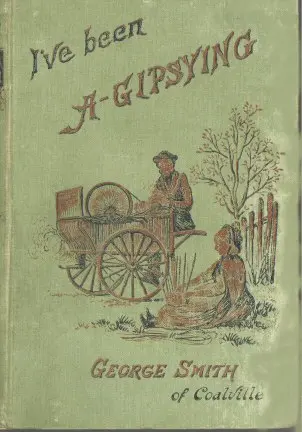
I’ve been a Gipsying or, Rambles among our Gipsies and their children in their tents and vans
George Smith
THE CLASSIC COLLECTION · 1880
"Gipsy Life" by George Smith is an account written in the late 19th century that examines the lives, origins, and social conditions of the Gipsy population in England. The book delves into the challenges faced by Gipsies, particularly women and children, highlighting themes of neglect and societal misunderstanding. The opening reveals the author's dedication to raising awareness about the plight of Gipsies and the need for educational intervention in their lives. Smith outlines the historical treatment of Gipsies across Europe, touching on their origins and the stigma associated with their lifestyle. He paints a vivid picture of the struggles they have endured, from persecution in various countries to their current state in England, emphasizing the importance of understanding their story to foster compassion and potential improvement in their circumstances.
Introduction adapted from the source catalogue; source summaries may be automatically generated.
Free to read · English · 108,927 words · No account needed
MAKE TIME FOR A GOOD BOOK
On by default. Untick to stop anonymous reading totals. Each page counts after 10 seconds in view. How this works.
Anonymous counting is on unless you have switched it off.
In Part III. I have endeavoured, as well as I have been able, to show some of the agencies that have been set in motion during the last three centuries for and against the Gipsies, with a view to their extermination, by the hang-man, to their being reclaimed by the religious zeal and fervour of the minister, and to their improvement by the artificial means of poetry, fiction, and romance. First, the persecution dealt out to the Gipsies in this, as well as other countries, during a period of several centuries, although to a large extent brought upon themselves by their horrible system of lying and deception, neither exterminated them nor improved their habits; but, on the contrary, they increased and spread like mushrooms; the oftener they were trampled upon the more they seemed to thrive; the more they were hated, hunted, and driven into hiding-places the oftener these sly, fortune-telling, lying foxes would be seen sneaking across our path, ready to grab our chickens and young turkeys as opportunities presented themselves. Second, that when stern justice said "it is enough," persecution hanging down its hands and revenge drooping her head, a few noble-hearted men, filled with missionary zeal, took up the cause of the Gipsies for a period of nearly forty years in various forms and ways at the end of the last and the commencement of the present century. Except in a few isolated cases, they also failed in producing any noticeable change in either the moral, social, or religious condition of the Gipsies, and with the death of Hoyland, Borrow, Crabb, Roberts, and others, died the last flicker of a flickering light that was to lead these poor, deluded, benighted heathen wanderers upon a road to usefulness, honesty, uprightness, and industry. Third, that on the decline of religious zeal, fervour, and philanthropy on behalf of the Gipsies more than forty years ago the spasmodic efforts of poets, novelists, and dramatists, in a variety of forms of fiction and romance, came to the front, to lead them to the goal through a lot of questionable by-lanes, queer places, and artificial lights, the result being that these melodramatic personages have left the Gipsies in a more pitiable condition than they were before they took up their cause, although they, in doing so, put "two faces under one hat," blessing and cursing, smiling and frowning, all in one breath, praising their faults and sins, and damning their few virtues. In fact, to such a degree have fiction writers painted the black side of a Gipsy's life, habits, and character in glowing colours that, to take another 20,000 men, women, and children out of our back slums and sink-gutters and write the word "Gipsy" upon their back, instead of "scamp," and send them through the country with a few donkeys, some long sticks, old blankets and rags, dark eyes, dirty faces, filthy bodies, short petticoats, and old scarlet hoods and cloaks, you would in fifty years make this country not worth living in. It is my decided conviction that unless we are careful, and take the "bull by the horns," and compel them to educate their children, and to put their habitations, tents, and vans under better sanitary arrangements, we shall be fostering seeds in these dregs of society that will one day put a stop to the work of civilisation, and bring to an end the advance in arts, science, laws, and commerce that have been making such rapid strides in this country of late years.
Your reading position is saved on this browser. Take it to another device with a library code. Reading pages adapt to text, rather than matching a printed edition.
George Smith
George Smith
BEHIND THE BOOK
This eBook is for the use of anyone anywhere in the United States and most other parts of the world at no cost and with almost no restrictions whatsoever. You may copy it, give it away or re-use it under the terms of the Project Gutenberg License included with this eBook or online at www.gutenberg.org. If you are not located in the United States, you will have to check the laws of the country where you are located before using this eBook. Read the source licence.
The original source file, including credits and licence, is retained by this library. Request an original-format copy at no charge. Please include the book title and Project Gutenberg identifier #28548.
KEEP YOUR CURIOSITY GOING
Cécile Tormay

Moritz Busch
John L. Ransom
Frances Wright
Cécile Tormay

Mabel Potter Daggett