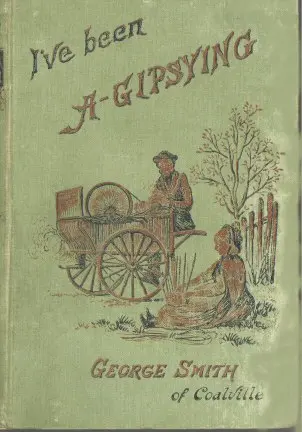
I’ve been a Gipsying or, Rambles among our Gipsies and their children in their tents and vans
George Smith
THE CLASSIC COLLECTION · 1880
"Gipsy Life" by George Smith is an account written in the late 19th century that examines the lives, origins, and social conditions of the Gipsy population in England. The book delves into the challenges faced by Gipsies, particularly women and children, highlighting themes of neglect and societal misunderstanding. The opening reveals the author's dedication to raising awareness about the plight of Gipsies and the need for educational intervention in their lives. Smith outlines the historical treatment of Gipsies across Europe, touching on their origins and the stigma associated with their lifestyle. He paints a vivid picture of the struggles they have endured, from persecution in various countries to their current state in England, emphasizing the importance of understanding their story to foster compassion and potential improvement in their circumstances.
Introduction adapted from the source catalogue; source summaries may be automatically generated.
Free to read · English · 108,927 words · No account needed
MAKE TIME FOR A GOOD BOOK
On by default. Untick to stop anonymous reading totals. Each page counts after 10 seconds in view. How this works.
Anonymous counting is on unless you have switched it off.
In a letter addressed to the Christian Observer, vol. vii., p. 91, in the year about 1809, "Nil" writes:--"As the divine spirit of Christianity deems no object, however uncouth or insignificant, beneath her notice, I venture to apply to you on behalf of a race, the outcasts of society, of whose pitiable condition, among the many forms of human misery which have engaged your efforts, I do not recollect to have seen any notice in the pages of your excellent miscellany. I allude to the deplorable state of the Gipsies, on whose behalf I beg leave to solicit your good offices with the public. Lying at our very doors, they seem to have a peculiar claim on our compassion. In the midst of a highly refined state of society, they are but little removed from savage life. In this happy country, where the light of Christianity shines with its purest lustre, they are still strangers to its cheering influence. I have not heard even of any efforts which have been made either by individuals or societies for their improvement." "Fraternicus," writing to the same Journal, vol. vii., and in the same year, says:--"It is painful to reflect how many thousands of these unhappy creatures have, since the light of Christianity has shone on this island, gone into eternity ignorant of the ways of salvation;" and goes on to say that, "there is an awful responsibility attached to this neglect," and recommends the appointment of missionaries to the work; and finishes his appeal as follows:--"Christians of various denominations, perhaps may, through the divine providence, be the means of exciting effectual attention to the spiritual wants of this deplorable set of beings; and the same benevolence which induced you to exert your talents and influence on behalf of the oppressed negroes may again be successfully employed in ameliorating the condition of a numerous class of our fellow-creatures." "H." wrote to the Christian Observer, and said he hoped "to see the day when the nation, which has at length done justice to the poor negroes, will be equally zealous to do their duty in this instance," and he offered to subscribe "twenty pounds per annum towards so good an object." "Minimus," another writer to the same paper, with reference to missionary enterprise, says:--"The soil which it is proposed to cultivate is remarkably barren and unpropitious; of course, a plentiful harvest must not be soon expected;" and finishes his letter by saying, "Let us arise and build; let us begin; there is no fear of progress and help." "H.," a clergyman, writes again and says:--"Surely, when our charity is flowing in so wide a channel, conveying the blessings of the Gospel to the most distant quarters of the globe, we shall not hesitate to water this one barren and neglected field in our own land. My attention was drawn to the state of this miserable class of human beings by the letter of 'Fraternicus,' and looking upon it as a reproach to our country;" and ends his letter with a short prayer, as follows: "It is my earnest prayer to God that this may not be one of these projects which are only talked of and never begun; but that it may tend to the glory of His name and to the bringing back of these poor lost sheep to the fold of their Redeemer." "J. P." writes to the same Journal, April 28, 1810, in which he says:--"Circumstances lead to think that were encouragement given to them the Gipsies would be inclined to live in towns and villages like other people; and would in another generation become civilised, and with the pains which are now taken to educate the poor, and to diffuse the Scriptures and the knowledge of Christ, would become a part of the regular fold. It would require much patient continuance in well doing in those who attempted it, and they must be prepared, perhaps, to meet with some untowardness and much disappointment." "Fraternicus" sums up the correspondence by suggesting a plan of taking the school to the Gipsies instead of taking the Gipsies to the schools:--"If the compulsory education of the Gipsies had taken place a century ago, and their tents brought under some sort of sanitary inspection, what a change by this time would have taken place in their habits," &c.; and he further says:--"By degrees they might be brought to attend divine worship; and if in the parish of a pious clergyman he would probably embrace the opportunity of teaching them. Much might be done by a pious schoolmaster and schoolmistress, by whom the girls might be taught different kinds of work, knitting, sewing, &c. Should these suggestions be deemed worthy of your insertion, they might, perhaps, awaken the attention of some benevolent persons, whose superior talents and experience in the ways of beneficence would enable them to perfect and carry into execution a plan for the effectual benefit of these unhappy portioners of our kind."
Your reading position is saved on this browser. Take it to another device with a library code. Reading pages adapt to text, rather than matching a printed edition.
George Smith
George Smith
BEHIND THE BOOK
This eBook is for the use of anyone anywhere in the United States and most other parts of the world at no cost and with almost no restrictions whatsoever. You may copy it, give it away or re-use it under the terms of the Project Gutenberg License included with this eBook or online at www.gutenberg.org. If you are not located in the United States, you will have to check the laws of the country where you are located before using this eBook. Read the source licence.
The original source file, including credits and licence, is retained by this library. Request an original-format copy at no charge. Please include the book title and Project Gutenberg identifier #28548.
KEEP YOUR CURIOSITY GOING
Cécile Tormay

Moritz Busch
John L. Ransom
Frances Wright
Cécile Tormay

Mabel Potter Daggett