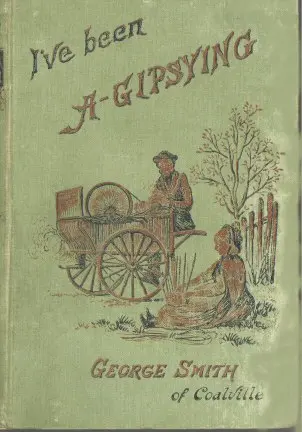
I’ve been a Gipsying or, Rambles among our Gipsies and their children in their tents and vans
George Smith
THE CLASSIC COLLECTION · 1880
"Gipsy Life" by George Smith is an account written in the late 19th century that examines the lives, origins, and social conditions of the Gipsy population in England. The book delves into the challenges faced by Gipsies, particularly women and children, highlighting themes of neglect and societal misunderstanding. The opening reveals the author's dedication to raising awareness about the plight of Gipsies and the need for educational intervention in their lives. Smith outlines the historical treatment of Gipsies across Europe, touching on their origins and the stigma associated with their lifestyle. He paints a vivid picture of the struggles they have endured, from persecution in various countries to their current state in England, emphasizing the importance of understanding their story to foster compassion and potential improvement in their circumstances.
Introduction adapted from the source catalogue; source summaries may be automatically generated.
Free to read · English · 108,927 words · No account needed
MAKE TIME FOR A GOOD BOOK
On by default. Untick to stop anonymous reading totals. Each page counts after 10 seconds in view. How this works.
Anonymous counting is on unless you have switched it off.
If the Gipsy and other tramping, travelling "rob rats" of to-day are to become honest, industrious, and useful citizens of the future, it must be by the influence of the schoolmaster and the sanitary officer, coming to a great extent as they do between the fitful and uncertain efforts of the missionary, the relentless hands of persecution, the policeman, and the stage.
From the time the Gipsies landed in this country in 1515, down to the time when Raper's translation of Grellmann's work appeared in 1787, a period of 272 years, nothing seems to have been done to improve the Gipsies, except to pass laws for their extermination. The earliest notice of the Gipsies in our own country was published in a quarto volume in the year 1612, the object of which was to expose the system of fortune-telling, juggling, and legerdemain, and in which reference is made to the Gipsies as follows:--"This kind of people about a hundred years ago beganne to gather an head, as the first heere about the southerne parts. And this, as I am imformed and can gather, was their beginning: Certain Egyptians banished their country (belike not for their good conditions) arrived heere in England, who for quaint tricks and devices, not known heere at that time among us, were esteemed and had in great admiration; insomuch that many of our English loyterers joined with them, and in time learned their crafty cosening. The speech which they used was the right Egyptian language, with whom our Englishmen conversing at least learned their language. These people continuing about the country and practising their cosening art, purchased themselves great credit among the country people, and got much by palmistry and telling of fortunes; insomuch they pitifully cosened poor country girls, both of money, silver spoons, and the best of their apparalle or other goods they could make." And he goes on to say, "But what numbers were executed on these statutes you would wonder; yet, notwithstanding, all would not prevaile, but they wandered as before uppe and downe and meeting once a year at a place appointed; sometimes at the Peake's Hole in Derbyshire, and other whiles by Ketbroak at Blackheath." The annual gathering of the Gipsies and others of the same class, who make Leicestershire, Derbyshire, Nottinghamshire, Staffordshire and neighbouring counties, their head-quarters, takes place at the well-known Bolton Fair, held about Whitsuntide, on the borders of Leicestershire, a village situated in a kind of triangle, between Leicestershire, Nottinghamshire and Derbyshire. Spellman speaks of the Gipsies about this time as follows:--"The worst kind of wanderers and impostors springing up on the Continent, but yet rapidly spreading themselves through Britain and other parts of Europe, disfigured by their swarthiness, sun-burnt, filthy in their clothing and indecent in all their customs." Under these circumstances it is not to be wondered at, in these dark ages, that some steps should be taken to stop these lawless desperadoes and vagabonds from contaminating our English labourers' and servant girls with their loose ideas of labour, cleanliness, honesty, morality, truthfulness, and religion. It was soon manifest what kind of strange people had begun to flock to our shores to make their domiciles among us, as will be seen in a description given of them in an Act of Parliament passed in the twenty-second year of the reign of Henry VIII., being only about seven years after their landing in Scotland, and to which I have referred before. In the tenth chapter of the said act they are described as--"An outlandish people calling themselves Egyptians, using no crafte nor feat of merchandise; who have come into this realm and gone from shire to shire and place to place in great company, and used great subtle and crafty means to deceive the people, bearing them in hand that by palmistry they could tell the men's and women's fortunes, and so many times by crafte and subtlety have deceived the people of their money, and also have committed many heinous felonies and robberies. Wherefore all are directed to avoid the realm and not to return under pain of imprisonment and forfeitures of their goods and chattels; and on their trials for any felonies which they may have committed they shall not be entitled to a jury." As if this was not sufficient or as if it had not the desired effect the authors anticipated viz., in preventing other Gipsies flocking to our shores or driving those away from us who were already in our midst another act was passed in the twenty-seventh year of the same reign, more severe than the previous act, and part of it runs as follows:--"Whereas certain outlandish people, who do not profess any crafte or trade, whereby to maintain themselves, but go about in great numbers from place to pace using insidious underhand means to impose on His Majesty's subjects, making them believe that they understand the art of foretelling to men and women their good and evil fortunes by looking in their hands, whereby they frequently defraud people of their money; likewise are guilty of thefts and highway robberies; it is hereby ordered that the said vagrants, commonly called Egyptians, in case they remain one month in the kingdom, shall be proceeded against as thieves and rascals, and at the importation of such Egyptians (the importer) shall forfeit 40 pounds for every trespass."
Your reading position is saved on this browser. Take it to another device with a library code. Reading pages adapt to text, rather than matching a printed edition.
George Smith
George Smith
BEHIND THE BOOK
This eBook is for the use of anyone anywhere in the United States and most other parts of the world at no cost and with almost no restrictions whatsoever. You may copy it, give it away or re-use it under the terms of the Project Gutenberg License included with this eBook or online at www.gutenberg.org. If you are not located in the United States, you will have to check the laws of the country where you are located before using this eBook. Read the source licence.
The original source file, including credits and licence, is retained by this library. Request an original-format copy at no charge. Please include the book title and Project Gutenberg identifier #28548.
KEEP YOUR CURIOSITY GOING
Cécile Tormay

Moritz Busch
John L. Ransom
Frances Wright
Cécile Tormay

Mabel Potter Daggett