READ · DISCOVER · ENJOYClassic literature · Always free
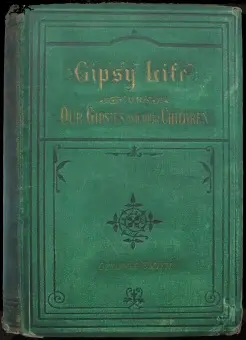
Gipsy Life Being an account of our Gipsies and their children, with suggestions for their improvement — digital edition cover

THE CLASSIC COLLECTION · 1880

Gipsy Life Being an account of our Gipsies and their children, with suggestions for their improvement

"Gipsy Life" by George Smith is an account written in the late 19th century that examines the lives, origins, and social conditions of the Gipsy population in England. The book delves into the challenges faced by Gipsies, particularly women and children, highlighting themes of neglect and societal misunderstanding. The opening reveals the author's dedication to raising awareness about the plight of Gipsies and the need for educational intervention in their lives. Smith outlines the historical treatment of Gipsies across Europe, touching on their origins and the stigma associated with their lifestyle. He paints a vivid picture of the struggles they have endured, from persecution in various countries to their current state in England, emphasizing the importance of understanding their story to foster compassion and potential improvement in their circumstances.

Introduction adapted from the source catalogue; source summaries may be automatically generated.

Start reading ↓

Free to read · English · 108,927 words · No account needed

MAKE TIME FOR A GOOD BOOK

Gipsy Life Being an account of our Gipsies and their children, with suggestions for their improvement

On by default. Untick to stop anonymous reading totals. Each page counts after 10 seconds in view. How this works.

Anonymous counting is on unless you have switched it off.

Gipsy Life Being an account of our Gipsies and their children, with suggestions for their improvement

I would say, in the first place, that it is my decided conviction that the Gipsies were neither more nor less, before they set out upon their pilgrimage, than a pell-mell gathering of many thousands of low-caste, good for nothing, idle Indians from Hindustan--not ashamed to beg, with some amount of sentiment in their nature, as exhibited in their musical tendencies and love of gaudy colours, and except in rare instances, without any true religious motives or influences. It may be worth while to notice that I have come to the conclusion that they were originally from India by observing them entirely in the light given to me years ago of the different characters of human beings both in Asia, Europe, and Africa. Their habits, manners, and customs, to me, is a sufficient test, without calling in the aid of the philologist to decide the point of their originality. I may here remark that in order to get at the real condition of the Gipsies as they are at the present day in this country, and not to have my mind warped or biassed in any way, I purposely kept myself in ignorance upon the subject as to what various authors have said either for or against them until I had made my inquiries and the movement had been afloat for several months. The first work touching the Gipsy question I ever handled was presented to me by one of the authors--Mr. Crofton--at the close of my Social Science Congress paper read at Manchester last October, entitled "The Dialect of the English Gipsies," which work, without any disrespect to the authors--and I know they will overlook this want of respect--remained uncut for nearly two months. With further reference to their Indian origin, the following is an extract from "Hoyland's Historical Survey," in which the author says:--"The Gipsies have no writing peculiar to themselves in which to give a specimen of the construction of their dialect. Music is the only science in which the Gipsies participate in any considerable degree; they likewise compose, but it is after the manner of the Eastern people, extempore." Grellmann asserts that the Hindustan language has the greatest affinity with that of the Gipsies. He also infers from the following consideration that Gipsies are of the lowest class of Indians, namely, Parias, or, as they are called in Hindustan, Suders, and goes on to say that the whole great nation of Indians is known to be divided into four ranks, or stocks, which are called by a Portuguese name, Castes, each of which has its own particular sub-division. Of these castes, the Brahmins is the first; the second contains the Tschechterias, or Setreas; the third consists of the Beis, or Wazziers; the fourth is the caste of the above-mentioned Suders, who, upon the peninsula of Malabar, where their condition is the same as in Hindustan, are called Parias and Pariers. The first were appointed by Brahma to seek after knowledge, to give instruction, and to take care of religion. The second were to serve in war. The third were, as the Brahmins, to cultivate science, but particularly to attend to the breeding of cattle. The caste of the Suders was to be subservient to the Brahmins, the Tschechterias, and the Beis. These Suders, he goes on to say, are held in disdain, and they are considered infamous and unclean from their occupation, and they are abhorred because they eat flesh; the three other castes living entirely on vegetables. Baldeus says the Parias or Suders are a filthy people and wicked crew. It is related in the "Danish Mission Intelligencer," nobody can deny that the Parias are the dregs and refuse of all the Indians; they are thievish, and have wicked dispositions. Neuhof assures us, "the Parias are full of every kind of dishonesty; they do not consider lying and cheating to be sinful." The Gipsy's solicitude to conceal his language is also a striking Indian trait. Professor Pallas says of the Indians round Astracan, custom has rendered them to the greatest degree suspicious about their language. Salmon says that the nearest relations cohabit with each other; and as to education, their children grow up in the most shameful neglect, without either discipline or instruction. The missionary journal before quoted says with respect to matrimony among the Suders or Gipsies, "they act like beasts, and their children are brought up without restraint or information." "The Suders are fond of horses, so are the Gipsies." Grellmann goes on to say "that the Gipsies hunt after cattle which have died of distempers in order to feed on them, and when they can procure more of the flesh than is sufficient for one day's consumption, they dry it in the sun. Such is the constant custom with the Suders in India." "That the Gipsies and natives of Hindustan resemble each other in complexion and shape is undeniable. And what is asserted of the young Gipsy girls rambling about with their fathers, who are musicians, dancing with lascivious and indecent gesture to divert any person who is willing to give them a small gratuity for so acting, is likewise perfectly Indian." Sonneratt confirms this in the account he gives of the dancing girls of Surat. Fortune-telling is practised all over the East, but the peculiar kind professed by the Gipsies, viz., chiromancy, constantly referring to whether the parties shall be rich or poor, happy or unhappy in marriage, &c., is nowhere met with but in India. Sonneratt says:--"The Indian smith carries his tools, his shop, and his forge about with him, and works in any place where he can find employment. He has a stone instead of an anvil, and his whole apparatus is a pair of tongs, a hammer, a beetle, and a file. This is very much like Gipsy tinkers," &c. It is usual for Parias, or Suders, in India to have their huts outside the villages of other castes. This is one of the leading features of the Gipsies of this country. A visit to the outskirts of London, where the Gipsies encamp, will satisfy any one upon this point, viz., that our Gipsies are Indians. In isolated cases a strong religious feeling has manifested itself in certain persons of the Bunyan type of character and countenance--a strong frame, with large, square, massive forehead, such as Bunyan possessed; for it should be noted that John Bunyan was a Gipsy tinker, with not an improbable mixture of the blood of an Englishman in his veins, and, as a rule, persons of this mixture become powerful for good or evil. A case in point, viz., Mrs. Simpson and her family, has come under my own observation lately, which forcibly illustrates my meaning, both as regards the evil Mrs. Simpson did in the former part of her life, and for the last twenty years in her efforts to do good among persons of her class, and also among others, as she has travelled about the country. The exodus of the Gipsies from India may be set down, first, to famine, of which India, as we all know, suffers so much periodically; second, to the insatiable love of gold and plunder bound up in the nature of the Gipsies--the West, from an Indian point of view, is always looked upon as a land of gold, flowing with milk and honey; third, the hatred the Gipsies have for wars, and as in the years of 1408 and 1409, and many years previous to these dates, India experienced some terrible bloody conflicts, when hundreds of thousands of men, women, and children were butchered by the cruel monster Timur Beg in cold blood, and during the tenth and eleventh centuries by Mahmood the Demon, on purpose to make proselytes to the Mohammedan faith, it is only natural to suppose that under those circumstances the Gipsies would leave the country to escape the consequences following those calamities, over-populated as it was, numbering close upon 200,000,000 of human beings. {8} I am inclined to think that it would be hunger and starvation upon their heels that would be the propelling power to send them forward in quest of food. From Attock, Peshawur, Cabul, and Herat, they would tramp through Persia by Teheran, and enter the Euphrates Valley at Bagdad. From Calcutta, Madras, Seringapatam, Bangalore, Goa, Poonah, Hydrabad, Aurungabad, Nagpoor, Jabbulpoor, Benares, Allahabad, Surat, Simla, Delhi, Lahore, they would wander along to the mouth of the river Indus, and commence their journey at Hydrabad, and travelling by the shores of the Indian Ocean, stragglers coming in from Bunpore, Gombaroon, the commencement of the Persian Gulf, when they would travel by Bushino to Bassora. At this place they would begin to scatter themselves over some parts of Arabia, making their headquarters near Molah, Mecca, and other parts of the country, crossing over Suez, and getting into Egypt in large numbers. Others would take the Euphrates Valley route, which, by the way, is the route of the proposed railway to India. Tribes branching off at Kurnah, some to Bagdad, following the course of the river Tigris to Mosul and Diarbeker, and others would go to Jerusalem, Damuscus, and Antioch, till they arrived at Allepo and Alexandretta. Here may be considered the starting-point from which they spread over Asiatic Turkey in large numbers, till they arrived before Constantinople at the commencement of the fourteenth century.

Your reading position is saved on this browser. Take it to another device with a library code. Reading pages adapt to text, rather than matching a printed edition.

More from this author

BEHIND THE WORDS

About George Smith

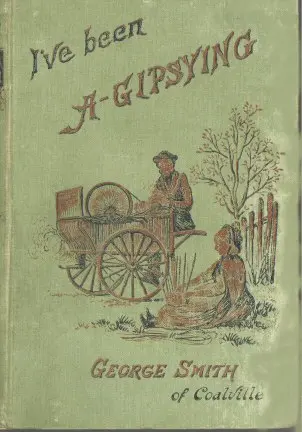
George Smith (1831–1895). Explore I’ve been a Gipsying or, Rambles among our Gipsies and their children in their tents and vans, Henry Martyn, Saint and Scholar First Modern Missionary to the Mohammedans, 1781-1812, Gipsy Life Being an account of our Gipsies and their children, with suggestions for their improvement in this collection. These books span travel & exploration, biography & memoir, history.

Explore this author’s books →

THE READERS’ VERDICT

How did this story stay with you?

Not rated yet
Your rating for Gipsy Life Being an account of our Gipsies and their children, with suggestions for their improvement

Be the first to share your verdict.

One rating per browser, which you can change or remove. A necessary browser identifier remembers your vote. How ratings work

A GOOD STORY DESERVES COMPANY

Pass this book along.

A great read is even better when it’s shared.

SEND A LITTLE INSPIRATION

Share this book

BEHIND THE BOOK

Edition & source details.

Title
Gipsy Life Being an account of our Gipsies and their children, with suggestions for their improvement
Author
George Smith
First publication (Open Library catalogue match)
1880
Digital edition publisher
Project Gutenberg
Gutenberg release date
2009-04-09
Language
English
Source edition imprint
Not stated in source catalogue
Source identifier
Project Gutenberg #28548
Contributors
William Heysham Overend (ill)

Public-domain source & licence

This eBook is for the use of anyone anywhere in the United States and most other parts of the world at no cost and with almost no restrictions whatsoever. You may copy it, give it away or re-use it under the terms of the Project Gutenberg License included with this eBook or online at www.gutenberg.org. If you are not located in the United States, you will have to check the laws of the country where you are located before using this eBook. Read the source licence.

Full source licence and obtaining an original copy

The original source file, including credits and licence, is retained by this library. Request an original-format copy at no charge. Please include the book title and Project Gutenberg identifier #28548.

the full Project Gutenberg License must appear
prominently whenever any copy of a Project Gutenberg work (any work
on which the phrase “Project Gutenberg” appears, or with which the
phrase “Project Gutenberg” is associated) is accessed, displayed,
performed, viewed, copied or distributed:

This eBook is for the use of anyone anywhere in the United States and most
other parts of the world at no cost and with almost no restrictions
whatsoever. You may copy it, give it away or re-use it under the terms
of the Project Gutenberg™ License included with this eBook or online
at www.gutenberg.org. If you
are not located in the United States, you will have to check the laws
of the country where you are located before using this eBook.

1.E.2. If an individual Project Gutenberg electronic work is
derived from texts not protected by U.S. copyright law (does not
contain a notice indicating that it is posted with permission of the
copyright holder), the work can be copied and distributed to anyone in
the United States without paying any fees or charges. If you are
redistributing or providing access to a work with the phrase “Project
Gutenberg” associated with or appearing on the work, you must comply
either with the requirements of paragraphs 1.E.1 through 1.E.7 or
obtain permission for the use of the work and the Project Gutenberg
trademark as set forth in paragraphs 1.E.8 or 1.E.9.

1.E.3. If an individual Project Gutenberg electronic work is posted
with the permission of the copyright holder, your use and distribution
must comply with both paragraphs 1.E.1 through 1.E.7 and any
additional terms imposed by the copyright holder. Additional terms
will be linked to the Project Gutenberg License for all works
posted with the permission of the copyright holder found at the
beginning of this work.

1.E.4. Do not unlink or detach or remove the full Project Gutenberg
License terms from this work, or any files containing a part of this
work or any other work associated with Project Gutenberg.

1.E.5. Do not copy, display, perform, distribute or redistribute this
electronic work, or any part of this electronic work, without
prominently displaying the sentence set forth in paragraph 1.E.1 with
active links or immediate access to the full terms of the Project
Gutenberg License.

1.E.6. You may convert to and distribute this work in any binary,
compressed, marked up, nonproprietary or proprietary form, including
any word processing or hypertext form. However, if you provide access
to or distribute copies of a Project Gutenberg work in a format
other than “Plain Vanilla ASCII” or other format used in the official
version posted on the official Project Gutenberg website
(www.gutenberg.org), you must, at no additional cost, fee or expense
to the user, provide a copy, a means of exporting a copy, or a means
of obtaining a copy upon request, of the work in its original “Plain
Vanilla ASCII” or other form. Any alternate format must include the
full Project Gutenberg License as specified in paragraph 1.E.1.

1.E.7. Do not charge a fee for access to, viewing, displaying,
performing, copying or distributing any Project Gutenberg works
unless you comply with paragraph 1.E.8 or 1.E.9.

1.E.8. You may charge a reasonable fee for copies of or providing
access to or distributing Project Gutenberg electronic works
provided that:

• You pay a royalty fee of 20% of the gross profits you derive from
the use of Project Gutenberg works calculated using the method
you already use to calculate your applicable taxes. The fee is owed
to the owner of the Project Gutenberg trademark, but he has
agreed to donate royalties under this paragraph to the Project
Gutenberg Literary Archive Foundation. Royalty payments must be paid
within 60 days following each date on which you prepare (or are
legally required to prepare) your periodic tax returns. Royalty
payments should be clearly marked as such and sent to the Project
Gutenberg Literary Archive Foundation at the address specified in
Section 4, “Information about donations to the Project Gutenberg
Literary Archive Foundation.”

• You provide a full refund of any money paid by a user who notifies
you in writing (or by e-mail) within 30 days of receipt that s/he
does not agree to the terms of the full Project Gutenberg™
License. You must require such a user to return or destroy all
copies of the works possessed in a physical medium and discontinue
all use of and all access to other copies of Project Gutenberg™
works.

• You provide, in accordance with paragraph 1.F.3, a full refund of
any money paid for a work or a replacement copy, if a defect in the
electronic work is discovered and reported to you within 90 days of
receipt of the work.

• You comply with all other terms of this agreement for free
distribution of Project Gutenberg™ works.


1.E.9. If you wish to charge a fee or distribute a Project
Gutenberg™ electronic work or group of works on different terms than
are set forth in this agreement, you must obtain permission in writing
from the Project Gutenberg Literary Archive Foundation, the manager of
the Project Gutenberg™ trademark. Contact the Foundation as set
forth in Section 3 below.

1.F.

1.F.1. Project Gutenberg volunteers and employees expend considerable
effort to identify, do copyright research on, transcribe and proofread
works not protected by U.S. copyright law in creating the Project
Gutenberg™ collection. Despite these efforts, Project Gutenberg™
electronic works, and the medium on which they may be stored, may
contain “Defects,” such as, but not limited to, incomplete, inaccurate
or corrupt data, transcription errors, a copyright or other
intellectual property infringement, a defective or damaged disk or
other medium, a computer virus, or computer codes that damage or
cannot be read by your equipment.

1.F.2. LIMITED WARRANTY, DISCLAIMER OF DAMAGES - Except for the “Right
of Replacement or Refund” described in paragraph 1.F.3, the Project
Gutenberg Literary Archive Foundation, the owner of the Project
Gutenberg™ trademark, and any other party distributing a Project
Gutenberg™ electronic work under this agreement, disclaim all
liability to you for damages, costs and expenses, including legal
fees. YOU AGREE THAT YOU HAVE NO REMEDIES FOR NEGLIGENCE, STRICT
LIABILITY, BREACH OF WARRANTY OR BREACH OF CONTRACT EXCEPT THOSE
PROVIDED IN PARAGRAPH 1.F.3. YOU AGREE THAT THE FOUNDATION, THE
TRADEMARK OWNER, AND ANY DISTRIBUTOR UNDER THIS AGREEMENT WILL NOT BE
LIABLE TO YOU FOR ACTUAL, DIRECT, INDIRECT, CONSEQUENTIAL, PUNITIVE OR
INCIDENTAL DAMAGES EVEN IF YOU GIVE NOTICE OF THE POSSIBILITY OF SUCH
DAMAGE.

1.F.3. LIMITED RIGHT OF REPLACEMENT OR REFUND - If you discover a
defect in this electronic work within 90 days of receiving it, you can
receive a refund of the money (if any) you paid for it by sending a
written explanation to the person you received the work from. If you
received the work on a physical medium, you must return the medium
with your written explanation. The person or entity that provided you
with the defective work may elect to provide a replacement copy in
lieu of a refund. If you received the work electronically, the person
or entity providing it to you may choose to give you a second
opportunity to receive the work electronically in lieu of a refund. If
the second copy is also defective, you may demand a refund in writing
without further opportunities to fix the problem.

1.F.4. Except for the limited right of replacement or refund set forth
in paragraph 1.F.3, this work is provided to you ‘AS-IS’, WITH NO
OTHER WARRANTIES OF ANY KIND, EXPRESS OR IMPLIED, INCLUDING BUT NOT
LIMITED TO WARRANTIES OF MERCHANTABILITY OR FITNESS FOR ANY PURPOSE.

1.F.5. Some states do not allow disclaimers of certain implied
warranties or the exclusion or limitation of certain types of
damages. If any disclaimer or limitation set forth in this agreement
violates the law of the state applicable to this agreement, the
agreement shall be interpreted to make the maximum disclaimer or
limitation permitted by the applicable state law. The invalidity or
unenforceability of any provision of this agreement shall not void the
remaining provisions.

1.F.6. INDEMNITY - You agree to indemnify and hold the Foundation, the
trademark owner, any agent or employee of the Foundation, anyone
providing copies of Project Gutenberg™ electronic works in
accordance with this agreement, and any volunteers associated with the
production, promotion and distribution of Project Gutenberg™
electronic works, harmless from all liability, costs and expenses,
including legal fees, that arise directly or indirectly from any of
the following which you do or cause to occur: (a) distribution of this
or any Project Gutenberg work, (b) alteration, modification, or
additions or deletions to any Project Gutenberg work, and (c) any
Defect you cause.

Section 2. Information about the Mission of Project Gutenberg

Project Gutenberg is synonymous with the free distribution of
electronic works in formats readable by the widest variety of
computers including obsolete, old, middle-aged and new computers. It
exists because of the efforts of hundreds of volunteers and donations
from people in all walks of life.

Volunteers and financial support to provide volunteers with the
assistance they need are critical to reaching Project Gutenberg’s
goals and ensuring that the Project Gutenberg collection will
remain freely available for generations to come. In 2001, the Project
Gutenberg Literary Archive Foundation was created to provide a secure
and permanent future for Project Gutenberg and future
generations. To learn more about the Project Gutenberg Literary
Archive Foundation and how your efforts and donations can help, see
Sections 3 and 4 and the Foundation information page at www.gutenberg.org.

Section 3. Information about the Project Gutenberg Literary Archive Foundation

The Project Gutenberg Literary Archive Foundation is a non-profit
501(c)(3) educational corporation organized under the laws of the
state of Mississippi and granted tax exempt status by the Internal
Revenue Service. The Foundation’s EIN or federal tax identification
number is 64-6221541. Contributions to the Project Gutenberg Literary
Archive Foundation are tax deductible to the full extent permitted by
U.S. federal laws and your state’s laws.

The Foundation’s business office is located at 41 Watchung Plaza #516,
Montclair NJ 07042, USA, +1 (862) 621-9288. Email contact links and up
to date contact information can be found at the Foundation’s website
and official page at www.gutenberg.org/contact

Section 4. Information about Donations to the Project Gutenberg
Literary Archive Foundation

Project Gutenberg™ depends upon and cannot survive without widespread
public support and donations to carry out its mission of
increasing the number of public domain and licensed works that can be
freely distributed in machine-readable form accessible by the widest
array of equipment including outdated equipment. Many small donations
($1 to $5,000) are particularly important to maintaining tax exempt
status with the IRS.

The Foundation is committed to complying with the laws regulating
charities and charitable donations in all 50 states of the United
States. Compliance requirements are not uniform and it takes a
considerable effort, much paperwork and many fees to meet and keep up
with these requirements. We do not solicit donations in locations
where we have not received written confirmation of compliance. To SEND
DONATIONS or determine the status of compliance for any particular state
visit www.gutenberg.org/donate.

While we cannot and do not solicit contributions from states where we
have not met the solicitation requirements, we know of no prohibition
against accepting unsolicited donations from donors in such states who
approach us with offers to donate.

International donations are gratefully accepted, but we cannot make
any statements concerning tax treatment of donations received from
outside the United States. U.S. laws alone swamp our small staff.

Please check the Project Gutenberg web pages for current donation
methods and addresses. Donations are accepted in a number of other
ways including checks, online payments and credit card donations. To
donate, please visit: www.gutenberg.org/donate.

Section 5. General Information About Project Gutenberg electronic works

Professor Michael S. Hart was the originator of the Project
Gutenberg concept of a library of electronic works that could be
freely shared with anyone. For forty years, he produced and
distributed Project Gutenberg eBooks with only a loose network of
volunteer support.

Project Gutenberg eBooks are often created from several printed
editions, all of which are confirmed as not protected by copyright in
the U.S. unless a copyright notice is included. Thus, we do not
necessarily keep eBooks in compliance with any particular paper
edition.

Most people start at our website which has the main PG search
facility: www.gutenberg.org.

This website includes information about Project Gutenberg,
including how to make donations to the Project Gutenberg Literary
Archive Foundation, how to help produce our new eBooks, and how to
subscribe to our email newsletter to hear about new eBooks.


KEEP YOUR CURIOSITY GOING

Your next chapter awaits.

Your privacy choices

Reading is always free. You can change these settings at any time.

Book banners link to our books on simonward.net. They do not use advertising cookies or tracking.

Privacy & cookie policy · Reading data and privacy controls