
The Book of Clever Beasts: Studies in Unnatural History
Myrtle Reed
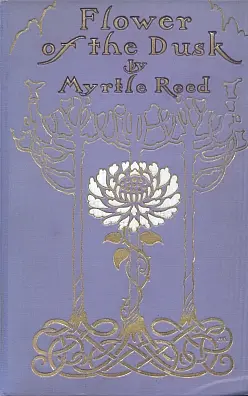
THE CLASSIC COLLECTION · 1908
"Flower of the Dusk" by Myrtle Reed is a novel written in the early 20th century. This work introduces readers to characters filled with yearning and creativity, particularly the blind Ambrose North, who is a musician, and his loving daughter, Barbara, who is dealing with her own physical challenges. The narrative hints at themes of love, loss, and the enduring bonds of family as it explores the delicate balance between hope and despair. At the start of the story, we encounter Ambrose North standing on a cliff, reflecting on the beauty of a spring sunset which evokes memories of joy and sorrow. As he returns home, he is greeted by his daughter Barbara, who is caring and devoted, and their aunt Miriam, who has taken on the role of caretaker since the passing of Ambrose's wife, Constance. They lead a life filled with quiet struggles and fleeting moments of happiness, masking the truth of their circumstances as they attempt to maintain a semblance of normality despite their poverty. The opening chapter establishes an emotional tone, revealing the warmth of their relationship and the complexities of their past, particularly surrounding the lingering effects of Constance's tragic death.
Introduction adapted from the source catalogue; source summaries may be automatically generated.
Free to read · English · 74,434 words · No account needed
MAKE TIME FOR A GOOD BOOK
On by default. Untick to stop anonymous reading totals. Each page counts after 10 seconds in view. How this works.
Anonymous counting is on unless you have switched it off.
"I have not forgotten," said Miriam, in a choking whisper. A surge of passionate hate swept over her even now, against the dead woman whose pretty face had swerved Ambrose North from his old allegiance.
"And I shall not forget," he answered, kindly. "I am on the westward slope, Miriam, and have been, for a long time. But a few more years--or months--or days--as God wills, and I shall join her again, past the sunset, where she waits for me.
"I have made things right for you and Barbara. Roger Austin has my will, dividing everything I have between you. I should like your share to go to Barbara, eventually, if you can see your way clear to do it."
"Don't!" cried Miriam, sharply. The strain was insupportable.
"I do not wish to pain you, Sister," answered the old man, with gentle dignity, "but sometimes it is necessary that these things be said. I shall not speak of it again. Will you give me back the check, please, and show me where to date it? I shall date it to-morrow--I cannot bear to write down this day."
When Barbara came down, her father was sitting at the old square piano, quite alone, improvising music that was both beautiful and sad. He seldom touched the instrument, but, when he did, wayfarers in the street paused to listen.
"Are you making a song, Father?" she asked, softly, when the last deep
chord died away.
[Sidenote: Too Sad for Songs]
"No," he sighed; "I cannot make songs to-day."
"There is always a song, Daddy," she reminded him. "You told me so
yourself."
"Yes, I know, but not to-day. Do you know what to-day is, my dear?"
"The seventh--the seventh of June."
"Twenty-one years ago to-day," he said, with an effort, "your dear mother took her own life." The last words were almost inaudible.
Barbara went to him and put her soft arms around his neck. "Daddy!" she whispered, with infinite sympathy, "Daddy!"
He patted her arm gently, unable to speak. She said no more, but the voice and the touch brought healing to his pain. Bone of her bone and flesh of her flesh, the daughter of the dead Constance was thrilled unspeakably with a tenderness that the other had never given him.
"Sit down, my dear," said Ambrose North, slowly releasing her. "I want to talk to you--of her. Did I hear Aunt Miriam go out?"
"Yes, just a few minutes ago."
"You are almost twenty-two, are you not, Barbara?"
"Yes, Daddy."
"Then you are a woman grown. Your dear mother was twenty-two, when--" He
choked on the words.
"When she died," whispered Barbara, her eyes luminous with tears.
Your reading position is saved on this browser. Take it to another device with a library code. Reading pages adapt to text, rather than matching a printed edition.
Myrtle Reed
Myrtle Reed
Myrtle Reed
Myrtle Reed
BEHIND THE BOOK
This eBook is for the use of anyone anywhere in the United States and most other parts of the world at no cost and with almost no restrictions whatsoever. You may copy it, give it away or re-use it under the terms of the Project Gutenberg License included with this eBook or online at www.gutenberg.org. If you are not located in the United States, you will have to check the laws of the country where you are located before using this eBook. Read the source licence.
The original source file, including credits and licence, is retained by this library. Request an original-format copy at no charge. Please include the book title and Project Gutenberg identifier #18057.
KEEP YOUR CURIOSITY GOING
Coulson Kernahan

Maurice Baring
Frances Wright
Cécile Tormay

Frederic Jesup Stimson

W. H. P. (William Henry Pope) Jarvis