
The Book of Clever Beasts: Studies in Unnatural History
Myrtle Reed
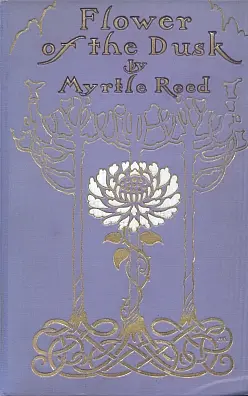
THE CLASSIC COLLECTION · 1908
"Flower of the Dusk" by Myrtle Reed is a novel written in the early 20th century. This work introduces readers to characters filled with yearning and creativity, particularly the blind Ambrose North, who is a musician, and his loving daughter, Barbara, who is dealing with her own physical challenges. The narrative hints at themes of love, loss, and the enduring bonds of family as it explores the delicate balance between hope and despair. At the start of the story, we encounter Ambrose North standing on a cliff, reflecting on the beauty of a spring sunset which evokes memories of joy and sorrow. As he returns home, he is greeted by his daughter Barbara, who is caring and devoted, and their aunt Miriam, who has taken on the role of caretaker since the passing of Ambrose's wife, Constance. They lead a life filled with quiet struggles and fleeting moments of happiness, masking the truth of their circumstances as they attempt to maintain a semblance of normality despite their poverty. The opening chapter establishes an emotional tone, revealing the warmth of their relationship and the complexities of their past, particularly surrounding the lingering effects of Constance's tragic death.
Introduction adapted from the source catalogue; source summaries may be automatically generated.
Free to read · English · 74,434 words · No account needed
MAKE TIME FOR A GOOD BOOK
On by default. Untick to stop anonymous reading totals. Each page counts after 10 seconds in view. How this works.
Anonymous counting is on unless you have switched it off.
The road was clear until he came to a fallen tree, over which he stepped easily. The new softness of the soil had, for him, its own deep meaning of resurrection. He felt it in the swelling buds of the branches that sometimes swayed before him, and found it in the scent of the cedar as he crushed a bit of it in his hand.
Easily, yet carefully, he went around the base of the hill to the street, where his house was the first upon the right-hand side. The gate creaked on its hinges and he went quickly up the walk, passing the grey tangle of last Summer's garden, where the marigolds had died and the larkspur fallen asleep.
Within the house, two women awaited him, one with anxious eagerness, the other with tenderly watchful love. The older one, who had long been listening, opened the door before he knocked, but it was Barbara who spoke to him first.
"You're late, Father, dear."
"Am I, Barbara? Tell me, was there a sunset to-night?"
"Yes, a glorious one."
[Sidenote: Seeing with the Soul]
"I thought so, and that accounts for my being late. I saw a beautiful sunset--I saw it with my soul."
"Give me your coat, Ambrose." The older woman stood at his side, longing to do him some small service.
"Thank you, Miriam; you are always kind."
The tiny living-room was filled with relics of past luxury. Fine pictures, in tarnished frames, hung on the dingy walls, and worn rugs covered the floor. The furniture was old mahogany, beautifully cared for, but decrepit, nevertheless, and the ancient square piano, outwardly, at least, showed every year of its age.
Still, the room had "atmosphere," of the indefinable quality that some people impart to a dwelling-place. Entering, one felt refinement, daintiness, and the ability to live above mere externals. Barbara had, very strongly, the house-love which belongs to some rare women. And who shall say that inanimate things do not answer to our love of them, and diffuse, between our four walls, a certain gracious spirit of kindliness and welcome?
In the dining-room, where the table was set for supper, there were marked contrasts. A coarse cloth covered the table, but at the head of it was overlaid a remnant of heavy table-damask, the worn places carefully hidden. The china at this place was thin and fine, the silver was solid, and the cup from which Ambrose North drank was Satsuma.
Your reading position is saved on this browser. Take it to another device with a library code. Reading pages adapt to text, rather than matching a printed edition.
Myrtle Reed
Myrtle Reed
Myrtle Reed
Myrtle Reed
BEHIND THE BOOK
This eBook is for the use of anyone anywhere in the United States and most other parts of the world at no cost and with almost no restrictions whatsoever. You may copy it, give it away or re-use it under the terms of the Project Gutenberg License included with this eBook or online at www.gutenberg.org. If you are not located in the United States, you will have to check the laws of the country where you are located before using this eBook. Read the source licence.
The original source file, including credits and licence, is retained by this library. Request an original-format copy at no charge. Please include the book title and Project Gutenberg identifier #18057.
KEEP YOUR CURIOSITY GOING
Coulson Kernahan

Maurice Baring
Frances Wright
Cécile Tormay

Frederic Jesup Stimson

W. H. P. (William Henry Pope) Jarvis