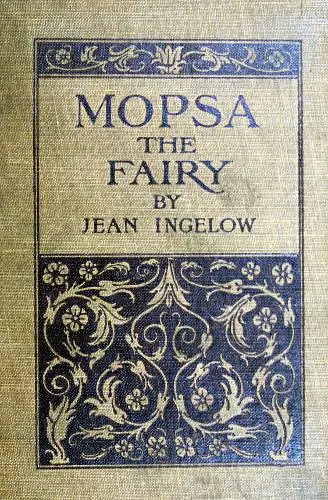
Mopsa the Fairy
Jean Ingelow
THE CLASSIC COLLECTION · 1875
"Fated to Be Free: A Novel" by Jean Ingelow is a fiction work crafted during the late 19th century. This narrative explores themes of family, loss, and the complexities of human relationships through the lens of the elderly Madam Melcombe and her descendants, who grapple with their legacy and connections to one another amidst their histories of estrangement and tragedy. The beginning of "Fated to Be Free" establishes a vividly described setting in a decaying manor and its surrounding garden, which serves as both a tangible and metaphorical representation of Madam Melcombe's life and the sorrows she has endured. The narrative revolves around her, an elderly matriarch who watches over a neglected garden filled with lilies—symbolic of her lost loved ones. As she reminisces about her past and her estranged sons, the story introduces Peter, her great-grandson, who is curious and innocent. His innocent exploration leads to accidental disturbances in the garden, prompting a reflection on the relationships, family dynamics, and secrets that haunt the characters, hinting at deeper themes of forgiveness and reconciliation that may unfold as the narrative progresses.
Introduction adapted from the source catalogue; source summaries may be automatically generated.
Free to read · English · 156,683 words · No account needed
MAKE TIME FOR A GOOD BOOK
On by default. Untick to stop anonymous reading totals. Each page counts after 10 seconds in view. How this works.
Anonymous counting is on unless you have switched it off.
"What was your advice, dear?" asked Miss Fairbairn sweetly, her golden head within a yard of John's as she stooped forward. "I wonder you should have ventured to give advice to such a man as Mr. Mortimer. People always seem to think that in any matter of consequence they are lucky if they can get advice from him."
John drew a long breath, and experienced a strong sense of compunction; but Miss Christie was merely relieved, and she began to talk with deep interest about the new governess and the new housekeeper.
Miss Fairbairn brought John down again as soon as she could, and took the opportunity to engage his attention on the stairs, by asking him a question on some political subject that really interested him; and he, like a straightforward man, falling into the trap, began to give her his views respecting it.
But as he opened the drawing-room door for her, his three children, who all this time had been in the garden, came running in at the window, and before he and Miss Fairbairn were seated, his two little boys, treading on Mrs. Walker's crape, were thrusting some large handfuls of flowers almost into her face, while Anastasia emptied a lapful on to her knees. Emily accepted them graciously.
"And so," little Hugh exclaimed, "as father said we were not to have the gardens, we thought we had better gather all the flowers, because they are our own, you know," he proceeded; "for we bought most of the bulbs with our own money; and they're all for you."
Hyacinths, narcissus, wallflowers, polyanthus, they continued to be held
up for her inspection.
"And you'll let us put them in water ourselves, won't you?" said
Bertram.
"Yes, she will, Bertie," cried Hugh.
"Don't tread on Mrs. Walker's dress," John began, and the sprites, as if in ready obedience, were off in an instant; but in reality they were gone to find vases for the flowers, Emily looking up with all composure, though a good deal of scrambling and arguing were heard through the open door.
"We found these in the pantry," exclaimed the two little boys, returning, each with a dish in his hand. "Nancy wanted to get some water, but we wouldn't let her."
"Come here," exclaimed John with gravity; "come here, and shut the door. Emily, I brought these imps on purpose to apologize for their high misdemeanours."
Thereupon the two little boys blushed and hung their heads. It was nothing to have taken the garden, but it daunted them to have to acknowledge the fault. Before they had said a word, however, a shrill little voice cried out behind them--
Your reading position is saved on this browser. Take it to another device with a library code. Reading pages adapt to text, rather than matching a printed edition.
Jean Ingelow
BEHIND THE BOOK
This eBook is for the use of anyone anywhere in the United States and most other parts of the world at no cost and with almost no restrictions whatsoever. You may copy it, give it away or re-use it under the terms of the Project Gutenberg License included with this eBook or online at www.gutenberg.org. If you are not located in the United States, you will have to check the laws of the country where you are located before using this eBook. Read the source licence.
The original source file, including credits and licence, is retained by this library. Request an original-format copy at no charge. Please include the book title and Project Gutenberg identifier #12303.
KEEP YOUR CURIOSITY GOING
Coulson Kernahan

Maurice Baring
Frances Wright
Cécile Tormay

Frederic Jesup Stimson

W. H. P. (William Henry Pope) Jarvis