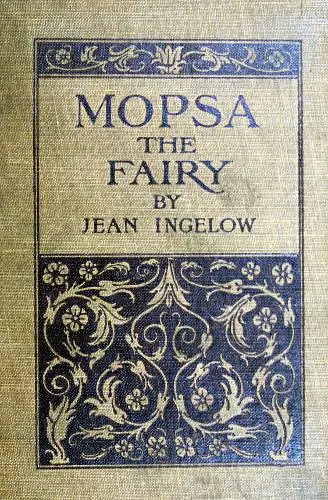
Mopsa the Fairy
Jean Ingelow
THE CLASSIC COLLECTION · 1875
"Fated to Be Free: A Novel" by Jean Ingelow is a fiction work crafted during the late 19th century. This narrative explores themes of family, loss, and the complexities of human relationships through the lens of the elderly Madam Melcombe and her descendants, who grapple with their legacy and connections to one another amidst their histories of estrangement and tragedy. The beginning of "Fated to Be Free" establishes a vividly described setting in a decaying manor and its surrounding garden, which serves as both a tangible and metaphorical representation of Madam Melcombe's life and the sorrows she has endured. The narrative revolves around her, an elderly matriarch who watches over a neglected garden filled with lilies—symbolic of her lost loved ones. As she reminisces about her past and her estranged sons, the story introduces Peter, her great-grandson, who is curious and innocent. His innocent exploration leads to accidental disturbances in the garden, prompting a reflection on the relationships, family dynamics, and secrets that haunt the characters, hinting at deeper themes of forgiveness and reconciliation that may unfold as the narrative progresses.
Introduction adapted from the source catalogue; source summaries may be automatically generated.
Free to read · English · 156,683 words · No account needed
MAKE TIME FOR A GOOD BOOK
On by default. Untick to stop anonymous reading totals. Each page counts after 10 seconds in view. How this works.
Anonymous counting is on unless you have switched it off.
"You cannot? That's because you don't consider, then, what we should feel if somebody now were to write a grand poem about our fathers, mothers, aunts, uncles, and dear friends deceased, setting forth how he had seen them all in the nether regions; how he had received their confidences, and how penitent most of them were. Persecuted, indeed! and misunderstood! I consider that his was the deadliest revenge any man ever took upon his enemies."
Miss Fairbairn's brow, on hearing this, contracted with pain; for John laughed again, and turning slightly towards Emily as he stood leaning against the window-frame, took the opportunity to get away from the subject of Italian literature, and ask her some question about her knitting.
"It must be something to give away, I am sure. You are always giving."
"But you know, John," she answered, as if excusing herself, "we are not at all sure that we shall have any possessions, anything of our own, in the future life--anything, consequently, to give away. Perhaps it will all belong to all. So let us have enough of giving while we can, and enjoy the best part of possession."
"Dear Emily," said Miss Fairbairn kindly, "you should not indulge in these unauthorised fancies."
"But it so chances that this is not for a poor person," observed Emily, "but for dear Aunt Christie."
"Ah, she was always very well while she lived with me," said John; "but I hear a very different account of her now."
"Yes; she has rheumatism in her foot; so that she is obliged to sit up-stairs. John, you should go and see her."
"I will take Mr. Mortimer to her," said Justina, rising serenely. This she thought would break off the conversation, in which she had no part.
So John went up to Miss Christie's little sitting-room, and there she was, bolt upright, with her lame foot on a cushion. By this visit he gave unmixed pleasure to the old lady, and afforded opportunity to the younger one for some pleasant, reasonable speeches, and for a little effective waiting on the invalid, as well as for some covert compliments.
"Ay, John Mortimer," quoth Miss Christie, with an audacious twinkle in her eyes, "I'm no that clear that I don't deserve all the pain I've got for my sins against ye."
"Against me!" exclaimed John, amazed.
"Some very bad advice I gave ye, John," she continued, while Miss Fairbairn, a little surprised, looked on.
"Make your mind easy," John answered with mock gravity, for he knew well enough what she meant. "I never follow bad advice. I promise not to follow yours."
Your reading position is saved on this browser. Take it to another device with a library code. Reading pages adapt to text, rather than matching a printed edition.
Jean Ingelow
BEHIND THE BOOK
This eBook is for the use of anyone anywhere in the United States and most other parts of the world at no cost and with almost no restrictions whatsoever. You may copy it, give it away or re-use it under the terms of the Project Gutenberg License included with this eBook or online at www.gutenberg.org. If you are not located in the United States, you will have to check the laws of the country where you are located before using this eBook. Read the source licence.
The original source file, including credits and licence, is retained by this library. Request an original-format copy at no charge. Please include the book title and Project Gutenberg identifier #12303.
KEEP YOUR CURIOSITY GOING
Coulson Kernahan

Maurice Baring
Frances Wright
Cécile Tormay

Frederic Jesup Stimson

W. H. P. (William Henry Pope) Jarvis