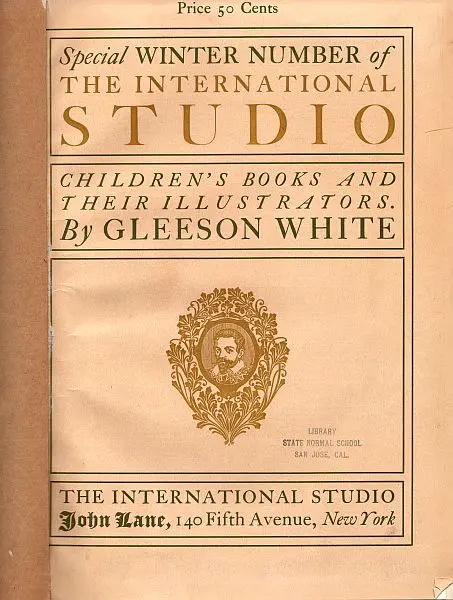
Children’s Books and Their Illustrators
Gleeson White
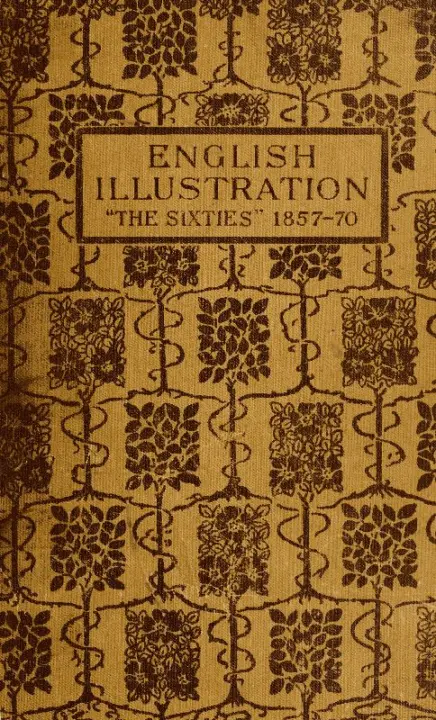
THE CLASSIC COLLECTION · 1903
"English Illustration 'The Sixties': 1855-70" by Gleeson White is a collection of critical essays and analyses written in the late 19th century. The work primarily focuses on the art and significance of various illustrators and illustrated periodicals from the 1860s, assessing their contributions to English literature and visual culture during this time. White reflects on how societal and aesthetic changes in this period influenced public perception of illustration and the artist's role. The opening of the volume sets the stage for a deep exploration of mid-Victorian illustration. Gleeson White expresses the need to reevaluate and appreciate the artists of the 1860s, who had once been overshadowed by painters but are now recognized for their merit in visual storytelling. He discusses the evolution of public interest in illustrations, linking it to a broader cultural shift that has made past styles and artists more appealing. This introduction suggests a rich examination of the art of the period and how it intermingled with societal trends, setting the groundwork for comprehensive discussions in subsequent chapters.
Introduction adapted from the source catalogue; source summaries may be automatically generated.
Free to read · English · 83,355 words · No account needed
MAKE TIME FOR A GOOD BOOK
On by default. Untick to stop anonymous reading totals. Each page counts after 10 seconds in view. How this works.
Anonymous counting is on unless you have switched it off.
In 1869 Wilfrid Lawson illustrates Whyte-Melville's M. or N., and has several other full-page drawings in his best vein (pp. 8, 48, 89, 128, 152, 232, 307, 467, 540); J. Mahoney is first met here with Officers and Gentlemen (p. 284), and J. D. Watson supplies the frontispiece to vol. xv., Bringing Home the Hay, and also that to vol. xvi., Second Blossom. In this latter Wilfrid Lawson has illustrations to M. or N. (pp. 156, 193, 236, 386); T. Morten, a powerful drawing, Winter's Night (p. 550); G. B. Goddard, The Sportman's Resolve (p. 528). The other artists, including some new contributors, are M. A. Boyd, Horace Stanton, E. J. Ellis, T. Sweeting, James Godwin, F. Roberts, A. W. Cooper, L. Huard, and B. Ridley. The Christmas number for 1869 contains a good Charles Keene, The Coat with the Fur Lining (pp. 1, 6); Gilbert's Secret of Calverly Court (p. 4); M. E. Edwards's How the Choirs were Carolling (p. 84); and J. Mahoney's Mr. Daubarn (p. 49), with others of no particular importance.
The numbers for 1870 contain, inter alia, in the first half-year, a good J. D. Watson, Going down the Road (Frontispiece); A Leaf from a Sketch-Book, by Linley Sambourne (printed, like a series this year, on special sheets of thick white paper, as four-page supplements), which contained lighter work by artists of the hour, but none worth special mention.
J. Mahoney's Going to the Drawing-room (p. 321), and Sir Stephen's Question (p. 112), and Spring-time, drawn and engraved by W. L. Thomas (p. 375), are among the most interesting of the ordinary full pages. In the second half of the year, volume 18, there is a full page, Not Mine (p. 501), by Arthur Hughes, which links 1855 to 1870; A. W. Small, After the Season (p. 338); the very unimportant drawing by M. J. Lawless, An Episode of the Italian War (p. 97), has interest as a relic; J. Mahoney contributes two to The Old House by the River (pp. 67, 172), and many others by H. Paterson, Wilfrid Lawson, A. Claxton. This year a Holiday number appeared, with a not very good J. D. Watson, A Landscape Painter (p. 47), and two Francis Walkers, A Summer Holiday and Rosalind and Celia, and other seasonable designs by various hands. The Christmas number has a coloured frontispiece and other designs by H. D. Marks; J. D. Watson illustrates What might have happened (pp. 8, 17, 19); and Charles Keene, Gipsy Moll (pp. 39, 45); Francis Walker has The Star Rider (p. 59) and A Tale (p. 63); F. A. Fraser, typical of the next decade, and one might say, without undue severity, of the decadence also, and F. Gilbert, that facile understudy of Sir John, show examples of work differing as far as it well could; but 1870 is the last stage we need note here in the career of a magazine which did notable service to the cause of illustration, and brought a good many men into notice who have taken prominent part in the history of 'black and white.' Without placing it on a level with Once a Week, it is an interesting collection of representative work, with some really first-rate drawing.
Your reading position is saved on this browser. Take it to another device with a library code. Reading pages adapt to text, rather than matching a printed edition.
Gleeson White
BEHIND THE BOOK
This eBook is for the use of anyone anywhere in the United States and most other parts of the world at no cost and with almost no restrictions whatsoever. You may copy it, give it away or re-use it under the terms of the Project Gutenberg License included with this eBook or online at www.gutenberg.org. If you are not located in the United States, you will have to check the laws of the country where you are located before using this eBook. Read the source licence.
The original source file, including credits and licence, is retained by this library. Request an original-format copy at no charge. Please include the book title and Project Gutenberg identifier #45426.
KEEP YOUR CURIOSITY GOING

David Patterson (Spirit) Hatch

David Patterson (Spirit) Hatch

David Patterson (Spirit) Hatch
Cécile Tormay

Moritz Busch
John L. Ransom