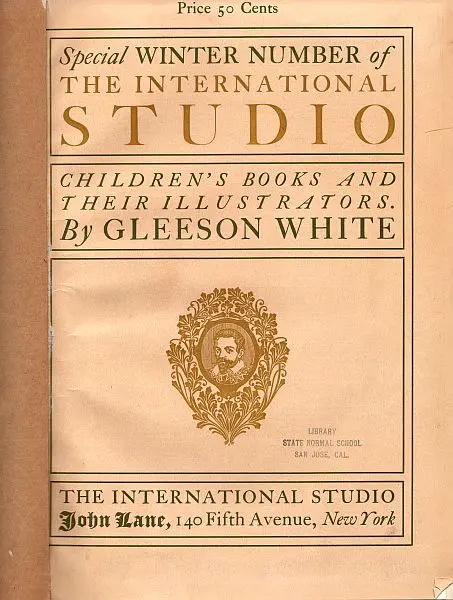
Children’s Books and Their Illustrators
Gleeson White
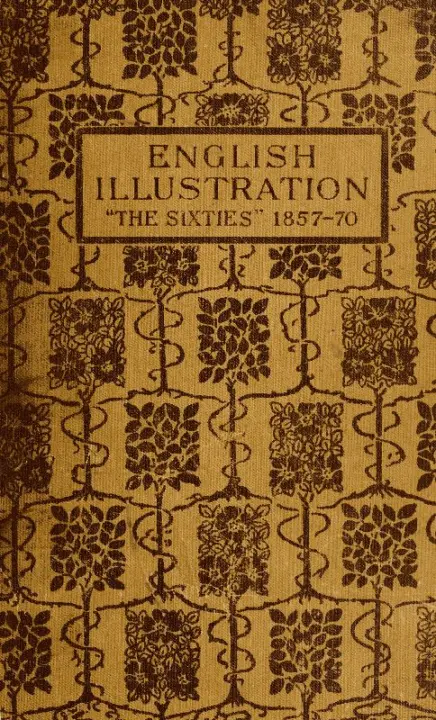
THE CLASSIC COLLECTION · 1903
"English Illustration 'The Sixties': 1855-70" by Gleeson White is a collection of critical essays and analyses written in the late 19th century. The work primarily focuses on the art and significance of various illustrators and illustrated periodicals from the 1860s, assessing their contributions to English literature and visual culture during this time. White reflects on how societal and aesthetic changes in this period influenced public perception of illustration and the artist's role. The opening of the volume sets the stage for a deep exploration of mid-Victorian illustration. Gleeson White expresses the need to reevaluate and appreciate the artists of the 1860s, who had once been overshadowed by painters but are now recognized for their merit in visual storytelling. He discusses the evolution of public interest in illustrations, linking it to a broader cultural shift that has made past styles and artists more appealing. This introduction suggests a rich examination of the art of the period and how it intermingled with societal trends, setting the groundwork for comprehensive discussions in subsequent chapters.
Introduction adapted from the source catalogue; source summaries may be automatically generated.
Free to read · English · 83,355 words · No account needed
MAKE TIME FOR A GOOD BOOK
On by default. Untick to stop anonymous reading totals. Each page counts after 10 seconds in view. How this works.
Anonymous counting is on unless you have switched it off.
The more you study the position of illustrators during the last forty years, the more you are inclined to believe that they owe their very existence, as a class, to the popularity of magazines and periodicals. From the time Once a Week started, to the present to-day, the bulk of illustrations of any merit have been issued in serial publications. It is easy to find a reason for this. The heavy cost of the drawings, and, until recent times, the almost equally heavy cost of engraving them, would suffice to prohibit their lavish use in ordinary books. For it must not be forgotten that every new book is, to a great extent, a speculation; whereas the circulation of a periodical, once it is assured, varies but slightly. A book may be prepared for twenty thousand buyers, and not attract one thousand; but a periodical that sold twenty thousand of its current number is fairly certain to sell eighteen thousand to nineteen thousand of the next, and more probably will show a slight increase. Again, although one appears to get as many costly illustrations in a magazine to-day as in a volume costing ten times the price, the comparative sales more than readjust the balance. For a quarter of a million, although a record circulation of a periodical, is by no means a unique one; whereas the most popular illustrated book ever issued--and Trilby could be easily proved to merit that title--is probably not far beyond its hundred thousand. This very book was published in Harper's Magazine, and so obtained an enormous advertisement in one of the most widely circulated shilling monthlies. One doubts if the most popular illustrated volumes published at one or two guineas would show an average sale of two thousand copies at the original price. Therefore, to regard the periodical, be it quarterly, monthly, or weekly--and quite soon the daily paper may be added to the list--as the legitimate field for the illustrator, is merely to accept the facts of the case. True, that here and there carefully prepared volumes, with all the added luxury of fine paper and fine printing, stand above the magazine of their time in this mechanical production. But things are rapidly changing. One may pick up some ephemeral paper to-day, to find it has process-blocks of better quality, and is better printed, than 'the art book of the season,' be it what it may. The illustrator is the really popular artist of the period--the natural product of the newer conditions. For one painter who makes a living entirely by pictures, there are dozens who subsist upon illustrating; while, against one picture of any reputable sort--framed and sold--it would be impossible to estimate the number of drawings made specially for publication. Nor even to-day--when either the demand for illustration is ahead of the supply, or else many editors artfully prefer the second best, not forgetting all the feeble stuff of the cheap weeklies--would it be safe to declare that the artistic level is below that of the popular galleries. Certainly, even in the thirties, there were, in proportion, as many masterpieces done for the engraver as those which were carried out in oil or water-colour. Waiving the question of the damage wrought by engraver, or process-reproducer, the artist--if he be a great man--is no less worthy of respect as an illustrator in a cheap weekly, than when he chooses to devote himself solely to easel pictures. It is not by way of depreciating paintings that one would exalt illustration, but merely to recognise the obvious truth that the best work of an artist who understands his medium can never fail to be of surpassing interest, whether he uses fresco, tempera, oil, or water-colour; whether he works with brush or needle, pen or pencil. Nobody doubts that most of these products are entitled, other qualities being present, to be considered works of art; but, until lately, people have not shown the same respect for an illustration. Even when they admired the work, it was a common form of appreciation to declare it was 'as good as an etching,' or 'a composition worthy of being painted.' Many writers have endeavoured to restore black-and-white art to its true dignity, and the labours of Sir F. Seymour Haden, who awakened a new popular recognition of the claims of the etcher, and of Mr. Joseph Pennell, who fought with sustained vigour for the dignity and importance of illustration, have helped to inspire outsiders with a new respect. For it is only outsiders who ever thought of making absurd distinctions between high art and minor arts. If the thing, be it what it may, is good--as good as it could be--at no age did it fail to win the regard of artists; even if it had to wait a few generations to charm the purchaser, or awaken the cupidity of the connoisseur. It is a healthy sign to find that people to-day are interesting themselves in the books of the sixties; it should make them more eager for original contemporary work, and foster a dislike to the inevitable photograph from nature reproduced by half-tone, which one feared would have satisfied their love for black-and-white to the exclusion of all else.
Your reading position is saved on this browser. Take it to another device with a library code. Reading pages adapt to text, rather than matching a printed edition.
Gleeson White
BEHIND THE BOOK
This eBook is for the use of anyone anywhere in the United States and most other parts of the world at no cost and with almost no restrictions whatsoever. You may copy it, give it away or re-use it under the terms of the Project Gutenberg License included with this eBook or online at www.gutenberg.org. If you are not located in the United States, you will have to check the laws of the country where you are located before using this eBook. Read the source licence.
The original source file, including credits and licence, is retained by this library. Request an original-format copy at no charge. Please include the book title and Project Gutenberg identifier #45426.
KEEP YOUR CURIOSITY GOING

David Patterson (Spirit) Hatch

David Patterson (Spirit) Hatch

David Patterson (Spirit) Hatch
Cécile Tormay

Moritz Busch
John L. Ransom