THE CLASSIC COLLECTION✦An outlaw’s diary: the CommuneCLASSIC FREE BOOKS
An outlaw’s diary: the Commune
Cécile Tormay
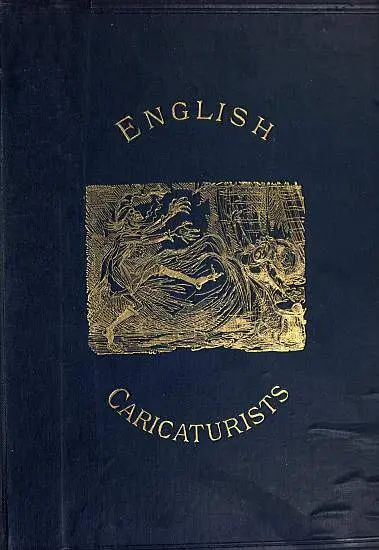
THE CLASSIC COLLECTION · 1886
"English Caricaturists and Graphic Humourists of the Nineteenth Century" by Graham Everitt is a historical account written in the late 19th century. The work explores the evolution and significance of English caricature and graphic satire from the time of Napoleon until the death of noted cartoonist John Leech in 1864. It provides a detailed examination of how caricaturists interpreted and illustrated the social and political climate of their times, with prominent figures like Gillray, Rowlandson, and Cruikshank featured prominently. The opening of the book introduces the subject of caricature, defining it as an exaggerated portrayal that conveys popular opinion and sentiments of the era. Everitt discusses the shift in style and spirit of English caricatures, noting how earlier works were characterized by coarseness typical of the last century, while later caricaturists like John Doyle and his successors refined and transformed the art into a more sophisticated form. He asserts the relevance of these artists in understanding the political narratives of their time, particularly regarding figures like Napoleon and the socio-political changes happening throughout the 19th century.
Introduction adapted from the source catalogue; source summaries may be automatically generated.
Free to read · English · 156,632 words · No account needed
MAKE TIME FOR A GOOD BOOK
On by default. Untick to stop anonymous reading totals. Each page counts after 10 seconds in view. How this works.
Anonymous counting is on unless you have switched it off.
Charles Lever's "Roland Cashel." 1849-50.
John Smith's "Sketches of Cantabs," two plates. 1850.
Defoe's "Robinson Crusoe," full-page cuts. 1850.
"The Illustrated Byron," two hundred woodcuts after Kenny Meadows, Birket Foster, Phiz, and Janet. Circa 1850.
"Ghost Stories and Tales of Mystery," etchings. Dublin, 1851.
"The Daltons." (Charles Lever.) 1850-52.
Francis Edward Smedley's "Lewis Arundel." 1852.
Charles Dickens's "Bleak House," thirty-nine plates. 1852-53.
Horace Mayhew's "Letters Left at the Pastrycook's: being the Correspondence of Kitty Clover," cuts. 1853.
W. Harrison Ainsworth's "Crichton."
"Christmas Day, and How it was Spent by four Persons in the House of Fograss, Fograss, Mowton, and Snorton, Bankers," by C. Le Ros. Woodcuts. 1854.
Charles Lever's "Dodd Family Abroad." 1854.
Francis E. Smedley's "Harry Coverdale's Courtship." 1854.
Charles Lever's "Martins of Cro' Martin." 1856.
"Home Pictures," seven excellent plates. Darton & Co. 1856.
Charles Dickens's "Little Dorrit." 1855-57.
W. Harrison Ainsworth's "Spendthrift," 1857; "Mervyn
Clitheroe," 1857-58.
Charles Lever's "Davenport Dunn." 1859.
Mrs. Stowe's "The Minister's Wooing." 1859.
Charles Dickens's "Tale of Two Cities," sixteen etchings; the last work he executed for that author.
W. Harrison Ainsworth's "Ovingdean Grange; a Tale of the South Downs."
1860.
"Twigs for Nests; or, Notes on Nursery Nurture," illustrations in graphotype by H. K. Browne and others, 1860.
Charles Lever's "One of Them," 1861; "Barrington," 1862-63.
"Tom Moody's Tales." (Mark Lemon.) 1864.
"Mr. Facey Romford's Hounds" (Surtees), [with John Leech]. 1864.
Charles Lever's "Luttrell of Arran." 1865.
"Ballads and Songs of Brittany," by Tom Taylor, translated from the "Barsaz-Breiz," illustrations by Tenniel, Millais, H. K. Browne, and others. 1865.
Anthony Trollope's "Can You Forgive Her?" (forty plates by Phiz and
Marcus Stone.) 1866.
"Dame Perkins and her Grey Mare," by J. L. Meadows. 1866.
And the following.
"The Illustrated Musical Annual" [with Kenny Meadows and Crowquill].
"The Works of Shakespeare," revised from the original text by Samuel Phelps. 2 vols. Numerous coloured plates.
"Wits and Beaux of Society," by Grace and Philip Wharton (Mrs. K. and J. C. Thomson); plates by Brown and Godwin.
"Memoirs of an Umbrella," by G. G. H. Rodwell, sixty-eight engravings by Landells from designs by Phiz.
"Phiz's Sketches of the Seaside and the Country," twenty-eight large plates, tinted mountings; oblong folio.
Smollett's "Adventures of Roderick Random."
Charles Lever's "Con Creggan."
"H. B.'s Schoolboy Days."
"Illustrations of the Five Senses."
George Halse's "Adventures of Sir Guy de Guy."
G. A. Salas "Baddington Peerage" (in Illustrated Times).
The Abbotsford Edition of "The Waverley Novels," etc., etc.
See also the "Memorial Edition" of Dickens's whole works, with several hundred illustrations by George Cruikshank, H. K. Browne, and others, printed on Chinese paper.
And in the following serials.
"New Monthly Magazine"; early volumes of "Once a Week"; "Tinsley's Magazine"; "London Society"; "St. James's Magazine"; "Illustrated Gazette"; "Sporting Times"; "Judy"; etc.
"A Bazaar," 145.
A Beckett, Gilbert, 223.
Aberdeen, Lord, 303, 395.
Abinger, Lord, 252.
Aboukir, Battle of, 13.
Your reading position is saved on this browser. Take it to another device with a library code. Reading pages adapt to text, rather than matching a printed edition.
BEHIND THE BOOK
This eBook is for the use of anyone anywhere in the United States and most other parts of the world at no cost and with almost no restrictions whatsoever. You may copy it, give it away or re-use it under the terms of the Project Gutenberg License included with this eBook or online at www.gutenberg.org. If you are not located in the United States, you will have to check the laws of the country where you are located before using this eBook. Read the source licence.
The original source file, including credits and licence, is retained by this library. Request an original-format copy at no charge. Please include the book title and Project Gutenberg identifier #31195.
KEEP YOUR CURIOSITY GOING
Cécile Tormay

Moritz Busch
John L. Ransom
Frances Wright
Cécile Tormay

Mabel Potter Daggett