THE CLASSIC COLLECTION✦An outlaw’s diary: the CommuneCLASSIC FREE BOOKS
An outlaw’s diary: the Commune
Cécile Tormay
THE CLASSIC COLLECTION · 1886
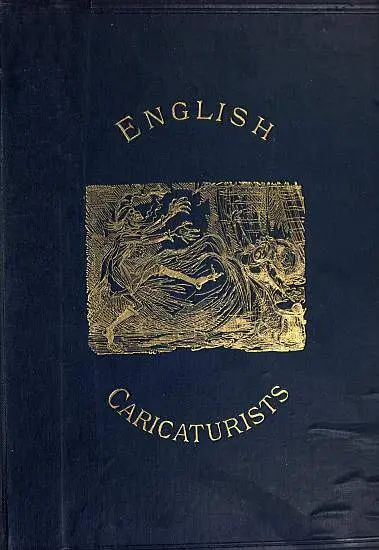
"English Caricaturists and Graphic Humourists of the Nineteenth Century" by Graham Everitt is a historical account written in the late 19th century. The work explores the evolution and significance of English caricature and graphic satire from the time of Napoleon until the death of noted cartoonist John Leech in 1864. It provides a detailed examination of how caricaturists interpreted and illustrated the social and political climate of their times, with prominent figures like Gillray, Rowlandson, and Cruikshank featured prominently. The opening of the book introduces the subject of caricature, defining it as an exaggerated portrayal that conveys popular opinion and sentiments of the era. Everitt discusses the shift in style and spirit of English caricatures, noting how earlier works were characterized by coarseness typical of the last century, while later caricaturists like John Doyle and his successors refined and transformed the art into a more sophisticated form. He asserts the relevance of these artists in understanding the political narratives of their time, particularly regarding figures like Napoleon and the socio-political changes happening throughout the 19th century.
Introduction adapted from the source catalogue; source summaries may be automatically generated.
Free to read · English · 156,632 words · No account needed
MAKE TIME FOR A GOOD BOOK
On by default. Untick to stop anonymous reading totals. Each page counts after 10 seconds in view. How this works.
Anonymous counting is on unless you have switched it off.
"Plain or Ringlets," by R. W. Surtees, coloured etchings and numerous
designs on wood.
[With George Cruikshank, "Phiz," and John Tenniel.] "Puck on Pegasus."
1861.
"Mill's Life of a Fox-Hound."
[With George Cruikshank and John Tenniel.] "The Ingoldsby Legends."
1864.
"The Follies of the Year," twenty-one coloured etchings from Punch's "Pocket Books," with descriptive letterpress by Shirley Brooks.
"Mr. Facey Romford's Hounds," by R. W. Surtees, coloured etchings and designs on wood (finished by "Phiz").
[With Doyle and others.] "The Cricket on the Hearth." By Charles
Dickens. 1845-6.
Reprint.
"Fly Leaves," lithographs.
"Sketches of Life and Character taken at the Police Court, Bow Street,"
by George Hodder.
"Ups and Downs," 1823; "Paternal Pride," 1825; "Despondency and Jealousy" (with George Cruikshank), and many others, in 1825; "Der Freyschutz Travestied," "Alfred Crowquill's Sketch-Book," "Absurdities in Prose and Verse," 1827; Goethe's "Faust," 1834; six plates of "Pickwickian Sketches," Alfred Bunn's "Vauxhall Papers," 1841; designs on wood for "Sea Pie," an omnium gatherum containing also plates after David Cox, Pyne, Stanfield, and Vickers, 1842; "Punch" (vols. ii. to iv.); plates and numerous designs on wood for "Bentley's Miscellany," many original designs to "Doctor Syntax's Tour in Search of the Picturesque," 1844; "Comic Arithmetic" (forty-seven humorous vignettes), 1844; "Woman's Love," 1846; "Wanderings of a Pen and Pencil," 1846; "A Good-natured Hint about California," 1849; "The Excitement" (2 plates), 1849; 120 designs on wood for the "Pictorial Grammar;" designs on wood for the "Pictorial Arithmetic;" "Gold," 1850; "A Bundle of Crowquills Dropped by Alfred Crowquill," 1854; "Fun," 1854; "Griffel Swillendrunken," 1856; "Aunt Mavor's Nursery Tales," 1856; "Little Pilgrim," 1856; "Little Plays for Little Actors," 1856; "Fairy Tales," 1857; "Merry Pictures by the Comic Hands of 'Phiz,'" etc. (Kent & Co.), 1857; "The Book of Ballads," by Bon Gaultier (with Doyle and Leech), 1857; "A New Story Book," 1858; "Fairy Tales," by Cuthbert Bede, 1858; "Baron Munchausen" (coloured plates), 1858; "Tyll Owlglass" (a similar book), 1859; "Honesty and Cunning," 1859; "Kindness and Cruelty," 1859; "The Red Cap," 1859; "Paul Prendergast," 1859; "Strange Surprising Adventures of the Venerable Gooros Simple," 1861; "Fairy Footsteps," 1861; Chambers' "Book of Days;" G. W. Reynolds' "Pickwick Abroad" (now scarce); "The Boys and the Giant," 1870; "The Cunning Fox," 1870; "Dick Doolittle," 1870; "Little Tiny's Picture Book," 1871; "Guide to the Watering Places" (views and comic plates); "Comic Eton Grammar" (with Leech); "Fairy Footsteps; or, Lessons from Legends" (100 designs on wood, with Kenny Meadows); Henry Cockton's "Sisters; or, England and France."
Charles Dickens's "Sunday under Three Heads," 1836.
"Posthumous Papers of the Pickwick Club," forty-three plates by Seymour
and "Phiz." 1836-37.
The following are also to be met with.
"Posthumous Papers of the Pickwick Club," with the Seymour and "Phiz" plates, the two suppressed plates of "Buss," and the extra series of thirty plates by Onwhyn. 1837.
Your reading position is saved on this browser. Take it to another device with a library code. Reading pages adapt to text, rather than matching a printed edition.
BEHIND THE BOOK
This eBook is for the use of anyone anywhere in the United States and most other parts of the world at no cost and with almost no restrictions whatsoever. You may copy it, give it away or re-use it under the terms of the Project Gutenberg License included with this eBook or online at www.gutenberg.org. If you are not located in the United States, you will have to check the laws of the country where you are located before using this eBook. Read the source licence.
The original source file, including credits and licence, is retained by this library. Request an original-format copy at no charge. Please include the book title and Project Gutenberg identifier #31195.
KEEP YOUR CURIOSITY GOING
Cécile Tormay

Moritz Busch
John L. Ransom
Frances Wright
Cécile Tormay

Mabel Potter Daggett