THE CLASSIC COLLECTION✦An outlaw’s diary: the CommuneCLASSIC FREE BOOKS
An outlaw’s diary: the Commune
Cécile Tormay
THE CLASSIC COLLECTION · 1886
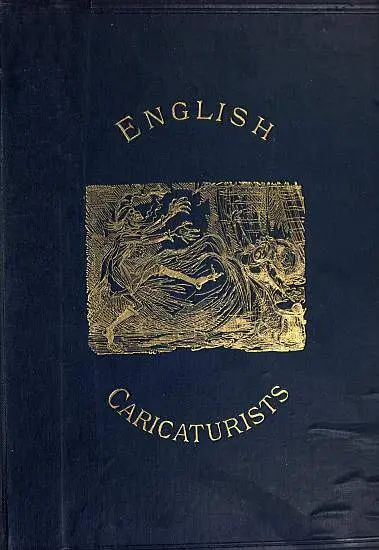
"English Caricaturists and Graphic Humourists of the Nineteenth Century" by Graham Everitt is a historical account written in the late 19th century. The work explores the evolution and significance of English caricature and graphic satire from the time of Napoleon until the death of noted cartoonist John Leech in 1864. It provides a detailed examination of how caricaturists interpreted and illustrated the social and political climate of their times, with prominent figures like Gillray, Rowlandson, and Cruikshank featured prominently. The opening of the book introduces the subject of caricature, defining it as an exaggerated portrayal that conveys popular opinion and sentiments of the era. Everitt discusses the shift in style and spirit of English caricatures, noting how earlier works were characterized by coarseness typical of the last century, while later caricaturists like John Doyle and his successors refined and transformed the art into a more sophisticated form. He asserts the relevance of these artists in understanding the political narratives of their time, particularly regarding figures like Napoleon and the socio-political changes happening throughout the 19th century.
Introduction adapted from the source catalogue; source summaries may be automatically generated.
Free to read · English · 156,632 words · No account needed
MAKE TIME FOR A GOOD BOOK
On by default. Untick to stop anonymous reading totals. Each page counts after 10 seconds in view. How this works.
Anonymous counting is on unless you have switched it off.
We have seen that at the time John Leech commenced work as a comic artist, the art of caricature was practically dead; it was not therefore at all surprising, under the circumstances, that he should reverse, as it were, the order of things: commence as an illustrator of books, and finish his career as a graphic humourist. Although his first contribution to Punch commences in the fourth number, his cartoons so called (from which, in accordance with the plan of this work we now proceed to select a few examples) seem to us to call for little mention before the year 1843.
His Royal Highness Prince Albert, who held high rank in the British army by virtue of his exalted position, was most unjustly suspected in those early Punch days of a desire to interfere unduly with its administration. He took, however, much interest in the dress and comfort of the British soldier; and those who remember what military costume was in 1843, will admit that there was room for improvement. Changes were made indeed, but these changes can hardly be said to have been made in the direction of either comfort, convenience, or good taste. The "Albert hat" (as it was called), one of the ugliest, most ungainly, and preposterous of military shakoes that was ever invented, made its appearance about this time, and the idea was credited (rightly or wrongly) to the amiable prince. Constant reference to this preposterous invention is made in the pages of Punch, and the prince's questionable taste in the matter of military costume is specially satirized in Leech's amusing cartoon entitled Prince Albert's Studio.
Mr. O'Connell, at a great Repeal meeting held in September, 1843, had expressed a hope that he should be able to give his dupes "as a new year's gift a parliament on College Green." No one knew better than himself the absurdity of such a promise. Had he named the first of April for the presentation instead of the first of January, it would have been more appropriate, and at least equally veracious. A great Repeal meeting was intended to be held in October at Clontarf, three miles from Dublin, at which certain supporters of the movement were to have attended on horseback and paraded in the character of the "Repeal Cavalry." This meeting the Irish executive prohibited by proclamation, and on the 14th, O'Connell and other prominent leaders were arrested, and held to bail on a charge of conspiracy. On the 24th of May, 1844, the Irish judges sentenced him to twelve months' imprisonment, and a fine of L2,000. The cartoon of The Probable Effects of Good Living and no Exercise refers to this result; but Punch on this occasion was wrong. O'Connell proved "too many" for the Irish lawyers. He appealed by writ of error to the Lords, and on the 4th of September the judgment was reversed.[139] Sir James Graham, the Home Secretary, and the government to which he belonged, had encountered much odium in consequence of the opening of certain letters which had passed through the post office. The result was the appointment of a Committee of Secrecy by both Houses to inquire into the official practice, and it would appear from their report that every administration had been in the habit of exercising this espionage under the authority of a warrant of the Secretary of State. The sins of the past as well as of the present were visited on the head of Sir James, who sought to throw the responsibility on higher powers; and in reference to this, Sir James Graham and Sir Robert Peel figure respectively as Sairey Gamp and Betsey Prig, after Phiz's well-known drawing. Sir James indeed seemed to have had rather a facility for getting himself into trouble. There was much excitement in and out of the House with reference to the additional grant to Maynooth College. In the course of the debates, Sir James Graham retracted an expression which he said had fallen from him in the heat of debate, viz. that concession in favour of Ireland had reached its utmost limit, and hoped that his actions had proved better than his words. Among the subsequent cartoons by Leech, he figures as Peel's Dirty Little Boy. "Drat the boy," says Dame Peel (as she chastises him), "he's always in a mess." Towards the close of the debate two remarkable speeches were delivered by Lord John Russell and Sir Robert Peel, both of whom concurred in the necessity of a conciliatory policy towards Ireland. This rapprochement between the two leaders of the opposite camps, and the leanings of Sir Robert in the direction of a Liberal policy, are referred to in Leech's cartoons of How do you Like the New Whig? and the Premier's Fix (Peel between Free Trade and Protection), the last borrowed from one of Cruikshank's drawings. The Railway Juggernaut of 1845 (also suggested by Cruikshank's well-known etching), refers to the then mania for dabbling in railway shares.
Your reading position is saved on this browser. Take it to another device with a library code. Reading pages adapt to text, rather than matching a printed edition.
BEHIND THE BOOK
This eBook is for the use of anyone anywhere in the United States and most other parts of the world at no cost and with almost no restrictions whatsoever. You may copy it, give it away or re-use it under the terms of the Project Gutenberg License included with this eBook or online at www.gutenberg.org. If you are not located in the United States, you will have to check the laws of the country where you are located before using this eBook. Read the source licence.
The original source file, including credits and licence, is retained by this library. Request an original-format copy at no charge. Please include the book title and Project Gutenberg identifier #31195.
KEEP YOUR CURIOSITY GOING
Cécile Tormay

Moritz Busch
John L. Ransom
Frances Wright
Cécile Tormay

Mabel Potter Daggett