THE CLASSIC COLLECTION✦An outlaw’s diary: the CommuneCLASSIC FREE BOOKS
An outlaw’s diary: the Commune
Cécile Tormay
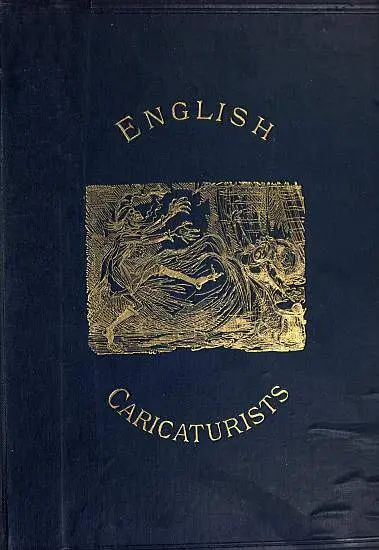
THE CLASSIC COLLECTION · 1886
"English Caricaturists and Graphic Humourists of the Nineteenth Century" by Graham Everitt is a historical account written in the late 19th century. The work explores the evolution and significance of English caricature and graphic satire from the time of Napoleon until the death of noted cartoonist John Leech in 1864. It provides a detailed examination of how caricaturists interpreted and illustrated the social and political climate of their times, with prominent figures like Gillray, Rowlandson, and Cruikshank featured prominently. The opening of the book introduces the subject of caricature, defining it as an exaggerated portrayal that conveys popular opinion and sentiments of the era. Everitt discusses the shift in style and spirit of English caricatures, noting how earlier works were characterized by coarseness typical of the last century, while later caricaturists like John Doyle and his successors refined and transformed the art into a more sophisticated form. He asserts the relevance of these artists in understanding the political narratives of their time, particularly regarding figures like Napoleon and the socio-political changes happening throughout the 19th century.
Introduction adapted from the source catalogue; source summaries may be automatically generated.
Free to read · English · 156,632 words · No account needed
MAKE TIME FOR A GOOD BOOK
On by default. Untick to stop anonymous reading totals. Each page counts after 10 seconds in view. How this works.
Anonymous counting is on unless you have switched it off.
The same, with the forty plates by Seymour and "Phiz," the two
suppressed plates of Buss, and twenty-three plates by "Sam Weller" and
Onwhyn.
"Sketches of Young Ladies by 'Quiz'" (Charles Dickens), six copper
plates, 1837.
James Grant's "Sketches in London," twenty-four humorous illustrations on steel by "Phiz" and others, Orr, 1838. Another edition in 1840.
"A Paper of Tobacco: a Treatise on Smoking, with Anecdotes, Mems on Pipes, Tobacco-boxes, and Snuff." By Joseph Fume, Copper plates and picture boards. 1839.
"Life and Adventures of Nicholas Nickleby." 1839.
The same, with the plates by "Phiz," and an extra series of plates by Onwhyn and "Peter Palette." 1839.
The same, with the forty plates by "Phiz," and a set of forty plates
by "Peter Palette" added.
"New Sporting Magazine." 1839.
Charles Lever's "Harry Lorrequer." 1839. (A pirated edition was published at Philadelphia, 1840.)
"London Magazine, Charivari, and Courrier des Dames" (with Leech and
"Gillray, Junr."). 1840.
"Master Humphrey's Clock," "Old Curiosity Shop," and "Barnaby Rudge," designs on wood, with Cattermole. 3 vols. 1840-41.
"Sir Thomas Dick Lauder's Legendary Tales of the Highlands." 3 vols.
1841.
Charles Lever's "Charles O'Malley, the Irish Dragoon," 2 vols. Dublin,
1841.
"Peter Priggins, the College Scout," 3 vols. 1841 (made its first appearance without illustrations in the New Monthly Magazine).
"The Pic-nic Papers," by Various Hands, edited by Charles Dickens, plates by Cruikshank, "Phiz," and Hamerton. 3 vols. 1841.
W. H. Maxwell's "Rambling Recollections of a Soldier of Fortune," woodcuts by "Phiz" and others. Dublin, 1842.
Lever's "Jack Hinton." Dublin, 1842-43.
Carleton's "Traits and Stories of the Irish Peasantry" (both series), steel plates by "Phiz," Sir J. Gilbert, Franklin, etc., and woodcuts. 2 vols. Dublin, 1843-44.
Charles Dickens's "Martin Chuzzlewit," forty plates. 1844.
Charles Lever's "Tom Burke of Ours." Dublin, 1844.
"Ainsworth's Magazine," from and after 1844.
"The Illuminated Magazine" [with Meadows, Sargent, Gilbert, Harvey,
etc.]. 1845.
Charles Lever's "St. Patrick's Eve," woodcuts and fine steel etchings.
1845.
"Tales of the Trains; some Chapters of Railroad Romance," by Tilbury Tramp (i.e. Charles Lever). Orr, 1845.
"Nuts and Nutcrackers." 1845.
Charles Lever's "The O'Donoghue." Dublin, 1845.
"Fiddle-Faddle's Sentimental Tour in Search of the Amusing, Picturesque,
and Agreeable." 1845.
"The Union Magazine," vol. i. Three plates. 1846.
"Fanny the Little Milliner; or, the Rich and the Poor" [with Onwhyn].
1846.
"The Commissioner; or, De Lunatico Inquirendo," twenty-eight steel
plates. Dublin, 1846.
"A Medical, Moral, and Christian Dissertion of Teetotalism," by
Democritus. 1846.
Charles Lever's "Knight of Gwynne." 1847.
"The Fortunes of Colonel Torlogh O'Brien: a Tale of the Wars of King
James." Dublin, 1847.
"John Smith's Irish Diamonds; or, a Theory of Irish Wit and Blunders."
1847.
W. Harrison Ainsworth's "Old St. Paul's," two plates. 1847.
Charles Dickens's "Dombey and Son." 1846-48.
Twelve full-length portraits illustrating "Dombey and Son," designed and etched by "Phiz." (Sometimes bound up with the book.) 1848.
Albert Smith's "The Pottleton Legacy." 1849. (Another edition in 1854.)
Charles Dickens's "David Copperfield," forty plates. 1849-50.
Your reading position is saved on this browser. Take it to another device with a library code. Reading pages adapt to text, rather than matching a printed edition.
BEHIND THE BOOK
This eBook is for the use of anyone anywhere in the United States and most other parts of the world at no cost and with almost no restrictions whatsoever. You may copy it, give it away or re-use it under the terms of the Project Gutenberg License included with this eBook or online at www.gutenberg.org. If you are not located in the United States, you will have to check the laws of the country where you are located before using this eBook. Read the source licence.
The original source file, including credits and licence, is retained by this library. Request an original-format copy at no charge. Please include the book title and Project Gutenberg identifier #31195.
KEEP YOUR CURIOSITY GOING
Cécile Tormay

Moritz Busch
John L. Ransom
Frances Wright
Cécile Tormay

Mabel Potter Daggett