THE CLASSIC COLLECTION✦An outlaw’s diary: the CommuneCLASSIC FREE BOOKS
An outlaw’s diary: the Commune
Cécile Tormay
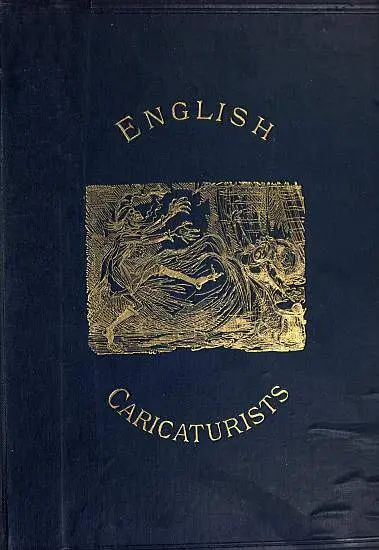
THE CLASSIC COLLECTION · 1886
"English Caricaturists and Graphic Humourists of the Nineteenth Century" by Graham Everitt is a historical account written in the late 19th century. The work explores the evolution and significance of English caricature and graphic satire from the time of Napoleon until the death of noted cartoonist John Leech in 1864. It provides a detailed examination of how caricaturists interpreted and illustrated the social and political climate of their times, with prominent figures like Gillray, Rowlandson, and Cruikshank featured prominently. The opening of the book introduces the subject of caricature, defining it as an exaggerated portrayal that conveys popular opinion and sentiments of the era. Everitt discusses the shift in style and spirit of English caricatures, noting how earlier works were characterized by coarseness typical of the last century, while later caricaturists like John Doyle and his successors refined and transformed the art into a more sophisticated form. He asserts the relevance of these artists in understanding the political narratives of their time, particularly regarding figures like Napoleon and the socio-political changes happening throughout the 19th century.
Introduction adapted from the source catalogue; source summaries may be automatically generated.
Free to read · English · 156,632 words · No account needed
MAKE TIME FOR A GOOD BOOK
On by default. Untick to stop anonymous reading totals. Each page counts after 10 seconds in view. How this works.
Anonymous counting is on unless you have switched it off.
[With C. Williams.] Frontispiece to George Ramsey's "New Dictionary of
Anecdote." 1822.
"My Cousin in the Army; or, Johnny Newcome on the Peace Establishment." Many coloured plates. 1822.
Twenty designs on wood for Charles Westmacott's "Points of Misery."
1823.
A series of drawings on wood to the "Spirit of the Public Journals for 1823 and 1824." (A selection of essays, jeux d'esprit, tales of humour, etc., 2 vols.)
"Life and Exploits of Don Quixote." Twenty-four designs on wood. (Knight
& Lacey.) 1824.
Bernard Blackmantle's (Charles Westmacott) "English Spy." 1825.
"Spirit of the Public Journals for 1825."
Charles Westmacott's "Punster's Pocket-book; or, the Art of Punning
Enlarged." 1826.
[With his brother George.] "London Characters." (Twenty-four plates, of which nine only are by Robert.) Robins. 1827.
[With George.] Designs on wood for the "Fairy Tales" of Albert Ludwigg
Grimm. 1827.
J. Thompson's "New Life of J. Allen." 1828.
Smeeton's "Doings in London." 1828.
"British Dance of Death" (allegorical coloured frontispiece). 1828.
"Spirit of the Age" Newspaper (vignette). 1828.
[With his brother.] The designs on wood for the "Universal Songster; or, Museum of Mirth." (3 vols.) 1828.
"London Oddities; or, Theatrical Cabinet, and Tit-bits of Humour and
Eccentricity." 1828.
"The Finish to the Adventures of Tom, Jerry, and Logic." 1828.
The following between 1830 and 1832.
"Cruikshank's Comic Album" (sometimes called "Facetiae"), being a series of little books published by Kidd, Miller, and others, afterwards collected into 3 vols.
"Walks about Town by an Antiquated Trio," three designs.
"The Condition of the West Indian Slave contrasted with that of the Infant Slave in our English Factories."
"Cruikshank and the New Police, showing the great Utility of that
Military Body."
"Cruikshank versus Witchcraft"; "Mary Ogilvie"; "Wee Watty."
"Robert Cruikshank versus Sir Andrew Agnew."
W. S. Moncrieff's "March of Intellect," six designs.
[With Kenny Meadows.] "The Devil in London."
"A Slap at the Times."
Illustrations to Foote's "Tailors," and "Mayor of Garratt"; O'Hara's "Midas"; "The Beggars' Opera"; "Katherine and Petruchio," and others.
The following between 1831 and 1836.
Design on wood for "Figaro in London."
[With Seymour and others.] Illustrations to a periodical called "The
Thief."
Twenty illustrations to W. R. Macdonald's "Comic Alphabet." (A rival to George Cruikshank's work of the same title.)
Eighty-five designs on wood to Crithannah's "Original Fables." Six designs on wood for "Readings from Dean Swift His Tale of a Tub, with Variorum Notes, and a Supplement for the use of the Nineteenth Century," by Quintus Flestrin Grildrig.
Johann Abricht's "Divine Emblems." And [with his brother] illustrations to J. Thomas's "Burlesque Drama." 1838.
[With Seymour.] The series known as "Cruikshank at Home," and "The Odd
Volume."
The following in 1839-1840.
Your reading position is saved on this browser. Take it to another device with a library code. Reading pages adapt to text, rather than matching a printed edition.
BEHIND THE BOOK
This eBook is for the use of anyone anywhere in the United States and most other parts of the world at no cost and with almost no restrictions whatsoever. You may copy it, give it away or re-use it under the terms of the Project Gutenberg License included with this eBook or online at www.gutenberg.org. If you are not located in the United States, you will have to check the laws of the country where you are located before using this eBook. Read the source licence.
The original source file, including credits and licence, is retained by this library. Request an original-format copy at no charge. Please include the book title and Project Gutenberg identifier #31195.
KEEP YOUR CURIOSITY GOING
Cécile Tormay

Moritz Busch
John L. Ransom
Frances Wright
Cécile Tormay

Mabel Potter Daggett