THE CLASSIC COLLECTION✦An outlaw’s diary: the CommuneCLASSIC FREE BOOKS
An outlaw’s diary: the Commune
Cécile Tormay
THE CLASSIC COLLECTION · 1886
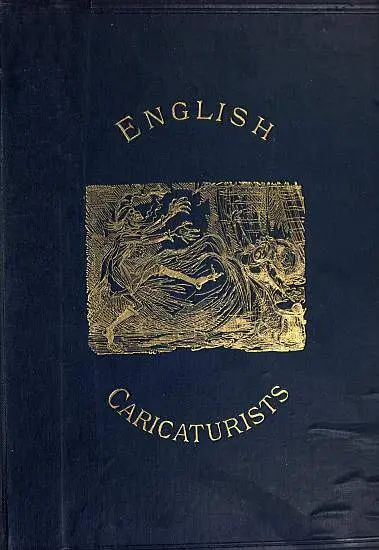
"English Caricaturists and Graphic Humourists of the Nineteenth Century" by Graham Everitt is a historical account written in the late 19th century. The work explores the evolution and significance of English caricature and graphic satire from the time of Napoleon until the death of noted cartoonist John Leech in 1864. It provides a detailed examination of how caricaturists interpreted and illustrated the social and political climate of their times, with prominent figures like Gillray, Rowlandson, and Cruikshank featured prominently. The opening of the book introduces the subject of caricature, defining it as an exaggerated portrayal that conveys popular opinion and sentiments of the era. Everitt discusses the shift in style and spirit of English caricatures, noting how earlier works were characterized by coarseness typical of the last century, while later caricaturists like John Doyle and his successors refined and transformed the art into a more sophisticated form. He asserts the relevance of these artists in understanding the political narratives of their time, particularly regarding figures like Napoleon and the socio-political changes happening throughout the 19th century.
Introduction adapted from the source catalogue; source summaries may be automatically generated.
Free to read · English · 156,632 words · No account needed
MAKE TIME FOR A GOOD BOOK
On by default. Untick to stop anonymous reading totals. Each page counts after 10 seconds in view. How this works.
Anonymous counting is on unless you have switched it off.
Here, in accordance with the plan which we designed when we sat down to write this work, we bring our labours to a close. If we have omitted all mention of two very excellent and talented artists, Messrs. Charles Keene and George Du Maurier, it is not from any lack of appreciation, but because one of them at least began his labours just about the period when those of John Leech were drawing to a close, while the reputation of both were made after their distinguished contemporary was laid to his rest. The merits of both these able men and of those now following after them must be left to be dealt with by another chronicler. Although, as we remarked in our opening chapter, the wood engraver has rung the knell of English caricature, with such clever men as Colonel Seccombe, Mr. Proctor, Mr. Randolph Caldicott, Mr. F. Barnard, the present George Cruikshank, Mr. Chasemore, and others whose names do not at present occur to us, there is happily no prospect of a decline in the art of English graphic satire.
[186] The present chapter was written before the artist's death; but I have to acknowledge the great assistance I have derived in its revision from the authority indicated.
[187] The Month, a Catholic Magazine, No. 237 (March, 1884), p 315.
[188] Ibid., page 317.
[189] One of these (and a very effective one) was the work of the
present Sir John Gilbert.
[190] Hamerton's "Etching and Etchers."
[191] William Hazlitt on "The Fine Arts," p. 51.
[192] An excellent burlesque of the Emperor's theatrical declarations.
Coloured frontispiece to the "Age of Intellect; or, Clerical Show Folk and Wonderful Lay Folk," by Francis Moore, Physician. 1819.
"Lessons of Thrift, published for the general benefit, by a Member of the Save-all Club," eleven coloured full-page etchings. 1820.
"The Total Eclipse, a Grand Politico-Astronomical Phenomenon." (Dolby,
Strand.) 1820.
"A Peep at the P. C. N.; or, Boiled Mutton with Caper Sauce at the Temple of Joss." (Effingham Wilson.) 1820.
"The Men in the Moon; or, the Devil to Pay." (Dean & Munday.) 1820.
[With his brother George.] Designs to Nightingale's "Memoirs of Queen Caroline." (J. Robins.) 1820.
"Radical Chiefs." One caricature illustration. 1821.
"The Royal Game of Chess." 1821.
"The Political All-my-knack for the Year of our Lord 1821."
"The Queen and Magna Charta; or, the Thing that John Signed." (Dolby,
Strand.) 1821.
"Tales of the Cordelier Metamorphosed." 1821.
[With his brother George.] "Life in London." (Sherwood, Nealy &
Jones.) 1821.
"The Commercial Tourist; or, Gentleman Traveller." (A satirical Poem), five coloured plates. 1822.
"Mock Heroicks; or, Snuff, Tobacco, and Gin, and a Rapsody on an Inkstand." Four caricature engravings. 1822.
"Annals of Sporting and Fancy Gazette." (Numerous coloured plates.)
1822-1825.
Your reading position is saved on this browser. Take it to another device with a library code. Reading pages adapt to text, rather than matching a printed edition.
BEHIND THE BOOK
This eBook is for the use of anyone anywhere in the United States and most other parts of the world at no cost and with almost no restrictions whatsoever. You may copy it, give it away or re-use it under the terms of the Project Gutenberg License included with this eBook or online at www.gutenberg.org. If you are not located in the United States, you will have to check the laws of the country where you are located before using this eBook. Read the source licence.
The original source file, including credits and licence, is retained by this library. Request an original-format copy at no charge. Please include the book title and Project Gutenberg identifier #31195.
KEEP YOUR CURIOSITY GOING
Cécile Tormay

Moritz Busch
John L. Ransom
Frances Wright
Cécile Tormay

Mabel Potter Daggett