
Little Prudy’s Captain Horace
Sophie May
THE CLASSIC COLLECTION · 1868
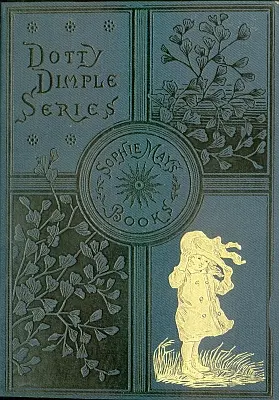
"Dotty Dimple at Her Grandmother's" by Sophie May is a children's fiction book, likely written in the late 19th century. The story follows a young girl named Dotty, or Alice, as she navigates life with her siblings while spending time at her grandmother's home. The narrative captures the innocence and curiosities of childhood, focusing on Dotty's adventures, interactions with other children, and her moral lessons learned throughout. At the start of the book, the three Parlin siblings are introduced as they arrive at their grandmother's house on a lovely Sunday morning. Dotty Dimple observes the beauty of nature and finds herself grappling with feelings of envy and admiration as she compares herself to another girl, Jennie. The opening reveals Dotty’s innocence and her childlike misunderstanding of social status, wealth, and virtue, particularly as she contemplates the act of giving and the lessons learned in Sunday school. The interactions and discussions amongst the children set the stage for Dotty's adventures and moral growth throughout the story, indicating that themes of generosity, honesty, and childhood imagination will be central to the narrative.
Introduction adapted from the source catalogue; source summaries may be automatically generated.
Free to read · English · 24,521 words · No account needed
MAKE TIME FOR A GOOD BOOK
On by default. Untick to stop anonymous reading totals. Each page counts after 10 seconds in view. How this works.
Anonymous counting is on unless you have switched it off.
"Horace is at Augusta; I left him there the other day."
"Yes," said Polly, settling her mournful black cap, "so I heard! I was very, very sorry," and she shook her head dolefully, as if it had been a bell and she were tolling it--"very, very sorry!"
Mrs. Clifford could not but wonder why.
"It is a dreadful thing to happen in a family! I'm sure, Maria, I never heard that stealing was natural to either side of the house!"
"Stealing!" echoed Mrs. Clifford.
"What in this world can you mean, Polly Whiting?" said Aunt Louise, laughing nervously; for she was a very lively young lady, and laughed a great deal. Miss Whiting thought this was no time for jokes. Her mouth twitched downward as if there were strings at the corners. Mrs. Clifford had turned very pale.
"Poll," said she, "do speak, and tell me what you have heard? It is all
a mystery to me."
"You don't say so," said Miss Whiting, looking relieved. "Well, I didn't more than half believe it myself; but the story is going that your Horace stole his Aunt Louise's breastpin, and sold it to a peddler for a rusty gun."
Miss Louise laughed merrily this time.
"I did lose my pearl brooch," said she, "but Prudy found it yesterday in an old glass candlestick."
"What an absurd report!" said Mrs. Clifford, quite annoyed. "I hope the children are not to be suspected every time their Aunt Louise misses anything!"
"They said you had decided to take Horace to the Reform School," added Miss Whiting, "but your friends begged you to leave him at Augusta in somebody's house locked up, with bread and water to eat."
"Now tell me where you heard all this," said Aunt Louise.
"Why, Mrs. Grant told me that Mrs. Small said that Mrs. Gordon told her. I hope you'll excuse me for speaking of it: but I thought you ought to know."
Miss Polly Whiting was a harmless woman, who went from family to family doing little "jobs" of work. She never said what was not true, did no mischief, and in her simple way was quite attached to the Parlins.
"I heard something more that made me very angry," said she, following Miss Louise into the pantry. "Mrs. Grant says Mrs. Gray is very much surprised to find your mother doesn't give good measure when she sells milk!"
Aunt Louise was so indignant at this that she went at once and told her
mother.
"It is a little too much to be borne," said she; "the neighbors may invent stories about Horace, if they have nothing better to do, but they shall not slander my mother!"
Your reading position is saved on this browser. Take it to another device with a library code. Reading pages adapt to text, rather than matching a printed edition.
BEHIND THE BOOK
This eBook is for the use of anyone anywhere in the United States and most other parts of the world at no cost and with almost no restrictions whatsoever. You may copy it, give it away or re-use it under the terms of the Project Gutenberg License included with this eBook or online at www.gutenberg.org. If you are not located in the United States, you will have to check the laws of the country where you are located before using this eBook. Read the source licence.
The original source file, including credits and licence, is retained by this library. Request an original-format copy at no charge. Please include the book title and Project Gutenberg identifier #20699.
KEEP YOUR CURIOSITY GOING
Coulson Kernahan

Maurice Baring
Frances Wright
Cécile Tormay

Frederic Jesup Stimson

W. H. P. (William Henry Pope) Jarvis

