
Uncle Sam’s Boys on Field Duty; or, Winning Corporal’s Chevrons
H. Irving (Harrie Irving) Hancock
THE CLASSIC COLLECTION · 1919
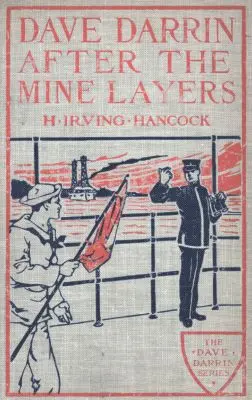
"Dave Darrin After the Mine Layers; Or, Hitting the Enemy a Hard Naval Blow" by H. Irving Hancock is a naval adventure novel written in the early 20th century. The story follows Lieutenant Commander Dave Darrin as he embarks on a dangerous mission involving mine warfare during World War I. Along with his close friend Dan Dalzell, Darrin navigates perilous waters while combating German naval forces and dealing with the complexities of war on the high seas. The opening of the novel sets the stage for an intense and suspenseful journey as Darrin receives orders to protect British mine-sweepers from German threats while also seeking to counter enemy mine-laying activities. As he and his crew prepare to weigh anchor, we see Darrin’s leadership and determination in high-stakes situations. The narrative features a critical moment where Darrin is hurled overboard during a storm, heightening the tension and establishing the potential for both personal heroism and tragedy in the face of naval combat. This opening portion effectively engages readers with its action-packed scenes and camaraderie among the crew, promising an exciting read filled with adventure and moral dilemmas.
Introduction adapted from the source catalogue; source summaries may be automatically generated.
Free to read · English · 50,828 words · No account needed
MAKE TIME FOR A GOOD BOOK
On by default. Untick to stop anonymous reading totals. Each page counts after 10 seconds in view. How this works.
Anonymous counting is on unless you have switched it off.
"And, I, too, am sorry," spoke up Mrs. Launce. "Life has been sweet to me, but I would much rather be dead than a captive in Germany. I condole with you, Mr. Darrin, that it was not possible for you to bring about the destruction of this wretched craft."
"It will, before long, go the way of the other German submarines," Dave assured her, hoping that there were enemy eavesdroppers who would overhear and understand.
At best exercise in this narrow short passage was a farce, though it was often more agreeable to be out here than sitting in the cramped space of one of the tiny sleeping cabins. The four prisoners rested, or moved listlessly about, until the evening meal was ready. Then Captain Kennor was summoned to eat with the petty officers, while Dave and his English companions received word to join the craft's officers in the tiny wardroom.
Mr. Launce glanced at Dave with a questioning look.
"Really, Mr. Darrin, I would as soon starve as eat with those German officer fellows, and my wife feels as I do about it."
"And my idea is the same," Dave answered.
So Mr. Launce turned to the German mess servant, delivering in German a message to the effect that the three prisoners did not care to join the officers at mess.
Thereupon von Schellen came out.
"What is the matter?" he asked.
"We don't care to eat with you, sir," Mr. Launce replied, bluntly.
"Oh, very well," replied the junior officer, carelessly. "You three, then, may eat at second table after we are pleased to be through."
Clicking his heels and wheeling, the junior officer went back to the wardroom. The three prisoners waited more than an hour before the same mess attendant came and beckoned them to enter.
They were alone, now, save for the presence of the ober-lieutenant, who was seated at one end of the table writing. He did not look up as they entered and seated themselves.
The meal set out was a coarse one, in quality of food, but there was plenty of it. The three prisoners ate slowly, almost in silence, nor did they address their host.
Before the meal was over the German commander left the room without word
or sign to his guests.
"Why, the boat has stopped!" exclaimed Mrs. Launce, in a low voice, some three minutes later. "Are we resting on the bottom?"
"I think I shall soon be able to answer you," Darrin replied.
Soon machinery began to rumble.
"We are on the surface," said Dave, laying down knife and fork. "We are
recharging batteries."
Mrs. Launce leaned forward to whisper:
Your reading position is saved on this browser. Take it to another device with a library code. Reading pages adapt to text, rather than matching a printed edition.
H. Irving (Harrie Irving) Hancock

H. Irving (Harrie Irving) Hancock

H. Irving (Harrie Irving) Hancock

H. Irving (Harrie Irving) Hancock
BEHIND THE BOOK
This eBook is for the use of anyone anywhere in the United States and most other parts of the world at no cost and with almost no restrictions whatsoever. You may copy it, give it away or re-use it under the terms of the Project Gutenberg License included with this eBook or online at www.gutenberg.org. If you are not located in the United States, you will have to check the laws of the country where you are located before using this eBook. Read the source licence.
The original source file, including credits and licence, is retained by this library. Request an original-format copy at no charge. Please include the book title and Project Gutenberg identifier #23036.
KEEP YOUR CURIOSITY GOING
Cécile Tormay

Moritz Busch
Coulson Kernahan
John L. Ransom

Maurice Baring
Frances Wright