
Uncle Sam’s Boys on Field Duty; or, Winning Corporal’s Chevrons
H. Irving (Harrie Irving) Hancock
THE CLASSIC COLLECTION · 1919
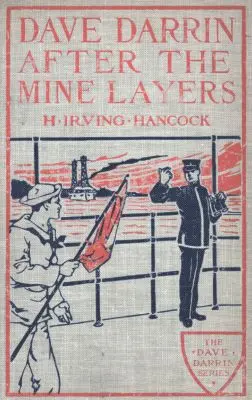
"Dave Darrin After the Mine Layers; Or, Hitting the Enemy a Hard Naval Blow" by H. Irving Hancock is a naval adventure novel written in the early 20th century. The story follows Lieutenant Commander Dave Darrin as he embarks on a dangerous mission involving mine warfare during World War I. Along with his close friend Dan Dalzell, Darrin navigates perilous waters while combating German naval forces and dealing with the complexities of war on the high seas. The opening of the novel sets the stage for an intense and suspenseful journey as Darrin receives orders to protect British mine-sweepers from German threats while also seeking to counter enemy mine-laying activities. As he and his crew prepare to weigh anchor, we see Darrin’s leadership and determination in high-stakes situations. The narrative features a critical moment where Darrin is hurled overboard during a storm, heightening the tension and establishing the potential for both personal heroism and tragedy in the face of naval combat. This opening portion effectively engages readers with its action-packed scenes and camaraderie among the crew, promising an exciting read filled with adventure and moral dilemmas.
Introduction adapted from the source catalogue; source summaries may be automatically generated.
Free to read · English · 50,828 words · No account needed
MAKE TIME FOR A GOOD BOOK
On by default. Untick to stop anonymous reading totals. Each page counts after 10 seconds in view. How this works.
Anonymous counting is on unless you have switched it off.
"Signal 'Ready to receive,'" was Darrin's command to his signalman, who stood waiting, signal flags in hand.
Rapidly the two flags moved, then paused. Dave's eyes, like Dan's, were turned toward the United States battleship that had lately acted as flagship for the destroyers and other small Yankee craft assembled in this port.
Brief indeed were the motions of the signalman on the bridge of the battleship, but the signal, translated, read:
"Proceed to sea in an hour, under instructions already received by you. Am proceeding to new station. Report to British admiral, this port, hereafter. No additions to these orders."
Instantly Darrin ordered the signal wigwagged back:
"Understood."
Immediately following this the flagship signalled the "Reed," Dan's ship, giving the same order, which Dan's executive officer, from the bridge of the other destroyer, acknowledged.
"Now, Darry, if you'll have your man signal for my gig," Dan urged, in a low voice, "I'll return to my ship. You and I are to cruise in company, as far as it may be done, and you are ranking officer. I am to part company from you only on your order."
"That is the admiral's order," Darrin acquiesced.
"Good-bye, old chap!" said Dan, with more than his wonted fervor, gripping his brother officer's hand. "And may we have the best of luck!"
"The best of a 'business' kind," smiled Dave.
"That's it!" laughed Dan, as he started down the steps. "I'm hoping for 'big business' this time!"
Dalzell had used the word "gig" in a figurative sense. It was a power launch that put smartly away from the "Reed" and was speedily alongside. Dan waved his hand to his chum, who was leaning over the bridge rail.
Dave did not return to the chart-room. He received the report of his chief engineer at the bridge telephone, then gazed musingly out over the crowded waters of the port. It was a busy scene, bristling with war activities.
Having compared his watch with the clock on the bridge, Dave glanced frequently at that time-keeper. Five minutes before the hour was up he gave a quiet order to the watch officer, who telephoned to the engine-room and then issued brisk deck orders. At this time Lieutenant Fernald, executive officer, joined the group on the bridge, as did also the navigation officer.
Promptly to the minute the "Grigsby," anchor up, turned and steamed slowly out of the harbor. As she passed, none of the other craft made signals. As though unnoticed Dave's ship slipped out of port, the "Reed" following.
Then out upon the Channel the two destroyers moved, into the lane now followed by all craft that sailed between England and the continent.
Your reading position is saved on this browser. Take it to another device with a library code. Reading pages adapt to text, rather than matching a printed edition.
H. Irving (Harrie Irving) Hancock

H. Irving (Harrie Irving) Hancock

H. Irving (Harrie Irving) Hancock

H. Irving (Harrie Irving) Hancock
BEHIND THE BOOK
This eBook is for the use of anyone anywhere in the United States and most other parts of the world at no cost and with almost no restrictions whatsoever. You may copy it, give it away or re-use it under the terms of the Project Gutenberg License included with this eBook or online at www.gutenberg.org. If you are not located in the United States, you will have to check the laws of the country where you are located before using this eBook. Read the source licence.
The original source file, including credits and licence, is retained by this library. Request an original-format copy at no charge. Please include the book title and Project Gutenberg identifier #23036.
KEEP YOUR CURIOSITY GOING
Cécile Tormay

Moritz Busch
Coulson Kernahan
John L. Ransom

Maurice Baring
Frances Wright