
Uncle Sam’s Boys on Field Duty; or, Winning Corporal’s Chevrons
H. Irving (Harrie Irving) Hancock
THE CLASSIC COLLECTION · 1919
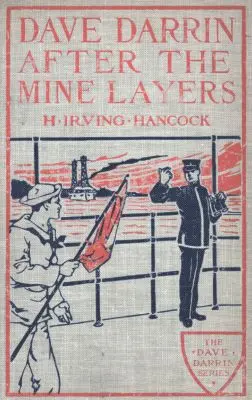
"Dave Darrin After the Mine Layers; Or, Hitting the Enemy a Hard Naval Blow" by H. Irving Hancock is a naval adventure novel written in the early 20th century. The story follows Lieutenant Commander Dave Darrin as he embarks on a dangerous mission involving mine warfare during World War I. Along with his close friend Dan Dalzell, Darrin navigates perilous waters while combating German naval forces and dealing with the complexities of war on the high seas. The opening of the novel sets the stage for an intense and suspenseful journey as Darrin receives orders to protect British mine-sweepers from German threats while also seeking to counter enemy mine-laying activities. As he and his crew prepare to weigh anchor, we see Darrin’s leadership and determination in high-stakes situations. The narrative features a critical moment where Darrin is hurled overboard during a storm, heightening the tension and establishing the potential for both personal heroism and tragedy in the face of naval combat. This opening portion effectively engages readers with its action-packed scenes and camaraderie among the crew, promising an exciting read filled with adventure and moral dilemmas.
Introduction adapted from the source catalogue; source summaries may be automatically generated.
Free to read · English · 50,828 words · No account needed
MAKE TIME FOR A GOOD BOOK
On by default. Untick to stop anonymous reading totals. Each page counts after 10 seconds in view. How this works.
Anonymous counting is on unless you have switched it off.
"The fault is mine, I guess," admitted Mr. Hartley, turning to Darrin and Ormsby. "These men are always chaffing each other, and they thought you wanted some of the same thing."
"We don't object," Dave smiled. "If hot air is the motive power that drives these men, then we want to sample it."
Hedgeby regarded this last speaker with a puzzled expression.
"If you're talking about fuel, sir," he went on, as Mr. Hartley moved away, "Hi'll say that 'ot air engines wouldn't be no good wotever on these 'ere craft. Gasoline is what we use, mostly, for our engines, sir, though some of the biggest use petroleum."
"Hot air is furnished by the men themselves," Dave explained. "It's a
favorite fuel at sea."
"Maybe, sir, maybe," admitted Hedgeby, slowly, looking as solemn as an owl. "Of course you know, sir, wot's used on the Yankee boats, anyway, sir, and if your Admiralty recommends 'ot air then no doubt hit's because you Yankees know 'ow to use it better than other fuel."
"And the joke of it is," muttered Ormsby, as Hedgeby sprang to obey an order, "one can't tell whether a chap like that is laughing at us, or trying to sympathize with our ignorance."
Dave laughed, then soon forgot the chaffing, for he was greatly interested in what he saw of the work that was being carried on. Certainly, for such a comparatively slow craft, a large area of sea surface could be covered in a forenoon.
Presently Hedgeby came back to them, and Ormsby tried once more to extract some real information.
"With the amount of speed you can command," he resumed, "what does a craft like this do, Hedgeby, if a German destroyer comes racing along after you?"
"We just shut off speed, sir, and the blooming destroyer goes by so fast that nine times hout of ten she doesn't see us at all."
"But if the destroyer sees you and stops to engage, what then?"
Once more the quizzical expression faded from the British sailorman's eyes. He stepped back, resting one hand on a light gun mounted on a swivel pedestal.
"We do hour best with this piece, sir."
"An unequal combat, Hedgeby!"
"You may well say it, sir, but hat least we come hout of the fracas as well as does the submarine that our sweep locates on the bottom."
"Have you known of any case in which a mine-sweeper had any show at all against a German destroyer?"
Your reading position is saved on this browser. Take it to another device with a library code. Reading pages adapt to text, rather than matching a printed edition.
H. Irving (Harrie Irving) Hancock

H. Irving (Harrie Irving) Hancock

H. Irving (Harrie Irving) Hancock

H. Irving (Harrie Irving) Hancock
BEHIND THE BOOK
This eBook is for the use of anyone anywhere in the United States and most other parts of the world at no cost and with almost no restrictions whatsoever. You may copy it, give it away or re-use it under the terms of the Project Gutenberg License included with this eBook or online at www.gutenberg.org. If you are not located in the United States, you will have to check the laws of the country where you are located before using this eBook. Read the source licence.
The original source file, including credits and licence, is retained by this library. Request an original-format copy at no charge. Please include the book title and Project Gutenberg identifier #23036.
KEEP YOUR CURIOSITY GOING
Cécile Tormay

Moritz Busch
Coulson Kernahan
John L. Ransom

Maurice Baring
Frances Wright