
Uncle Sam’s Boys on Field Duty; or, Winning Corporal’s Chevrons
H. Irving (Harrie Irving) Hancock
THE CLASSIC COLLECTION · 1919
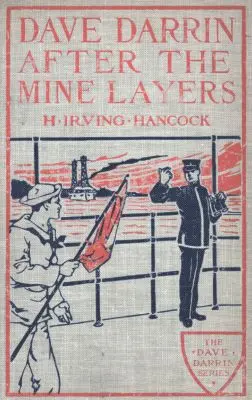
"Dave Darrin After the Mine Layers; Or, Hitting the Enemy a Hard Naval Blow" by H. Irving Hancock is a naval adventure novel written in the early 20th century. The story follows Lieutenant Commander Dave Darrin as he embarks on a dangerous mission involving mine warfare during World War I. Along with his close friend Dan Dalzell, Darrin navigates perilous waters while combating German naval forces and dealing with the complexities of war on the high seas. The opening of the novel sets the stage for an intense and suspenseful journey as Darrin receives orders to protect British mine-sweepers from German threats while also seeking to counter enemy mine-laying activities. As he and his crew prepare to weigh anchor, we see Darrin’s leadership and determination in high-stakes situations. The narrative features a critical moment where Darrin is hurled overboard during a storm, heightening the tension and establishing the potential for both personal heroism and tragedy in the face of naval combat. This opening portion effectively engages readers with its action-packed scenes and camaraderie among the crew, promising an exciting read filled with adventure and moral dilemmas.
Introduction adapted from the source catalogue; source summaries may be automatically generated.
Free to read · English · 50,828 words · No account needed
MAKE TIME FOR A GOOD BOOK
On by default. Untick to stop anonymous reading totals. Each page counts after 10 seconds in view. How this works.
Anonymous counting is on unless you have switched it off.
For the Englishman's laconic message meant that the submarine had just proved herself to be of the mine-laying variety. Further, the Hun craft, hearing the destroyer's propellers almost overhead, had judged the moment at which to let loose a mine, which, rising to its proper level under water, would have struck the hull of the advancing destroyer.
Had that happened, the career of the "Grigsby" would have been over, and several officers' and seamen's names would have been added to the war's list of dead.
"Going to try again, sir?" asked Lieutenant Fernald, quietly, as Dave himself changed the full-speed-astern order.
"It's out of our line, I guess," Darrin confessed, with a smile. "Signal yonder mine-sweeper to close in on the job."
As a result of the message, and aided by the "blimp" overhead, the snub-nosed mine-sweeper steamed into position. First, her wire sweeper picked up the mine that had been sprung for the "Grigsby's" undoing, and backed away.
Then, under Dave's further order, after the mine had been hoisted on board, the snub-nosed craft moved in with a different type of sweeper. To different wires of this implement were attached small but powerful contact bombs. Jauntily the snub-nosed craft moved over the lurking place of the submarine, and passed on ahead.
From the depths came muffled sounds, followed by a big and growing spread
of oil on the water.
"Enemy done for!" signalled the "blimp."
"Thank you, sir. We know it," the "Grigsby" wirelessed back.
The mine-sweeper, having passed on ahead, now circled back, her crew grinning at sight of the mass of floating oil.
The contact bombs dangling from the sweep wires had struck against the submarine's hull and exploded, letting in the water at several points. The Hun seamen were even now drowning, caught without a show for their lives, just as they had probably sent many souls to graves in the ocean.
For some minutes more the dirigible moved back and forth through the air, her observers watching for the presence of hidden enemy craft. Then, without warning, came the message:
"Sorry, but engine trouble threatens and will compel our return to land, and to our base if possible."
"The best of luck to you," Dave ordered wirelessed back to these British comrades. "We'll stand by until we're as close to shore as we can go."
For he knew that, near shore, the shoals became dangerous shallows at
this point on the coast.
Away limped the "blimp," the "Grigsby" following, and standing ready to do rescue work should the dirigible need assistance.
But the "blimp" not only made her way over to shore, but vanished slowly
in the distance.
Your reading position is saved on this browser. Take it to another device with a library code. Reading pages adapt to text, rather than matching a printed edition.
H. Irving (Harrie Irving) Hancock

H. Irving (Harrie Irving) Hancock

H. Irving (Harrie Irving) Hancock

H. Irving (Harrie Irving) Hancock
BEHIND THE BOOK
This eBook is for the use of anyone anywhere in the United States and most other parts of the world at no cost and with almost no restrictions whatsoever. You may copy it, give it away or re-use it under the terms of the Project Gutenberg License included with this eBook or online at www.gutenberg.org. If you are not located in the United States, you will have to check the laws of the country where you are located before using this eBook. Read the source licence.
The original source file, including credits and licence, is retained by this library. Request an original-format copy at no charge. Please include the book title and Project Gutenberg identifier #23036.
KEEP YOUR CURIOSITY GOING
Cécile Tormay

Moritz Busch
Coulson Kernahan
John L. Ransom

Maurice Baring
Frances Wright