Modern daughters
Alexander Black
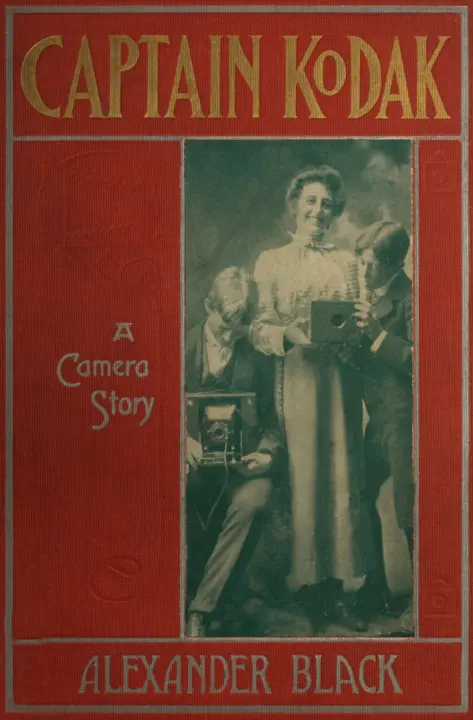
THE CLASSIC COLLECTION · 1899
"Captain Kodak: A Camera Story" by Alexander Black is a fictional narrative written in the late 19th century. The story revolves around an amateur photographer, Allan Hartel, and his adventures alongside his friends, particularly in relation to the excitement and challenges that come from their shared interest in photography. The plot begins with Allan receiving a camera, which ignites a series of events involving friendships, mishaps, and community interactions centered around photography. At the start of the narrative, readers are introduced to Allan and his friend McConnell amidst an amusing chaos after a circus elephant escapes and creates havoc in their town, Hazenfield. Allan expresses a desire to have documented the incident with a photograph, hinting at his budding passion for photography. Shortly afterward, he reveals to McConnell that he won a camera as a prize from a composition contest. This revelation sparks their enthusiasm for setting up a darkroom and experimenting with photography, leading them to a night filled with events surrounding a factory fire that they eagerly attempt to photograph. The opening sets the tone for a blend of adventure, friendship, and the exploratory nature of youth as they dive into the world of photography.
Introduction adapted from the source catalogue; source summaries may be automatically generated.
Free to read · English · 50,307 words · No account needed
MAKE TIME FOR A GOOD BOOK
On by default. Untick to stop anonymous reading totals. Each page counts after 10 seconds in view. How this works.
Anonymous counting is on unless you have switched it off.
Then came a new and louder clatter, with fresh yells. The cowboys had come, and, after a wild fusillade, the Indians fled, the smoke cleared away, and the old coach lumbered back to the grand stand, with Allan and McConnell staring, half-dazed, at the two men on the front seat.
“How did you like it?” asked one of the men, as he swung open the door.
“It was great!” cried Allan.
McConnell could hardly find his voice. “I guess it was like being in a battle!” he said, as he climbed out.
“Just like it,” laughed one of the men, “only that you haven’t got any
lead in you!”
“Did you see Big Wolf?” asked Allan, as they walked, rather weak in the knees, back to their seats.
“Yes,” answered McConnell, “and I thought I saw Walking Dog, but I wasn’t sure. I suppose he was there. Wasn’t the noise awful!—and the smoke! I can see now why they can’t photograph well in a battle—unless they use that new smokeless powder I was reading about.”
There was more of the show, but nothing seemed so thrilling as that ride. In the midst of the last performance McConnell leaned forward excitedly to say, “Suppose some of them forgot and put in real cartridges!”
When the Congress of Rough Riders had drawn up in line and Buffalo Bill had swung his big hat in a final salute, the boys once more hurried around to the Indian tents, and found the Indians all very busy in preparation for departure, and the wigwams gradually disappearing.
Mr. Twink was nowhere to be seen, and nobody seemed to know where he was. It seemed for a time as if they would have to give him up.
“Oh, there’s Big Wolf!” exclaimed McConnell. “I suppose he would know
where he was.”
“I’ve a mind to ask him,” said Allan. In a moment he did gather courage to hurry over to where Big Wolf was standing, solemnly and deliberately folding a red blanket.
“Do you know where Mr. Twink is?” asked Allan, in a loud voice, as people always do when they talk to a foreigner or one whom they fear will not understand them.
Big Wolf turned and mutely pointed toward a distant group of men. Yes, Mr. Twink was there. “Thank you,” said Allan. Big Wolf went on folding the blanket.
When they got over to where Mr. Twink was, Allan caught his attention, and both boys stammered their thanks to him.
“Oh, that’s all right,” said Twink. “Glad to have given you a hand. Come and see us again sometime. Good-by!”
And they left him.
Your reading position is saved on this browser. Take it to another device with a library code. Reading pages adapt to text, rather than matching a printed edition.
Alexander Black
Alexander Black
BEHIND THE BOOK
This eBook is for the use of anyone anywhere in the United States and most other parts of the world at no cost and with almost no restrictions whatsoever. You may copy it, give it away or re-use it under the terms of the Project Gutenberg License included with this eBook or online at www.gutenberg.org. If you are not located in the United States, you will have to check the laws of the country where you are located before using this eBook. Read the source licence.
The original source file, including credits and licence, is retained by this library. Request an original-format copy at no charge. Please include the book title and Project Gutenberg identifier #70197.
KEEP YOUR CURIOSITY GOING
Coulson Kernahan

Maurice Baring
Frances Wright
Cécile Tormay

Frederic Jesup Stimson

W. H. P. (William Henry Pope) Jarvis