Modern daughters
Alexander Black
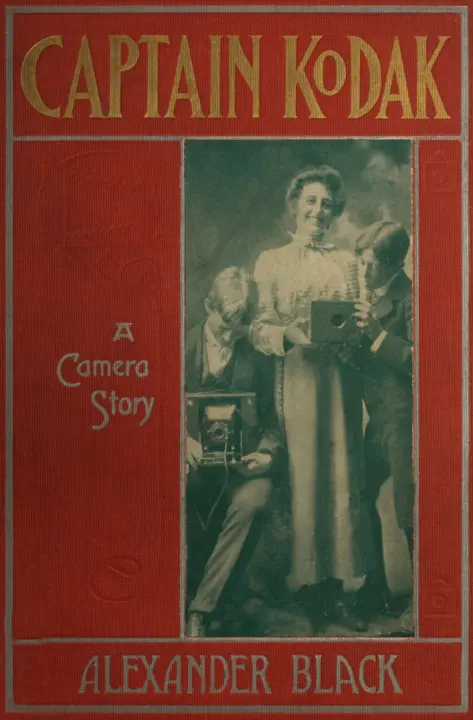
THE CLASSIC COLLECTION · 1899
"Captain Kodak: A Camera Story" by Alexander Black is a fictional narrative written in the late 19th century. The story revolves around an amateur photographer, Allan Hartel, and his adventures alongside his friends, particularly in relation to the excitement and challenges that come from their shared interest in photography. The plot begins with Allan receiving a camera, which ignites a series of events involving friendships, mishaps, and community interactions centered around photography. At the start of the narrative, readers are introduced to Allan and his friend McConnell amidst an amusing chaos after a circus elephant escapes and creates havoc in their town, Hazenfield. Allan expresses a desire to have documented the incident with a photograph, hinting at his budding passion for photography. Shortly afterward, he reveals to McConnell that he won a camera as a prize from a composition contest. This revelation sparks their enthusiasm for setting up a darkroom and experimenting with photography, leading them to a night filled with events surrounding a factory fire that they eagerly attempt to photograph. The opening sets the tone for a blend of adventure, friendship, and the exploratory nature of youth as they dive into the world of photography.
Introduction adapted from the source catalogue; source summaries may be automatically generated.
Free to read · English · 50,307 words · No account needed
MAKE TIME FOR A GOOD BOOK
On by default. Untick to stop anonymous reading totals. Each page counts after 10 seconds in view. How this works.
Anonymous counting is on unless you have switched it off.
“Where the princes sat ought to be good enough for us,” laughed Allan. “Come,” he added, “let us go back to the show,” and they hurried around to the grand stand in time to see the Mexican throwing the lasso.
“I don’t believe we thanked Mr. Twink,” said Allan.
“Won’t we see him again?” asked McConnell.
“That’s so. We can see him before we leave. I feel as if he had been very good to us.” “Indeed he has.”
“We never could have seen so much and got those Indians without him.”
“Do you suppose he would care for a picture of Big Wolf?”
“I don’t think he would.”
“We might ask him.”
“I almost think we had better not bother him again.”
“Except to thank him, you mean?”
“Except to thank him, yes.”
Presently, the man with the wonderful voice, who made the announcements, told how the great Deadwood stage-coach would be attacked by the Indians, and how it would be rescued by a company of cowboys under the leadership of Buffalo Bill.
The coach itself, drawn by four horses, now came rolling around the
arena.
“Are you going?” asked McConnell, his eyes twitching with excitement.
“Of course,” replied Allan; but he could not have concealed his
nervousness.
As the coach drew nearer the grand stand the boys rose and clambered down the steps to the main entrance; and, when the coach stopped, they walked falteringly forward, expecting the man at the bars to ask them what they wanted anyway.
But the man at the bars, on a signal from the coach, made way for them, and the old coach door opened. They now saw that there were two men on the front inside seat, and, with several thousand people watching them, the boys climbed in and sat down on the back seat, the door closed, and the coach started forward with a jolt.
The whip cracked and soon came the louder crack of a rifle, then a clatter of shots, and the two men in the coach, each with a rifle, began blazing away through the window at the yelling band of Indians in pursuit. It was all so real, the Indians looked so ferocious, the smoke and flame from the rifles was so thrilling and threatening, that Allan and McConnell found themselves shrinking in expectation of actual bullets.
In the midst of the hubbub Allan saw through the window, almost at his elbow, the now distorted face of Big Wolf, screaming a most frightful note, and apparently on the point at last of getting even with his photographic tormentors.
Your reading position is saved on this browser. Take it to another device with a library code. Reading pages adapt to text, rather than matching a printed edition.
Alexander Black
Alexander Black
BEHIND THE BOOK
This eBook is for the use of anyone anywhere in the United States and most other parts of the world at no cost and with almost no restrictions whatsoever. You may copy it, give it away or re-use it under the terms of the Project Gutenberg License included with this eBook or online at www.gutenberg.org. If you are not located in the United States, you will have to check the laws of the country where you are located before using this eBook. Read the source licence.
The original source file, including credits and licence, is retained by this library. Request an original-format copy at no charge. Please include the book title and Project Gutenberg identifier #70197.
KEEP YOUR CURIOSITY GOING
Coulson Kernahan

Maurice Baring
Frances Wright
Cécile Tormay

Frederic Jesup Stimson

W. H. P. (William Henry Pope) Jarvis