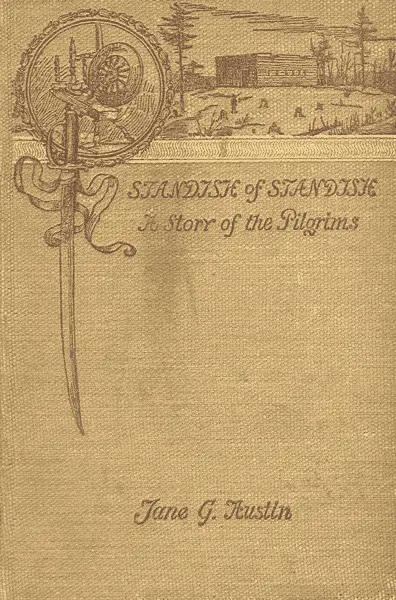
Standish of Standish: A Story of the Pilgrims
Jane G. (Jane Goodwin) Austin
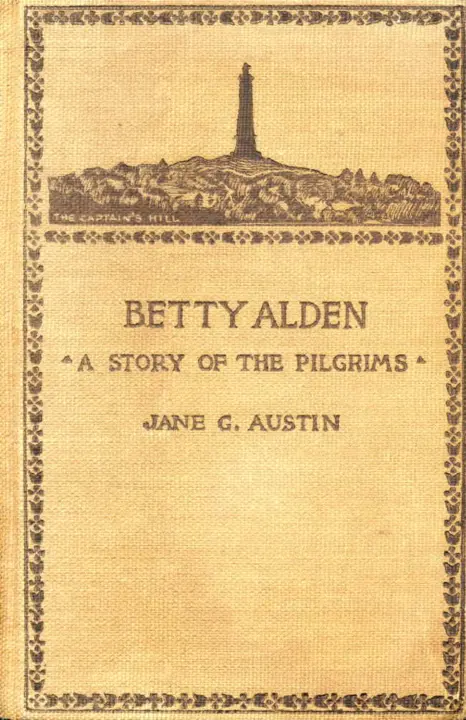
THE CLASSIC COLLECTION · 1891
"Betty Alden: The First-Born Daughter of the Pilgrims" by Jane G. Austin is a historical novel written in the late 19th century. The book explores the life of Betty Alden, the daughter of John and Priscilla Alden, as it intricately weaves her story with the broader historical context of the Pilgrims’ struggles and triumphs in the New World. The narrative likely emphasizes the lives and societal roles of women during this early American period, highlighting Betty's significance as a pivotal character. The opening of the novel introduces the reader to a lively dialogue between characters, revealing the tense political atmosphere in Plymouth as they navigate suspicions of treason among new arrivals, particularly figures like John Lyford and John Oldhame. Priscilla Alden and Barbara Standish engage in spirited banter about the men’s reluctance to heed warnings from women, setting the tone for a community grappling with external threats and internal discord. Through witty exchanges, the characters establish a vivid portrayal of life in Plymouth, hinting at Betty's future involvement in the conflicts that surround her family and colony.
Introduction adapted from the source catalogue; source summaries may be automatically generated.
Free to read · English · 109,719 words · No account needed
MAKE TIME FOR A GOOD BOOK
On by default. Untick to stop anonymous reading totals. Each page counts after 10 seconds in view. How this works.
Anonymous counting is on unless you have switched it off.
Again Bartholomew Allerton, with much pride in the performance, beat out the “assembly” in the Town Square, and at the sound some fourscore men gathered from the houses, the shore, or those impaled garden plots surrounding each house, where already patient toil had produced in the wilderness very sweet reminiscences of English cottage-gardens.
The weather was wild, and ominous with the promise of one of those fierce storms of wind and rain, pretty sure to visit the coast in March and September, and still called by Plymouth folk the line storm, or the equinoctial, in calm contempt of modern meteorological theories. They also call a thunder-shower, however slight, a “tempest,” and who is to object? Not I.
“Master Lyford’s friends are gathering in force,” remarked Standish, as he stood at the door of his house just below the Fort on Burying Hill.
“His friends!” repeated Alden, who, living in the house between that of the governor and the captain, was often to be found in company of the latter. “I did not think he had friends enough in Plymouth to be called a force.”
“Not in Plymouth, nor yet in heaven, but somewhere between the two. The armies of the Prince of the Power of the Air.”
And Standish, smiling grimly, pointed to the troops of clouds scurrying up over Manomet, and Watson’s Hill, and all along the eastern and southern horizon; serried ranks, and scattered outposts, and flying vedettes, which, now by a flank movement, and now by an onward rush, seemed taking possession of all the blue battlefield above, blotting out the azure, and audaciously attacking the great sun himself.
“’Tis the equinoctial,” stammered John Alden, perplexed.
“The wind, the great wind Euroclydon,” replied Standish, who loved the sonorous and martial sound of old Bible English, and read it alternately with his Cæsar.
“Are you ready, Captain? You remember our arrangements?” asked Bradford, his fine face a little more pallid, a little more nervous than its wont, as he stopped on his way up the hill with the Elder and Doctor Fuller, who was vehemently saying,--
“Oh, he’ll clear himself, Elder, he’ll clear himself; an unsuspicious man like Brother Lyford may be led into unadvised action from the very best and soundest of motives.”
“Then he must be restrained, for the safety of other people as well as for his own,” replied the Elder coldly. “If one of your fever patients took a fancy in his delirium to set the house afire, I don’t suppose you would leave him unchecked in his action, however blameless you might hold himself.”
Your reading position is saved on this browser. Take it to another device with a library code. Reading pages adapt to text, rather than matching a printed edition.
Jane G. (Jane Goodwin) Austin
BEHIND THE BOOK
This eBook is for the use of anyone anywhere in the United States and most other parts of the world at no cost and with almost no restrictions whatsoever. You may copy it, give it away or re-use it under the terms of the Project Gutenberg License included with this eBook or online at www.gutenberg.org. If you are not located in the United States, you will have to check the laws of the country where you are located before using this eBook. Read the source licence.
The original source file, including credits and licence, is retained by this library. Request an original-format copy at no charge. Please include the book title and Project Gutenberg identifier #67608.
KEEP YOUR CURIOSITY GOING
Cécile Tormay

Moritz Busch
Coulson Kernahan
John L. Ransom

Maurice Baring
Frances Wright