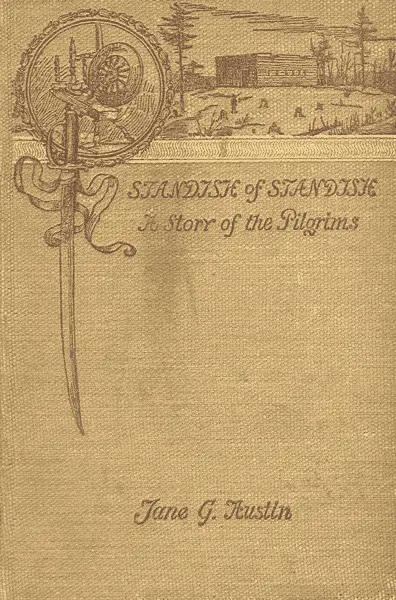
Standish of Standish: A Story of the Pilgrims
Jane G. (Jane Goodwin) Austin
THE CLASSIC COLLECTION · 1891
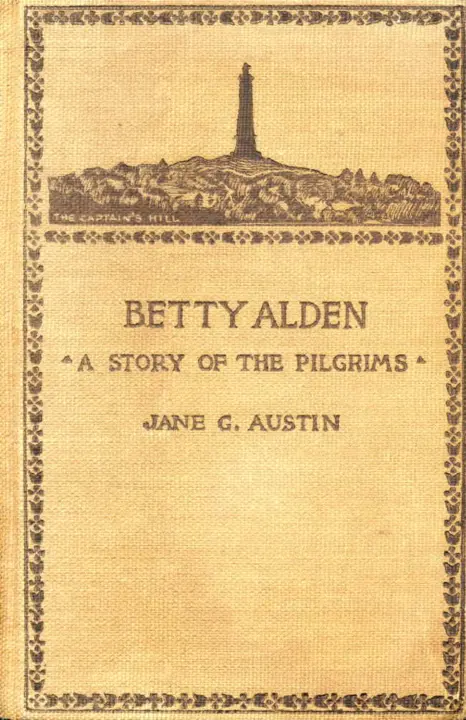
"Betty Alden: The First-Born Daughter of the Pilgrims" by Jane G. Austin is a historical novel written in the late 19th century. The book explores the life of Betty Alden, the daughter of John and Priscilla Alden, as it intricately weaves her story with the broader historical context of the Pilgrims’ struggles and triumphs in the New World. The narrative likely emphasizes the lives and societal roles of women during this early American period, highlighting Betty's significance as a pivotal character. The opening of the novel introduces the reader to a lively dialogue between characters, revealing the tense political atmosphere in Plymouth as they navigate suspicions of treason among new arrivals, particularly figures like John Lyford and John Oldhame. Priscilla Alden and Barbara Standish engage in spirited banter about the men’s reluctance to heed warnings from women, setting the tone for a community grappling with external threats and internal discord. Through witty exchanges, the characters establish a vivid portrayal of life in Plymouth, hinting at Betty's future involvement in the conflicts that surround her family and colony.
Introduction adapted from the source catalogue; source summaries may be automatically generated.
Free to read · English · 109,719 words · No account needed
MAKE TIME FOR A GOOD BOOK
On by default. Untick to stop anonymous reading totals. Each page counts after 10 seconds in view. How this works.
Anonymous counting is on unless you have switched it off.
“For ’tis the twenty-first of June,
The merriest day in all the year,”
sang Jack Jenney, the younger brother of the mill and the miller, as to amuse his sister’s visitors he threw the great wheel into gear and set the machinery in motion. “Put in a grist, you young idiot, and don’t grind off the face of the stones,” growled Samuel, standing by, and not so hospitable as to forget business.
“Well, here’s Squire Pabodie’s Indian waiting--English, too, but that wants daylight. Here, bear a hand, Sam, with the Indian.” And the two young men poured the two bushels of gold-colored maize into the hopper, while little Hope Howland, bending over to see it drawn down the vortex of the cruel stones, cried,--
“Poor Indian! Do you know, Jack, one of those Englishmen that came from Boston to see the Rock where our fathers first landed was at the governor’s to dinner, and father was there, and Master Bradford said he must have some more Indian ground, and the man made great eyes and said,--
“‘But does your excellency chastise the savages in such fashion as that?’ He thought, poor gentleman, that we ground up the Indians!”
“And doubtless he feared our governor next would roar,--
‘Fee, fie, faw, fum!
I smell the blood of an Englishman!
And be he alive, or be he dead,
I’ll grind his bones to make my bread!’”
And John Howland junior put his great hands upon his sister’s shoulders to draw her back, saying, “But we won’t have you ground this grist, Hope; so don’t tumble in. Mother wouldn’t like it.”
“Oh, John, how you tease!” cried Hope, pouting, yet clinging to the arm of her stalwart brother, a fine young fellow, who at a later date calmly incurred judicial censure and a heavy fine for the sake of warning some Quakers, in whose belief he had no share, that they were about to be arrested and imprisoned. And from that day to our own the stout Howland blood has held its own, foremost in that Army of Occupation which the departing Pilgrims left to hold the land their prowess had won.
But while this little scene was enacted around the hopper, William Pabodie, who, bringing his father’s corn to mill late in the afternoon, had accepted an invitation to spend the evening and join the merrymaking, wandered out of the house, and standing beside the pool, idly broke the branch of lilac that some one had given him into little bits and cast them upon the waters.
Your reading position is saved on this browser. Take it to another device with a library code. Reading pages adapt to text, rather than matching a printed edition.
Jane G. (Jane Goodwin) Austin
BEHIND THE BOOK
This eBook is for the use of anyone anywhere in the United States and most other parts of the world at no cost and with almost no restrictions whatsoever. You may copy it, give it away or re-use it under the terms of the Project Gutenberg License included with this eBook or online at www.gutenberg.org. If you are not located in the United States, you will have to check the laws of the country where you are located before using this eBook. Read the source licence.
The original source file, including credits and licence, is retained by this library. Request an original-format copy at no charge. Please include the book title and Project Gutenberg identifier #67608.
KEEP YOUR CURIOSITY GOING
Cécile Tormay

Moritz Busch
Coulson Kernahan
John L. Ransom

Maurice Baring
Frances Wright