THE CLASSIC COLLECTION✦Notes on witchcraftCLASSIC FREE BOOKS
Notes on witchcraft
George Lyman Kittredge
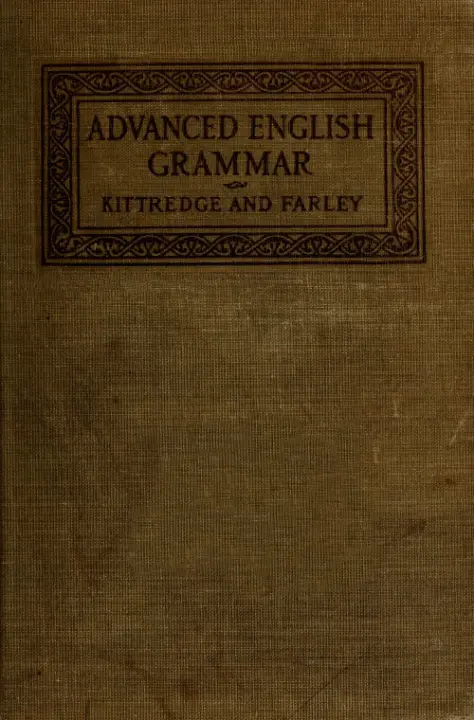
THE CLASSIC COLLECTION · 1913
"An Advanced English Grammar with Exercises" by George Lyman Kittredge and Frank Edgar Farley is an educational grammar textbook written in the early 20th century. This comprehensive guide aims to enhance students' understanding of English grammar, focusing on various elements such as parts of speech, inflections, and syntax. It is designed for learners who have a foundational knowledge of English and seeks to provide in-depth insights into sentence structure, grammatical rules, and usage. The opening of the text presents a clear structure for the book, beginning with a preface that outlines the organization of its content into distinct parts covering the essentials of English grammar. It sets the stage for a systematic study that includes both definitions and examples of various grammatical components and their functions within sentences. Additionally, the introduction emphasizes the relationship between language, thought, and grammar, establishing a foundational understanding of how grammar serves as a framework for effective communication. This portion effectively presents both the purpose of the text and the strategic approach it will take in facilitating advanced English grammar learning.
Introduction adapted from the source catalogue; source summaries may be automatically generated.
Free to read · English · 100,928 words · No account needed
MAKE TIME FOR A GOOD BOOK
On by default. Untick to stop anonymous reading totals. Each page counts after 10 seconds in view. How this works.
Anonymous counting is on unless you have switched it off.
+76.+ A few nouns have the same form in both singular and plural.
EXAMPLES: deer, sheep, heathen, Japanese, Portuguese, Iroquois.
NOTE. This class was larger in older English than at present. It included, for example, year, which in Shakspere has two plurals:--“six thousand years,” “twelve year since.”
+77.+ A few nouns have two plurals, but usually with some difference in
meaning.
brother { brothers (relatives)
{ brethren (members of the same society)
horse { horses (animals)
{ horse (cavalry)
foot { feet (parts of the body)
{ foot (infantry)
sail { sails (on vessels)
{ sail (vessels in a fleet)
head { heads (in usual sense)
{ head (of cattle)
fish { fishes (individually)
{ fish (collectively)
penny { pennies (single coins)
{ pence (collectively)
cloth { cloths (pieces of cloth)
{ clothes (garments)
die { dies (for stamping)
{ dice (for gaming)
The pennies were arranged in neat piles.
English money is reckoned in pounds, shillings, and pence.
+78.+ When +compound nouns+ are made plural, the last part usually takes the plural form; less often the first part; rarely both parts.
EXAMPLES: spoonful, spoonfuls; bathhouse, bathhouses; forget-me-not, forget-me-nots; editor-in-chief, editors-in-chief; maid-of-honor, maids-of-honor; gentleman usher, gentlemen ushers; Knight Templar, Knights Templars; Lord Justice, Lords Justices; manservant, menservants.
+79.+ Letters of the alphabet, figures, signs used in writing, and words regarded merely as words take ’s in the plural.
“Embarrassed” is spelled with two r’s and two s’s.
Your 3’s look like 8’s.
Tell the printer to change the §’s to ¶’s.
Don’t interrupt me with your but’s!
+80.+ Foreign nouns in English sometimes retain their foreign plurals; but many have an English plural also.
Some of the commonest are included in the following list:[12]
alumna (feminine) alumnæ
alumnus (masculine) alumni
amanuensis amanuenses
analysis analyses
animalculum animalcula[13]
antithesis antitheses
appendix { appendices
{ appendixes
axis axes
bacillus bacilli
bacterium bacteria
bandit { banditti
{ bandits
basis bases
beau { beaux
{ beaus
candelabrum candelabra
cumulus cumuli
cherub { cherubim
{ cherubs
crisis crises
curriculum curricula
datum data
ellipsis ellipses
erratum errata
formula { formulæ
{ formulas
genius { genii
{ geniuses
genus genera
gymnasium { gymnasia
{ gymnasiums
hippopotamus hippopotami
hypothesis hypotheses
larva larvæ
memorandum { memoranda
{ memorandums
nebula nebulæ
oasis oases
parenthesis parentheses
phenomenon phenomena
radius radii
seraph { seraphim
{ seraphs
species species
stratum strata
synopsis synopses
tableau tableaux
tempo tempi
terminus termini
thesis theses
trousseau trousseaux
vertebra vertebræ
The two plurals sometimes differ in meaning: as,--
Michael Angelo and Raphael were geniuses.
Spirits are sometimes called genii.
This book has two indices.
The printer uses signs called indexes.
+81.+ When a +proper name+ with the title Mr., Mrs., Miss, or Master, is put into the plural, the rules are as follows:--
1. The plural of Mr. is Messrs. (pronounced Messers[14]). The name remains in the singular. Thus,--
Mr. Jackson, plural Messrs. (or the Messrs.) Jackson.
Your reading position is saved on this browser. Take it to another device with a library code. Reading pages adapt to text, rather than matching a printed edition.
BEHIND THE BOOK
This eBook is for the use of anyone anywhere in the United States and most other parts of the world at no cost and with almost no restrictions whatsoever. You may copy it, give it away or re-use it under the terms of the Project Gutenberg License included with this eBook or online at www.gutenberg.org. If you are not located in the United States, you will have to check the laws of the country where you are located before using this eBook. Read the source licence.
The original source file, including credits and licence, is retained by this library. Request an original-format copy at no charge. Please include the book title and Project Gutenberg identifier #45814.
KEEP YOUR CURIOSITY GOING

Charles G. (Charles Griffith) Ross
Hannah Webster Foster

Emily Lawless
Edwin Hamlin Carr

Charles De Lano Hine
Andrew Ure