THE CLASSIC COLLECTION✦My diaries, being a personal narrative of events 1888-1914, Part 2 (1900-1914)CLASSIC FREE BOOKS
My diaries, being a personal narrative of events 1888-1914, Part 2 (1900-1914)
Wilfrid Scawen Blunt
THE CLASSIC COLLECTION · 1874
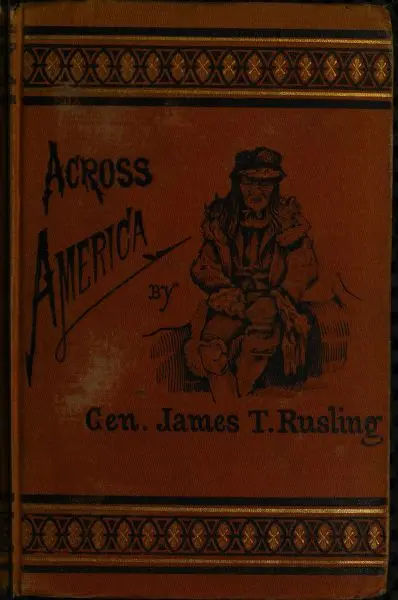
"Across America; Or, The Great West and the Pacific Coast" by James Fowler Rusling is a historical account written in the mid-19th century. The work details the author's extensive journey across America, specifically focusing on the exploration and inspection of military posts from Fort Leavenworth to the Pacific Coast, including his observations of the people, landscapes, and changing cultures he encounters along the way. At the start of the narrative, Rusling sets the stage for his journey with a description of his orders to inspect various military posts in the West following the Civil War. He describes the logistical aspects of his travels, including the modes of transportation, the people he travels with, and his initial impressions of the landscapes he traverses. The opening chapters cover his departure from New York, passage through multiple states, and his encounter with both settlers and Indigenous peoples, illustrating the rich and often challenging realities of the American frontier during that era. The author employs a vivid and engaging style, inviting readers into the world of 1866 America as he navigates varied terrains and unfamiliar cultures.
Introduction adapted from the source catalogue; source summaries may be automatically generated.
Free to read · English · 147,892 words · No account needed
MAKE TIME FOR A GOOD BOOK
On by default. Untick to stop anonymous reading totals. Each page counts after 10 seconds in view. How this works.
Anonymous counting is on unless you have switched it off.
In the course of the afternoon, hundreds of the Indians thronged our little camp, in all varieties of costume, though chiefly in breech-cloth and blanket or buffalo-robe. Both sexes dress much alike, and at first it was difficult to distinguish one from the other, though you soon came to know the squaws from their smaller stature. The paraphernalia of some of them was ludicrous in the extreme. One young buck had managed to secure an old-style artillery hat, with long scarlet horsehair plume, and a dilapidated white shirt; and as he strutted about in these (only these and nothing more!) considered himself wholly en regle. Another, the princess and beauty of the tribe, a dirty belle of seventeen, resplendent in paint and feathers, was arrayed in much gorgeousness of beads and buckskin, and whiffed her cigarritos by the hour together. During the morning she had ridden her thirty miles, man-fashion, with the chiefs from Fort Garland, and in the afternoon she lolled about camp in magnificent indolence. Her laugh was rich and musical, and she seemed indeed quite a pet with the tribe.
The afternoon was passed in preliminary arrangements for the Treaty, and towards evening a number of us walked over to the Indian village to return our calls. We found it to consist of perhaps three hundred wigwams, arranged pretty regularly in streets, and containing in all some twelve hundred souls. The wigwams or lodges were made of skins and hides, stretched over circularly inclined poles--rude originals evidently of our army Sibley tents--with an opening at the top for the smoke to escape through. At the door were planted their spears or lances, and shields; inside, on skins or blankets, the braves were fast asleep or playing cards; without, the youngsters were playing ball or practicing with the bow and arrows. We wandered through the streets until nightfall, striking up a talk or barter in our broken Ute the best we could, and had some interesting experiences. Just then the village was all agog with excitement and joy. The day before, their Agent had given them several beeves, which they had at once slaughtered and partly eaten; the surplus was now hanging all about on lariats and poles, curing in the dry atmosphere. "Jerked-beef," I suppose, our Plains-men would call it. A flock of sheep had also been given them, and the squaws were now busy "corraling" these, as we happened along. A few refractory ewes refused to enter the corral--a slight enclosure of brush--and these were being hotly pursued by the boy-braves and dogs. The dogs headed them off on all sides, while the boys lassoed them one after another, until the squaws came up and caught them. It was fine practice for the lasso, and the youngsters seemed to enjoy it greatly. Dogs abounded everywhere. Each wigwam seemed to have a goodly supply, and the village at large a brigade besides. They were small wolfish-looking curs, as a rule, and the most vociferous and incessant yelpers I ever listened to. They had no regular bark--only a wild yelp, like their savage ancestors, the cayotes of the Plains. It is only the civilized dog, that "bays deep-mouthed welcome"--that has a full, open "bark"--and this he loses when he relapses to savagery again. There was no moving anywhere about the village, without having a score or more of them yelping at your heels; but this seemed to be the extent of their hostile intentions. When they became rather noisier than usual, some passing squaw would dash at them with a stick and a shower of "God dams," and that would scatter them for the time. Most of our Indians have all learned to swear the rough oaths of the Border, and always swear in English, as they have no corresponding words in their own language. In describing cavalry, they put the thumb and forefinger of one hand on the palm of the other, and then move them along in imitation of a gallop. In speaking of ox-trains, they stretch out their arms, and say, "Whoa-Haw! Git!" But when they come to mule-teams, they invariably speak of them as "God dams! Go 'long!" because of the copious oaths our teamsters hurl at them. Indeed, the average Indian always speaks of the donkey, as a "God dam," and thinks that the correct name. These Utes in general, I must say, seemed to be much more thrifty and comfortable than we had anticipated, though doubtless some of this was due to the recent generous issue of supplies by the Agent.
Your reading position is saved on this browser. Take it to another device with a library code. Reading pages adapt to text, rather than matching a printed edition.
BEHIND THE BOOK
This eBook is for the use of anyone anywhere in the United States and most other parts of the world at no cost and with almost no restrictions whatsoever. You may copy it, give it away or re-use it under the terms of the Project Gutenberg License included with this eBook or online at www.gutenberg.org. If you are not located in the United States, you will have to check the laws of the country where you are located before using this eBook. Read the source licence.
The original source file, including credits and licence, is retained by this library. Request an original-format copy at no charge. Please include the book title and Project Gutenberg identifier #42706.
KEEP YOUR CURIOSITY GOING
Wilfrid Scawen Blunt
Wilfrid Scawen Blunt

E. W. (Edgar Watson) Howe
Cécile Tormay

Moritz Busch
John L. Ransom