THE CLASSIC COLLECTION✦My diaries, being a personal narrative of events 1888-1914, Part 2 (1900-1914)CLASSIC FREE BOOKS
My diaries, being a personal narrative of events 1888-1914, Part 2 (1900-1914)
Wilfrid Scawen Blunt
THE CLASSIC COLLECTION · 1874
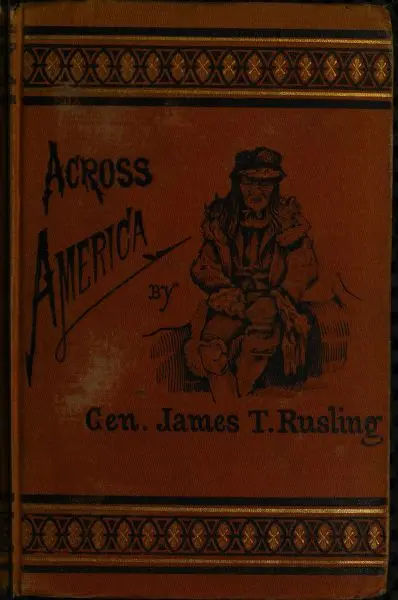
"Across America; Or, The Great West and the Pacific Coast" by James Fowler Rusling is a historical account written in the mid-19th century. The work details the author's extensive journey across America, specifically focusing on the exploration and inspection of military posts from Fort Leavenworth to the Pacific Coast, including his observations of the people, landscapes, and changing cultures he encounters along the way. At the start of the narrative, Rusling sets the stage for his journey with a description of his orders to inspect various military posts in the West following the Civil War. He describes the logistical aspects of his travels, including the modes of transportation, the people he travels with, and his initial impressions of the landscapes he traverses. The opening chapters cover his departure from New York, passage through multiple states, and his encounter with both settlers and Indigenous peoples, illustrating the rich and often challenging realities of the American frontier during that era. The author employs a vivid and engaging style, inviting readers into the world of 1866 America as he navigates varied terrains and unfamiliar cultures.
Introduction adapted from the source catalogue; source summaries may be automatically generated.
Free to read · English · 147,892 words · No account needed
MAKE TIME FOR A GOOD BOOK
On by default. Untick to stop anonymous reading totals. Each page counts after 10 seconds in view. How this works.
Anonymous counting is on unless you have switched it off.
We reached Fort Garland next day (Sept. 20) about one, P. M., without meeting a single Indian, either hostile or friendly. Denver, as before said, had warned us to be on our guard, and we tried to be; but all reported dangers vanished as we advanced--Munchausen after Munchausen exploding in turn. From the Huerfano across the mountains to Garland, some fifty miles or more, there was but a single ranch, and scarcely anybody on the road. A Mexican on foot and another on a donkey were emigrating to the Huerfano, and at one point we encountered a whole family similarly engaged. Paterfamilias, whiffing his cigarito, led a diminutive broncho (Mexican for jackass) about the size of a spring calf, on which sat his household gods, to wit, his Señora also smoking, with a child before and another behind her--all of them astride. Another broncho of about the same size followed on behind, loaded down with clothing, bedding, and various domestic utensils until there was but little to be seen of him except his legs. What the locomotive is to the Yankee, and the horse to the borderer, that the broncho is to the Mexican, and the two seem alike fitted for each other and inseparable. His patient little beast costs but little, and when stopping browses by the wayside the best it may, while Don Quixote himself sits basking in the sunshine. The serene and infinite content of a Mexican peon, as he sits thus wrapped in his poncho or serape, sucking his everlasting cigarrito, no American can imagine. His dignity is as perfect as that of a Castilian; but the stolidity of his brain, who shall describe?
Some fifteen miles or so from Fort Garland, in the heart of the San Luis Park, lies San Luis de Culebra, a hamlet of five or six hundred people, and I believe, the most considerable "city," there. You strike the Park proper some distance east of Fort Garland, and from there to Culebra the country is substantially a dead-level. Culebra was then a genuine Mexican town without an atom of the Yankee in or about it, and seemed a thousand years old, it was so sleepy, though comparatively a new settlement. Its houses were all one-story adobes, with chimneys in the corner, in the true Mexican style, and were all grouped about a central "plaza," of course, or the town would not be Mexican. All Southern Colorado, it will be remembered, formerly belonged to New Mexico, and hence these Mexican settlements here and beyond. The people raised wheat, barley, and oats to some extent; but depended on their flocks and herds chiefly for support. We entered Culebra at dark, amidst a multitudinous chorus of dogs, and halted at the house of Capt. D. a bright German, formerly an officer of New Mexican Volunteers, but who had recently married a Culebra señorita and settled there. He gave us an excellent supper, after which we all adjourned to a "baille," or Mexican Ball, gotten up especially in honor of Gen. Sherman and Gov. Cumming, but which Sherman was unable to attend. Several of his staff-officers, however, and the governor were present, and these with the rest of us made up quite a party. These bailles are great institutions among the New Mexicans, who retain all the old Spanish fondness for music and dancing, and are ready for a "baille," any time. The Culebrans had already had two or three that week, but got up the Sherman-Cumming one on short notice and in grand style. The only thing necessary was to engage a room and music, and send a runner through the village, to announce a baille was on the tapis, and the whole population--men, women, children, dogs, and fleas--were sure to be there. At the primitive hour of eight P. M. the people began to assemble, and by nine P. M. the baille was in full blast. The ball-room itself was an adobe building, one-story high, perhaps fifty feet long by thirty wide, with a dirt floor, and seats all around. At the farther end was a rude bar, with a transparency over it, bearing the motto, "Limonade and Egg-nog," at which each cavalier was expected to treat his lady from time to time. Near this was a rough platform for the musicians, who consisted of three or four violinists, led by an irrepressible guitarist--blind and quite a character in his way. As the evening progressed, he worked himself up into an ecstacy of enthusiasm, and then, with his eyes "in fine phrensy rolling," improvised words to every piece they played. He appeared perfectly absorbed and carried away with playing and singing, and when a dance ended seemed quite exhausted. No bone-ist, or tambourine-ist, in a troupe of minstrels east, ever performed with more thorough and reckless abandon. His head was thrown back; his eye-balls rolled wildly: his coarse, matted, coal-black hair swept his shoulders: his long and bony fingers fairly flew up and down his quivering guitar: while his shrill, piping, tenor voice rose and fell above the music, in thorough unison with the general scene. Later in the evening, after frequent potations of egg-nog, Don Jesus, (for that was his name) became immensely funny, and his gyrations amused us greatly.
Your reading position is saved on this browser. Take it to another device with a library code. Reading pages adapt to text, rather than matching a printed edition.
BEHIND THE BOOK
This eBook is for the use of anyone anywhere in the United States and most other parts of the world at no cost and with almost no restrictions whatsoever. You may copy it, give it away or re-use it under the terms of the Project Gutenberg License included with this eBook or online at www.gutenberg.org. If you are not located in the United States, you will have to check the laws of the country where you are located before using this eBook. Read the source licence.
The original source file, including credits and licence, is retained by this library. Request an original-format copy at no charge. Please include the book title and Project Gutenberg identifier #42706.
KEEP YOUR CURIOSITY GOING
Wilfrid Scawen Blunt
Wilfrid Scawen Blunt

E. W. (Edgar Watson) Howe
Cécile Tormay

Moritz Busch
John L. Ransom