THE CLASSIC COLLECTION✦My diaries, being a personal narrative of events 1888-1914, Part 2 (1900-1914)CLASSIC FREE BOOKS
My diaries, being a personal narrative of events 1888-1914, Part 2 (1900-1914)
Wilfrid Scawen Blunt
THE CLASSIC COLLECTION · 1874
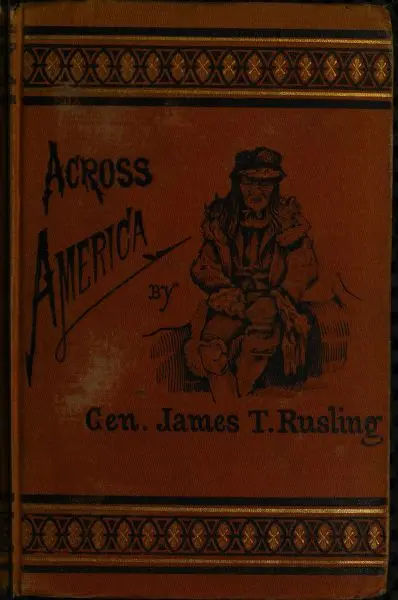
"Across America; Or, The Great West and the Pacific Coast" by James Fowler Rusling is a historical account written in the mid-19th century. The work details the author's extensive journey across America, specifically focusing on the exploration and inspection of military posts from Fort Leavenworth to the Pacific Coast, including his observations of the people, landscapes, and changing cultures he encounters along the way. At the start of the narrative, Rusling sets the stage for his journey with a description of his orders to inspect various military posts in the West following the Civil War. He describes the logistical aspects of his travels, including the modes of transportation, the people he travels with, and his initial impressions of the landscapes he traverses. The opening chapters cover his departure from New York, passage through multiple states, and his encounter with both settlers and Indigenous peoples, illustrating the rich and often challenging realities of the American frontier during that era. The author employs a vivid and engaging style, inviting readers into the world of 1866 America as he navigates varied terrains and unfamiliar cultures.
Introduction adapted from the source catalogue; source summaries may be automatically generated.
Free to read · English · 147,892 words · No account needed
MAKE TIME FOR A GOOD BOOK
On by default. Untick to stop anonymous reading totals. Each page counts after 10 seconds in view. How this works.
Anonymous counting is on unless you have switched it off.
Indications of mining operations appeared first at Denver, where gold was first discovered at the junction of the South Platte and Cherry Creek. But the "diggings," or placer mines, here were soon worked out, and then the miners naturally ascended Cherry Creek to Clear Creek, and so into the heart of the mountains. All along North Clear Creek, you see where the stream has been turned aside, and its bed "panned" over, and as we approached Black Hawk we found a few miners still humbly at work this way. But placer-mining in Colorado had mostly been abandoned as no longer profitable, and now the chief labor and capital were applied to the quartz mines--the parents of the "diggings." These seemed to occur, more or less, all through the Rocky Mountains, wherever quartz cropped out; but the richest of them thus far had been found in the narrow defile about Central City. The sides of the ranges there had been "prospected" all over, until they seemed honey-combed or like pepper-boxes, so ragged and torn were they with the process. Here and there they were divided up into infinitesimal lots, rudely enclosed, embracing a few hundred feet or so, denoting mining "claims." Many of these had shafts sunk some distance, with a board up, proclaiming name of mine and the ownership thereof, but others were without these. The favorite mine in Colorado just then seemed to be the Gregory Consolidated, near Central City. We went down into this some three hundred feet, exploring its various galleries, and it seemed to be all that was represented. The gold here was so much diffused through the quartz as to be imperceptible to the eye, and was further mingled badly with silver, copper, and sulphur. The company had erected no mill as yet, but were contenting themselves with developing the lode, and getting out "pay-ore." Their plan was to sink the main shaft straight down on the lode, and every twenty feet or so follow up the indications by lateral galleries, to see whether the vein held out or not. So far it was doing well, and the ore continued of an excellent quality. But it was so difficult to reduce, there was no mill in Colorado that could save a fair proportion of the gold; so that what ore they cared to work was shipped east, or to Swansea, Wales, even, for reduction. The superintendent of the mine was a sturdy young Englishman, once a humble miner with his pick and candle, but afterwards sub-superintendent of a great silver mine in Mexico, and now for two or three years here--a man of rare energy and intelligence. No wonder the stock of the Gregory Consolidated was steadily rising, with such a policy and such a superintendent. Too many of the companies organized in the east were pursuing just the contrary course. They were putting up mills at once at great expense, with steam engines and stamps complete, and then when they came to sink down upon their veins, lo! they had no "pay-ore" there, or at least none worth working. A signal instance of this had occurred a year or two before. A New York Wall street Company had been organized, on a broad basis, and with great expectations. With a West Point ex-army officer superintendent and plenty of capital, their stock soon went soaring up like a rocket; but presently it came down again like a stick--a la their superintendent during the war. He erected a splendid mill of dressed stone at a cost of thousands of dollars, and went in wildly for all the latest and most improved machinery; but when afterwards he came to test their lode thoroughly, alas! he discovered they had only a poor sickly trace of ore, that soon "petered out," and so that fine company of gold and silver miners incontinently collapsed--or, as Mr. Mantilini would have said, "went to the demnition bow-wows!" Machinery that cost the company thirty-three thousand dollars in New York, was afterwards sold by the Colorado sheriff for thirteen hundred dollars, to pay freight bills; and other property in proportion. Other instances were reported to us, but none quite so bad as this. But from the large number of mills and mines standing idle--fully fifty per cent., it seemed--we could well believe that mining machinery could be bought cheaper in Colorado than New York, and that steam-engines and boilers were a drug. A foundry-man beyond Golden City, we were told, found it more profitable to buy up old machinery and recast it, than to work a rich iron mine, though the former was scattered through the mountains and the latter was just at his door.
Your reading position is saved on this browser. Take it to another device with a library code. Reading pages adapt to text, rather than matching a printed edition.
BEHIND THE BOOK
This eBook is for the use of anyone anywhere in the United States and most other parts of the world at no cost and with almost no restrictions whatsoever. You may copy it, give it away or re-use it under the terms of the Project Gutenberg License included with this eBook or online at www.gutenberg.org. If you are not located in the United States, you will have to check the laws of the country where you are located before using this eBook. Read the source licence.
The original source file, including credits and licence, is retained by this library. Request an original-format copy at no charge. Please include the book title and Project Gutenberg identifier #42706.
KEEP YOUR CURIOSITY GOING
Wilfrid Scawen Blunt
Wilfrid Scawen Blunt

E. W. (Edgar Watson) Howe
Cécile Tormay

Moritz Busch
John L. Ransom