THE CLASSIC COLLECTION✦My diaries, being a personal narrative of events 1888-1914, Part 2 (1900-1914)CLASSIC FREE BOOKS
My diaries, being a personal narrative of events 1888-1914, Part 2 (1900-1914)
Wilfrid Scawen Blunt
THE CLASSIC COLLECTION · 1874
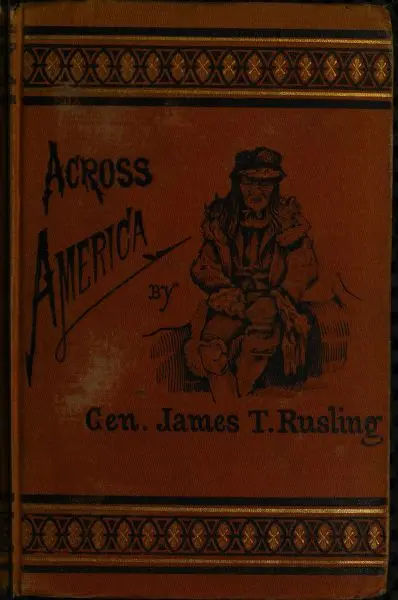
"Across America; Or, The Great West and the Pacific Coast" by James Fowler Rusling is a historical account written in the mid-19th century. The work details the author's extensive journey across America, specifically focusing on the exploration and inspection of military posts from Fort Leavenworth to the Pacific Coast, including his observations of the people, landscapes, and changing cultures he encounters along the way. At the start of the narrative, Rusling sets the stage for his journey with a description of his orders to inspect various military posts in the West following the Civil War. He describes the logistical aspects of his travels, including the modes of transportation, the people he travels with, and his initial impressions of the landscapes he traverses. The opening chapters cover his departure from New York, passage through multiple states, and his encounter with both settlers and Indigenous peoples, illustrating the rich and often challenging realities of the American frontier during that era. The author employs a vivid and engaging style, inviting readers into the world of 1866 America as he navigates varied terrains and unfamiliar cultures.
Introduction adapted from the source catalogue; source summaries may be automatically generated.
Free to read · English · 147,892 words · No account needed
MAKE TIME FOR A GOOD BOOK
On by default. Untick to stop anonymous reading totals. Each page counts after 10 seconds in view. How this works.
Anonymous counting is on unless you have switched it off.
The prevailing hues of the landscape were a dull red and brownish gray, and these produced at times some very singular and striking effects. The one thing, that relieved our ride from utter dullness and monotony, was the weird and picturesque forms, in which nature has there piled up her rocks, and chiseled out her mountains. Domes, peaks, terraces, castles, turrets, ramparts--all were sculptured against the cloudless sky; and we fell to interesting ourselves sometimes for hours, as we rode along, in tracing out the strange resemblances to all sorts of architecture and animals, ancient and modern, that nature, in her silent sublimity, has perpetrated there. At sunset, when parting day lingered and played upon the surrounding or distant mountains, it bathed their rock-ribbed sides and summits in the most gorgeous tints of purple and maroon, and filled the imagination with all that was most sublime and mysterious. What Milton must have thought of in portraying Hell, or Dante imagined in delineating the weird and sombre landscapes of his awful Inferno, may well be realized in passing through this singular region, where Desolation seems to have outstretched her wings, and made up her mind to brood gloomily forever.
At Union Pass, we crossed the last mountain range, at an elevation of fully five thousand feet, whence we caught welcome sight again of the ruby waters of the Colorado. Debouching into the valley, we presently struck the river at Hardyville. Here it winds its sinuous course, through a broad valley of volcanic mesas and mountains, and has no bottoms worth mentioning, except those occupied of old by the Mojave Indians. These are fertilized by the annual overflow of the Colorado, like the bottoms of the Nile, and no doubt might be made to produce very largely. As it was, the Mojaves scratched them a little, so as to plant some corn and barley, and raise a few beans, vegetables, etc., the surplus of which they sold chiefly at Hardyville, for Mr. Hardy to re-sell to the Government again--of course, at a profit. It seemed, on the whole, that they did not usually raise enough, off of all their broad acres, to feed and clothe themselves comfortably; and we were told they would often go hungry, were it not for the gratuitous issues of flour, meal, and other supplies occasionally made to them by the commanding officer at Fort Mojave. We rode through their villages one evening, while halting at Fort Mojave, and found they numbered about a thousand or so just there; but farther down the Colorado, at La Paz, there was said to be another branch of them, even more numerous. They were usually a shapely, well-made race, and seemed to take life even more easy, if possible, than their red brethren elsewhere. Their women made a rude pottery ware, that seemed in general use among them, and the men themselves sometimes labored commendably, in gathering drift-wood for fuel for the petty steamers, that occasionally ascended to Hardyville. These Mojaves had been quiet and peaceable for years, and it seemed very moderate efforts would put them on the road to civilization, as readily as the Choctaws and the Cherokees. But they complained, and quite justly, that the Government did not furnish them implements, tools, seeds, etc., to enable them to work their lands and support themselves, while the savage Hualapais, Pai-Utes, and other hostile tribes, were being constantly bribed with presents and annuities. This, however, was only another instance of the stupidity and blundering of our Indian Department at that time, whose policy, or rather impolicy, seemed to be to neglect friendly Indians, and exhaust its money and efforts on hostile ones, under the plea of "pacifying" them! As if "gifts" and "annuities" ever really pacified or civilized a Red Skin yet, or ever will! No; the only true policy with our Indians, then as now, is to encourage and reward the friendly, in every right way; while the hostile ones should be turned over to the Army, for chastisement and surveillance, to the uttermost, until they learn the hard lesson, that henceforth they must behave themselves.
Your reading position is saved on this browser. Take it to another device with a library code. Reading pages adapt to text, rather than matching a printed edition.
BEHIND THE BOOK
This eBook is for the use of anyone anywhere in the United States and most other parts of the world at no cost and with almost no restrictions whatsoever. You may copy it, give it away or re-use it under the terms of the Project Gutenberg License included with this eBook or online at www.gutenberg.org. If you are not located in the United States, you will have to check the laws of the country where you are located before using this eBook. Read the source licence.
The original source file, including credits and licence, is retained by this library. Request an original-format copy at no charge. Please include the book title and Project Gutenberg identifier #42706.
KEEP YOUR CURIOSITY GOING
Wilfrid Scawen Blunt
Wilfrid Scawen Blunt

E. W. (Edgar Watson) Howe
Cécile Tormay

Moritz Busch
John L. Ransom