THE CLASSIC COLLECTION✦My diaries, being a personal narrative of events 1888-1914, Part 2 (1900-1914)CLASSIC FREE BOOKS
My diaries, being a personal narrative of events 1888-1914, Part 2 (1900-1914)
Wilfrid Scawen Blunt
THE CLASSIC COLLECTION · 1874
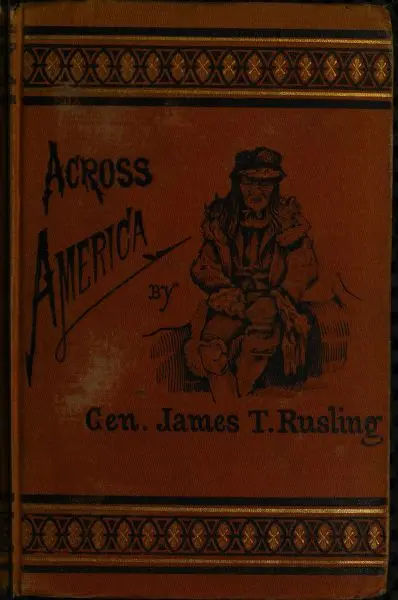
"Across America; Or, The Great West and the Pacific Coast" by James Fowler Rusling is a historical account written in the mid-19th century. The work details the author's extensive journey across America, specifically focusing on the exploration and inspection of military posts from Fort Leavenworth to the Pacific Coast, including his observations of the people, landscapes, and changing cultures he encounters along the way. At the start of the narrative, Rusling sets the stage for his journey with a description of his orders to inspect various military posts in the West following the Civil War. He describes the logistical aspects of his travels, including the modes of transportation, the people he travels with, and his initial impressions of the landscapes he traverses. The opening chapters cover his departure from New York, passage through multiple states, and his encounter with both settlers and Indigenous peoples, illustrating the rich and often challenging realities of the American frontier during that era. The author employs a vivid and engaging style, inviting readers into the world of 1866 America as he navigates varied terrains and unfamiliar cultures.
Introduction adapted from the source catalogue; source summaries may be automatically generated.
Free to read · English · 147,892 words · No account needed
MAKE TIME FOR A GOOD BOOK
On by default. Untick to stop anonymous reading totals. Each page counts after 10 seconds in view. How this works.
Anonymous counting is on unless you have switched it off.
As a means of a water communication, from the Gulf of California into the very heart of the continent, it would seem, that this great river ought to have become more useful to civilization, than it has. But the difficulties of navigating it, even to Callville, were reported great; and beyond that, was the insuperable obstacle of the Big Cañon of the Colorado, which nobody then knew anything about, except as a geographical mystery, but which Prof. Powell has since explored so gallantly. At Yuma, the river was a turbid, rolling flood, broad and deep; and, judging by what we saw of it there, it would seem, that steamers of proper draught and build ought to be able to stem its current, and be of great service hereafter to all the upper country. The rates then current on the river were as follows: From the mouth of the Colorado to Yuma or Arizona City, 150 miles, twenty dollars per ton, coin; to La Paz, 300 miles, forty dollars per ton; to Fort Mojave or Hardyville, 450 miles, sixty dollars per ton. The rates from San Francisco to the mouth of the river, some 2000 miles, were then from twelve to fifteen dollars per ton, coin, besides; so that every load of freight put down at Arizona City or Hardyville, cost say thirty-five dollars and seventy-five dollars per ton, coin, respectively, for transportation alone. This may have been good business for the transportation companies; but it was death to mining, and other private enterprises, and operated practically as a prohibition to business, over most of the country there. It made Arizona substantially inaccessible, to population and trade, by this route (and there was no other so advantageous), and the whole country was hoping against hope, with prayers without ceasing, for a sometime oncoming railroad.
March 2d, while still at Arizona City, inspecting the depot there, we saw something of a Yuma sand-storm. The whirlwinds we had observed in the distance, when crossing the Colorado Desert a day or two before, seemed to have been only its precursors. It struck Yuma on the 2d, and promised to be only a passing blow, lulling away at eventide; but on the 3d, it resumed its course, with increased violence, and all day long rolled and roared onward furiously. We had heard much of these Yuma sand-storms, and on the whole were rather glad to see one, disagreeable as it proved. The morning dawned, hot and sultry, without a breath of air anywhere. Along about 9 A. M., the wind commenced sweeping in from the Desert, and as it increased in power uplifted and whirled along vast masses of sand, that seemed to trail as curtains of tawny gossamer from the very sky. As yet, it was comparatively clear at Yuma, and we could see the sweep and whirl of the storm off on the Desert, as distinctly as the outlines of a distant summer shower. But, subsequently, the Desert itself seemed to be literally upborne, and sweeping in, on the wings of the wind. The heavens became lurid and threatening. The sun disappeared, as in a coppery fog. The landscape took on a yellowish, fiery glare. The atmosphere became suffocating and oppressive. Towards noon, the wind rose to a hurricane; the sand, if possible, came thicker and faster, penetrating into every nook and cranny; the air became absolutely stifling, until neither man nor beast could endure it passably. People kept within doors, with every window closed, and animals huddled in groups with their noses to the ground, as if the only place to breathe. As night approached, the tempest gradually ceased, as if it had blown itself out; but it followed us on a minor scale, for a day or two afterwards, as we journeyed up the Gila. The ill-defined horror, and actual suffering of such a day, must be experienced to be appreciated. Out on the Desert, in the midst of the storm, the phenomenon no doubt would amount much to the same thing as the simooms of the Sahara. Travellers or troops caught in these sand-storms have to stop still, and instances are not rare where persons have lost their lives, in attempting to battle with them. They obliterate all signs of a road, where they actively prevail, whirling the sand into heaps and ridges, like New England snow-drifts; and the next travellers, who chance along, have either to go by the compass, or employ a guide, who understands the lay of the mountains, and country generally. Col. Crittenden, of the 32d Infantry, who crossed the Desert with a portion of his command some time after, was detained two days by such a storm, and his men suffered greatly, especially for want of water.
Your reading position is saved on this browser. Take it to another device with a library code. Reading pages adapt to text, rather than matching a printed edition.
BEHIND THE BOOK
This eBook is for the use of anyone anywhere in the United States and most other parts of the world at no cost and with almost no restrictions whatsoever. You may copy it, give it away or re-use it under the terms of the Project Gutenberg License included with this eBook or online at www.gutenberg.org. If you are not located in the United States, you will have to check the laws of the country where you are located before using this eBook. Read the source licence.
The original source file, including credits and licence, is retained by this library. Request an original-format copy at no charge. Please include the book title and Project Gutenberg identifier #42706.
KEEP YOUR CURIOSITY GOING
Wilfrid Scawen Blunt
Wilfrid Scawen Blunt

E. W. (Edgar Watson) Howe
Cécile Tormay

Moritz Busch
John L. Ransom