THE CLASSIC COLLECTION✦My diaries, being a personal narrative of events 1888-1914, Part 2 (1900-1914)CLASSIC FREE BOOKS
My diaries, being a personal narrative of events 1888-1914, Part 2 (1900-1914)
Wilfrid Scawen Blunt
THE CLASSIC COLLECTION · 1874
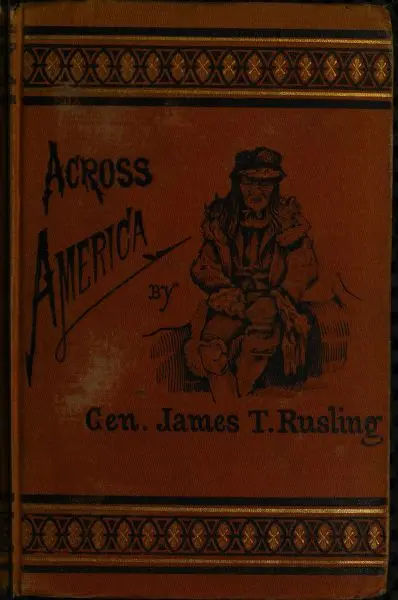
"Across America; Or, The Great West and the Pacific Coast" by James Fowler Rusling is a historical account written in the mid-19th century. The work details the author's extensive journey across America, specifically focusing on the exploration and inspection of military posts from Fort Leavenworth to the Pacific Coast, including his observations of the people, landscapes, and changing cultures he encounters along the way. At the start of the narrative, Rusling sets the stage for his journey with a description of his orders to inspect various military posts in the West following the Civil War. He describes the logistical aspects of his travels, including the modes of transportation, the people he travels with, and his initial impressions of the landscapes he traverses. The opening chapters cover his departure from New York, passage through multiple states, and his encounter with both settlers and Indigenous peoples, illustrating the rich and often challenging realities of the American frontier during that era. The author employs a vivid and engaging style, inviting readers into the world of 1866 America as he navigates varied terrains and unfamiliar cultures.
Introduction adapted from the source catalogue; source summaries may be automatically generated.
Free to read · English · 147,892 words · No account needed
MAKE TIME FOR A GOOD BOOK
On by default. Untick to stop anonymous reading totals. Each page counts after 10 seconds in view. How this works.
Anonymous counting is on unless you have switched it off.
Quitting Villacito, we found the road sandy and heavy, the air sultry and hot, and the nearest water eighteen miles off at Carissa Creek. The country was one dreary succession of sand and gravel, barren peaks and rocky ridges, with arroyas now and then, but no signs of humidity anywhere. It was not, however, such a perfect desert, as we had anticipated; for here and there were clumps of chemisal, mescal, and cactus, and these somewhat relieved the general dreariness of the landscape, poor apologies as they are for trees and shrubbery. The chemisal grows in clumps, something like our alder-bushes east, but with rods straighter and slenderer, bearing a pale-green leaf. The mescal seems to be a bastard variety of aloes, much similar to what is popularly known as Eve's Thread, though on a larger scale. The Mexicans and Indians distil a villainous liquor from it, which they also call "Mescal," that is worse in its effects than even fusel-oil or strychnine-whiskey. The cacti appeared to be of several varieties--many the same as we have in conservatories east, but all vastly larger here. The flora, as we proceeded southward, constantly became sparser and thornier; but the fauna continued about the same--the chief species being jack-rabbits and California quails--the latter a very handsome variety, with top-knots, never seen east. The rabbits were numerous, and the quails whirred across our road in coveys quite frequently, until we were well into the Desert, when both mainly disappeared. We reached Carissa Creek, with its welcome though brackish water, about 2 P. M.; but as it was thirty-three miles yet to the next certain water, at Laguna, with only uncertain wells between (dug by the Government), concerning which we could get no definite information, we concluded to halt there till morning.
From there on, the first few miles were about the same as the day before. Then we ascended an abrupt bluff, that looked in the distance like an impassable castellated wall, and suddenly found ourselves on an elevated mesa or table-land, the very embodiment of dreariness and desolation. On all sides, it was a vast, outstretched plain, of coarse sand and gravel, without tree, or shrub, or living thing--even the inevitable mescal and cactus here disappeared. Behind us, to the north and east, there was a weird succession of grand terraces and castellated mountains, reminding one of portions of Wyoming. On our right, to the west, the ever-present Coast Range loomed along the landscape, barren and ghostly. To the south, all was a dead level, panting and quivering beneath the sun, as he neared the zenith, except where here and there a heavy mirage obscured the view, or vast whirlwinds careered over the desert, miles away--their immense spirals circling upward to the very sky. These last, on first sight, we took for columns of smoke, so erect and vast were they. But soon they rose all along the southwestern horizon, one after another, like mighty genii on the march, and our driver bade us look out for a Yuma sand-storm. We had already here and there found the sand drifted into ridges, like snow-banks, where sand-storms had preceded us, and had heard ugly accounts of them before leaving Wilmington; but, fortunately, we escaped this one--the whirlwinds keeping away to the southwest, where they hugged the Coast Range, and in the course of the afternoon obscured the whole landscape there. This was now the Colorado or Yuma Desert in earnest, without bird, or beast, or bush, or sign of life anywhere--nothing, in fact, but barrenness and desolation, as much as any region could well be. A large portion of it is so low, that the overflow of the Colorado often reaches it during spring freshets, and remains for weeks. In travelling over this portion, now baked dry and hard beneath the sun, we had frequent exhibitions of mirage, on a magnificent scale. One day in particular, we had been driving since early morning, over a heavy sandy road, with the sun blazing down upon us like a ball of fire, with no water since starting, our poor mules panting with heat and thirst, when long after noon we observed--apparently a mile or so ahead--what seemed like a great outspread pond or lake, with little islands here and there, their edges fringed with bushes, whose very images appeared reflected in the water. The scene was so perfect, that the driver and T. both insisted it must be water; however, I inclined to believe it mirage, as it afterwards turned out, but the optical illusion was so complete in this and other instances, that when later in the day we really did approach a veritable sheet of water at the Laguna, we all of us mistook this for mirage also. Here, however, we found a body of water a mile long by half a mile wide, surrounded by a rank growth of coarse grass, and covered with water-fowl--a perfect oasis in the desert. This was also a part of the overflow of the Colorado, there being a depression in the Desert just here, which holds the water like a cup. The quantity is so large, that it lasts for two seasons; but after that, is apt to dry up, if the overflow does not come. But as this usually happens every year, this Laguna (Spanish for lagoon or lake) becomes a perfect god-send to the traveller here. On its southern margin, a Mr. Ganow from Illinois had established a ranch, and already was acquiring a comfortable home. His horses and cattle found ample subsistence in the brakes, on the borders of the lagoon, and the passing travel to and from California and Arizona made him considerable patronage in the course of the year.
Your reading position is saved on this browser. Take it to another device with a library code. Reading pages adapt to text, rather than matching a printed edition.
BEHIND THE BOOK
This eBook is for the use of anyone anywhere in the United States and most other parts of the world at no cost and with almost no restrictions whatsoever. You may copy it, give it away or re-use it under the terms of the Project Gutenberg License included with this eBook or online at www.gutenberg.org. If you are not located in the United States, you will have to check the laws of the country where you are located before using this eBook. Read the source licence.
The original source file, including credits and licence, is retained by this library. Request an original-format copy at no charge. Please include the book title and Project Gutenberg identifier #42706.
KEEP YOUR CURIOSITY GOING
Wilfrid Scawen Blunt
Wilfrid Scawen Blunt

E. W. (Edgar Watson) Howe
Cécile Tormay

Moritz Busch
John L. Ransom