THE CLASSIC COLLECTION✦My diaries, being a personal narrative of events 1888-1914, Part 2 (1900-1914)CLASSIC FREE BOOKS
My diaries, being a personal narrative of events 1888-1914, Part 2 (1900-1914)
Wilfrid Scawen Blunt
THE CLASSIC COLLECTION · 1874
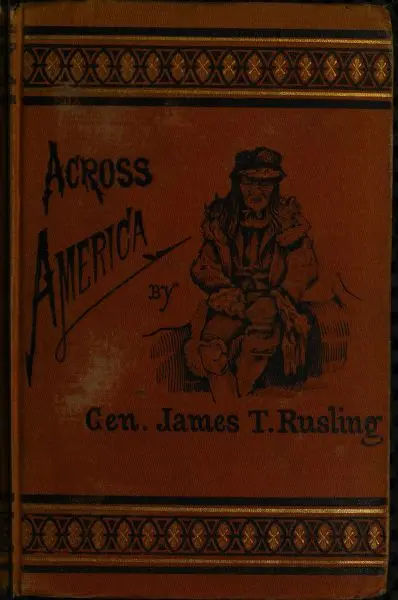
"Across America; Or, The Great West and the Pacific Coast" by James Fowler Rusling is a historical account written in the mid-19th century. The work details the author's extensive journey across America, specifically focusing on the exploration and inspection of military posts from Fort Leavenworth to the Pacific Coast, including his observations of the people, landscapes, and changing cultures he encounters along the way. At the start of the narrative, Rusling sets the stage for his journey with a description of his orders to inspect various military posts in the West following the Civil War. He describes the logistical aspects of his travels, including the modes of transportation, the people he travels with, and his initial impressions of the landscapes he traverses. The opening chapters cover his departure from New York, passage through multiple states, and his encounter with both settlers and Indigenous peoples, illustrating the rich and often challenging realities of the American frontier during that era. The author employs a vivid and engaging style, inviting readers into the world of 1866 America as he navigates varied terrains and unfamiliar cultures.
Introduction adapted from the source catalogue; source summaries may be automatically generated.
Free to read · English · 147,892 words · No account needed
MAKE TIME FOR A GOOD BOOK
On by default. Untick to stop anonymous reading totals. Each page counts after 10 seconds in view. How this works.
Anonymous counting is on unless you have switched it off.
At Santa Barbara, some three hundred miles down the Coast, we touched for an hour or two, and put ashore several passengers, and some thirty tons of freight. While discharging the latter, we sauntered up into the town, and found it to be a pleasant place of some fifteen hundred inhabitants--county-seat to a county of the same name. The buildings were mostly adobe, of course, and all quite old; but the town had an appearance of comfort and respectability, if not of thrift, and the few Americans we met were sanguine of its future. The Santa Barbara plains, just back of the town, consist of a broad and beautiful valley, enclosed by two imposing mountain ranges, that here jut obliquely into the ocean, and they have a climate that is no doubt seldom equalled even on the Pacific Coast. As a sanatarium, Santa Barbara was already being much resorted to by invalids, and doubtless will become more so when better known. With great evenness of temperature the year round,[18] without either snow or frost, or intense heat, the grape, fig, orange, peach, pomegranate, olive, all nourish here in the open air; and Nature seems so prodigal of her gifts, the Santa Barbarans appear exempted from the primal curse, "In the sweat of thy face shalt thou eat bread, etc." Mountain streams from the neighboring ranges, they had, however, trained into irrigating ditches, and by these cultivated a considerable breadth of land. They said, they had water sufficient to irrigate thousands of acres more, and needed only capital and population to build up a prosperous and thriving community. In old times--"before the flood," as a Forty-Niner would say--the Jesuit Fathers had one of their most flourishing Missions here, and their old Mission Church on a plateau back of the town was still standing, though now used chiefly as a school. Dr. O. formerly of the Army, but now married to a señorita and settled at Santa Barbara, escorted us through the town, and afterwards regaled us with wine from his own vineyard, of an excellent brand. He pronounced Santa Barbara, with its fruits and its flowers, a second paradise, the only place fit to live in--where one would about never die--and half persuaded some of us to the same way of thinking. The petroleum wells near there, as yet, had produced but little; but there seemed no doubt of the petroleum being there in large quantities. We had noticed it floating on the sea for miles before reaching Santa Barbara; and, if it issues beneath the sea sufficient for this purpose, it ought to be struck somewhere in that vicinity in paying quantities. The Santa Barbarans by no means despaired of doing this yet, and thus hoped to add another item to their already large and growing products. . At San Pedro, the seaport of Los Angelos, a hundred miles or so farther down the Coast, we put off some four hundred tons of freight, and parted with the bulk of our passengers. Of this place, more hereafter. Thence, past Anaheim, a settlement of German wine-growers, we steamed on down a hundred miles farther, and halted at last at San Diego. A stiff breeze, freshening into a gale, and a rough swell, followed us into San Diego; but once inside the jaws of the harbor, we found the bay almost unruffled, while all outside was wild and threatening. The harbor, indeed, is quite land-locked, and after San Francisco is the finest on the Pacific Coast, below Puget Sound. But a few hundred yards in width at the entrance, it soon spreads out into a broad and handsome bay, one or two miles wide by ten or twelve long, and with a depth of water close in shore sufficient to float the largest vessels. A bold promontory running obliquely into the sea, as all the headlands on this coast do, shelters the harbor perfectly from all north and northwest winds, and contributes much to make San Diego what it is. In the old Mexican times, before the days of '49, San Diego was a leading Mission on the Coast, and the chief seaport of California, whence she shipped wool, hides, etc., and where she received supplies. San Francisco, gushing young metropolis now, was then only sterile Yerba Buena, and practically nowhere.[19] When the rush of miners to California came in '49, San Diego still held her own for awhile, quite courageously. The Panama steamers then touched here in going and coming. A large city was projected, and built--on paper, with "water-fronts," "corner-lots," and the like, quite in extenso. But there was no sufficient back country--no mines or agricultural resources to speak of--to support a town, and so in the end San Diego incontinently collapsed. Poor Derby of the engineers, immortal as John Phœnix, flourished here in those days, and afterwards used to say in his own inimitable style, he "Thanked heaven his lot was not cast in San Diego; it had been, but was sold for taxes!" We anchored off the old wharf, then fallen to decay, where in other days the Panama steamers had floated proudly, and after rowing well in were carried ashore on the shoulders of Mexican peons. The U. S. barracks and corral, now empty and without a watchman even, and a score or so of other buildings, were grouped near the landing, constituting New San Diego; but the main town, or Old San Diego, was three miles off up the bay. A rickety old ambulance, once U. S. property, but long since condemned and sold, carried us up to the town, where we spent several hours. Formerly numbering two or three thousand inhabitants, and a pretty stirring place, it now had only about two or three hundred, and was a good illustration of some of California's changes. Its buildings, of course, were all one-story adobe, but partly inhabited, and these were grouped about a squalid, Plaza, that reminded one of Mexico or Spain, rather than the United States. Being the county-seat, of course, it had a court-house and a jail--the one, a tumble-down adobe--the other, literally a cage, made of boiler-iron, six or seven feet square at the farthest. The day we were there three men were brought in, arrested for horse-stealing, or something of the sort; but as the jail would accommodate only two--crowded at that--the judge discharged the third, with an appropriate reprimand. At least, we supposed it "appropriate;" but as it was in Californicè, and the judge a native, we could make nothing of it. In hot weather, this iron jail-cage must be a miniature tophet; but, no doubt, it remains generally empty. On a hill just back of the town, commanding it and the harbor, were the remains of Fort Stockton, which our Jersey commodore of that name built and garrisoned with his gallant Jack-Tars, during the Mexican war, and held against all comers. Beyond it still, were the ruins of the old Mexican Presidio, with palm and olive trees scattered here and there, but all now desolate and forsaken. The general broken-down, dilapidated, "played out" appearance of the town, was certainly most forlorn. And yet, the San Diegoans, like all good Californians, had still a profound faith in their future, and swore by their handsome bay as stoutly as ever. They knew San Diego would yet be the western terminus of the Southern Pacific Railroad, whenever this got itself built; and with this, they fondly believed, would come population, prosperity, power (the three great p's of modern civilization), and come to stay. With the exception of a handful of Americans and Jews, engaged chiefly in merchandizing, the inhabitants consisted mainly of native Californians, in all stages of impecuniosity. Being steamer-day, several Americans--most of them ex-army officers--had galloped in from their neighboring ranches, some coming ten and twenty miles for this purpose, and all were as hospitable and warm-hearted, as men leading such a life usually are. They laughed and chatted over their California experiences, predicted great things for San Diego yet, and offered a hundred acres or more from their leagues-square ranches, to any American who would come and settle among them. All united in pronouncing the climate simply perfect, though a little warm in summer; and, I must say, it really seemed so, when we were there. They declared the thermometer never varied more than twenty degrees the year round, and maintained people never died there, except from the knife or bullet. When reminded of a Mr. S. who had died that morning, they replied, he came there too late--a confirmed consumptive; otherwise, he would have got well, and in the end have shrivelled up and evaporated, like the rest of their aged people.
Your reading position is saved on this browser. Take it to another device with a library code. Reading pages adapt to text, rather than matching a printed edition.
BEHIND THE BOOK
This eBook is for the use of anyone anywhere in the United States and most other parts of the world at no cost and with almost no restrictions whatsoever. You may copy it, give it away or re-use it under the terms of the Project Gutenberg License included with this eBook or online at www.gutenberg.org. If you are not located in the United States, you will have to check the laws of the country where you are located before using this eBook. Read the source licence.
The original source file, including credits and licence, is retained by this library. Request an original-format copy at no charge. Please include the book title and Project Gutenberg identifier #42706.
KEEP YOUR CURIOSITY GOING
Wilfrid Scawen Blunt
Wilfrid Scawen Blunt

E. W. (Edgar Watson) Howe
Cécile Tormay

Moritz Busch
John L. Ransom