THE CLASSIC COLLECTION✦My diaries, being a personal narrative of events 1888-1914, Part 2 (1900-1914)CLASSIC FREE BOOKS
My diaries, being a personal narrative of events 1888-1914, Part 2 (1900-1914)
Wilfrid Scawen Blunt
THE CLASSIC COLLECTION · 1874
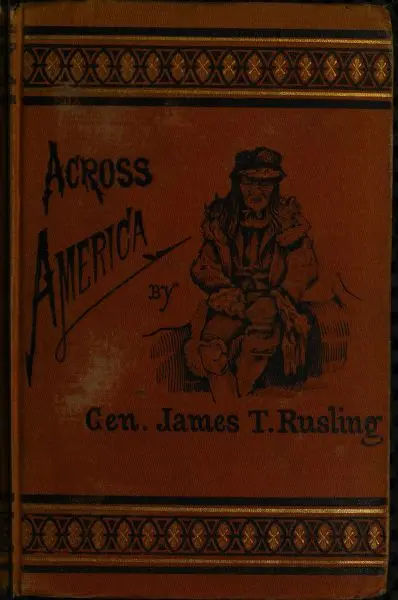
"Across America; Or, The Great West and the Pacific Coast" by James Fowler Rusling is a historical account written in the mid-19th century. The work details the author's extensive journey across America, specifically focusing on the exploration and inspection of military posts from Fort Leavenworth to the Pacific Coast, including his observations of the people, landscapes, and changing cultures he encounters along the way. At the start of the narrative, Rusling sets the stage for his journey with a description of his orders to inspect various military posts in the West following the Civil War. He describes the logistical aspects of his travels, including the modes of transportation, the people he travels with, and his initial impressions of the landscapes he traverses. The opening chapters cover his departure from New York, passage through multiple states, and his encounter with both settlers and Indigenous peoples, illustrating the rich and often challenging realities of the American frontier during that era. The author employs a vivid and engaging style, inviting readers into the world of 1866 America as he navigates varied terrains and unfamiliar cultures.
Introduction adapted from the source catalogue; source summaries may be automatically generated.
Free to read · English · 147,892 words · No account needed
MAKE TIME FOR A GOOD BOOK
On by default. Untick to stop anonymous reading totals. Each page counts after 10 seconds in view. How this works.
Anonymous counting is on unless you have switched it off.
There were indications, that the Coast had fallen to thinking seriously of all this, and somehow meant to deal more justly with the Chinese hereafter. The anti-Chinese mobs in the cities and towns were passing away, and even among the mining-camps Vigilance Committees were beginning to execute rough justice on thieves and murderers, when their treatment of John became too flagrant and notorious.[17] Capital, always keen-sighted, was getting to see the necessity for their labor and skill, and the culture and conscience of the Coast were already on their side. Gov. Low, (since Minister to China, most fittingly) presided at the Occidental Banquet, and in his remarks there took strong ground in their favor. He said, among other good things:
"We must learn to treat the Chinese who come to live among us decently, and not oppress them by unfriendly legislation, nor allow them to be abused, robbed and murdered, without extending to them any adequate remedy.
"I am a strong believer in the strength of mind and muscle of the Anglo-Saxon race, which will win in the contest for supremacy with any people, without the aid of unequal and oppressive laws; and the man, who is afraid to take his chances on equal terms with his opponents, is a coward and unworthy the name of an American.
"Were I to sum up the whole duty imposed upon us, I should say, let us be honest, industrious and frugal, be persevering and progressive, and remember Raleigh's maxim, that 'Whoever commands the sea commands the trade of the world, and whoever commands the trade of the world commands the riches of the world, and consequently the world itself.'"
So, the pulpit, and the press, as a rule, omitted no opportunity to speak a kind word for them, and to denounce the barbarism, and absurdity, of existing statutes against them. In San Francisco, a public-school had been established for their benefit, and was crowded day and night with adult Chinamen striving to learn English. The public-school fund running short that year, (1867) the Chinese merchants promptly volunteered to eke out the appropriation, rather than have the Board of Education close the school. Since then the Rev. Dr. Gibson, (formerly a Methodist missionary to China, and a man of great energy and force), has started his Sunday-Schools, expecting to plant them all over the Coast, and there seems a marked uprising in John's behalf generally. True, Mr. Senator Casserly, himself a catholic foreigner and the negro-hating democracy, are just now essaying a crusade against them; but this is because the XVth Amendment has ended the "nigger," and they are sadly in want of political capital. Our churches have certainly, now and here, a noble opportunity for effective and valuable missionary work. Instead of having to go half round the globe, across the sea, into malarious regions, among Pagan influences, to seek out the lost sheep of the House of Israel, we here have the heathen at our back-door, and ought to unfurl the Banner of the Cross to them, in every town and from every hillside. The story of the Yankee, who gave a missionary-collector a quarter of a dollar, and when he was leaving called him back, and gave him a dollar more, "to send that quarter along," has it not some grains of truth in it? Here the whole dollar and a quarter may be made immediately effective, and our missionary money should be forthcoming without stint. Not only would we thus more readily and cheaply evangelize the Chinese on our shores, but their returning thousands in turn would evangelize their countrymen at home; and we would thus accomplish a hundredfold more for China, than our missionaries there now seem to be doing, judging by their statistics, all put together. And not only do our Chinese themselves call for this, but the harmony and purity of the national life demand it, and may our churches awake to their great responsibility. Here is their true field for instant and aggressive missionary work, and they should occupy it overwhelmingly.
Your reading position is saved on this browser. Take it to another device with a library code. Reading pages adapt to text, rather than matching a printed edition.
BEHIND THE BOOK
This eBook is for the use of anyone anywhere in the United States and most other parts of the world at no cost and with almost no restrictions whatsoever. You may copy it, give it away or re-use it under the terms of the Project Gutenberg License included with this eBook or online at www.gutenberg.org. If you are not located in the United States, you will have to check the laws of the country where you are located before using this eBook. Read the source licence.
The original source file, including credits and licence, is retained by this library. Request an original-format copy at no charge. Please include the book title and Project Gutenberg identifier #42706.
KEEP YOUR CURIOSITY GOING
Wilfrid Scawen Blunt
Wilfrid Scawen Blunt

E. W. (Edgar Watson) Howe
Cécile Tormay

Moritz Busch
John L. Ransom