THE CLASSIC COLLECTION✦My diaries, being a personal narrative of events 1888-1914, Part 2 (1900-1914)CLASSIC FREE BOOKS
My diaries, being a personal narrative of events 1888-1914, Part 2 (1900-1914)
Wilfrid Scawen Blunt
THE CLASSIC COLLECTION · 1874
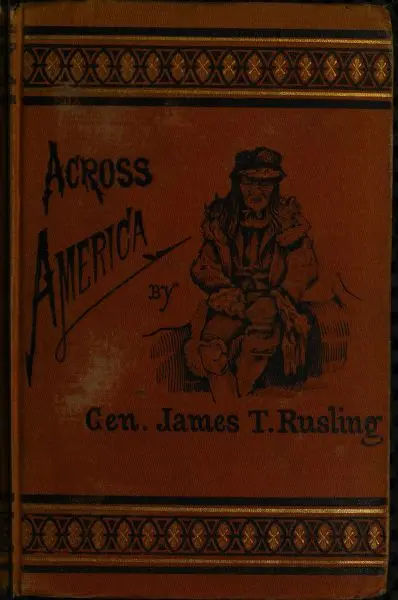
"Across America; Or, The Great West and the Pacific Coast" by James Fowler Rusling is a historical account written in the mid-19th century. The work details the author's extensive journey across America, specifically focusing on the exploration and inspection of military posts from Fort Leavenworth to the Pacific Coast, including his observations of the people, landscapes, and changing cultures he encounters along the way. At the start of the narrative, Rusling sets the stage for his journey with a description of his orders to inspect various military posts in the West following the Civil War. He describes the logistical aspects of his travels, including the modes of transportation, the people he travels with, and his initial impressions of the landscapes he traverses. The opening chapters cover his departure from New York, passage through multiple states, and his encounter with both settlers and Indigenous peoples, illustrating the rich and often challenging realities of the American frontier during that era. The author employs a vivid and engaging style, inviting readers into the world of 1866 America as he navigates varied terrains and unfamiliar cultures.
Introduction adapted from the source catalogue; source summaries may be automatically generated.
Free to read · English · 147,892 words · No account needed
MAKE TIME FOR A GOOD BOOK
On by default. Untick to stop anonymous reading totals. Each page counts after 10 seconds in view. How this works.
Anonymous counting is on unless you have switched it off.
The Chinese temple, synagogue, or "Josh-House," of which we had heard such conflicting reports, stands near the corner of Kearney and Pine streets, in the heart of the city. It is a simple structure of brick, two or three stories high, and would attract little or no attention, were it not for a plain marble slab over the entrance, with "Sze-Yap Asylum" carved upon it, in gilt letters, and the same repeated in Chinese characters. It was spoken of as a "Heathen Synagogue," a "Pagan Temple," etc., and we had heard much ado about it, from people of the William Nye school chiefly, long before reaching San Francisco. But, in reality, it appeared to be only an asylum or hospital, for the unemployed and infirm of the Sze-Yap Emigration Company; with a small "upper chamber," set apart for such religious services, as to them seemed meet. The other companies all have similar hospitals or asylums, but we visited only this one. The first room on the ground-floor seemed to be the business-room or council-chamber of the company, and this was adorned very richly with crimson and gold. Silk-hangings were on the walls, arm-chairs elaborately carved along the sides, and at the end on a raised platform stood a table and chair, as if ready for business. The room adjoining seemed to be the general smoking and lounging room of the members of the company. Here several Chinamen lay stretched out, on rude but comfortable lounges, two smoking opium, all the rest only cigarritos--taking their afternoon siesta. Back of this were the dining-room, kitchen, etc., but we did not penetrate thither. A winding stairs brought us to the second floor, and here was the place reserved for religious purposes,--an "upper chamber" perhaps twenty by thirty feet, or even less. Its walls and ceiling were hung with silk, and here and there were placards, inscribed with moral maxims from Confucius and other writers, much as we suspend the same on the walls of our Sunday-school rooms, with verses on them from our Sacred writings. These mottoes, of course, were in Chinese; but they were said to exhort John to virtue, fidelity, integrity, the veneration of ancestors, and especially to admonish the young men not to forget, that they are away from home, and to do nothing to prejudice the character of their country in the eyes of foreigners. A few gilded spears and battle-axes adorned either side, while overhead hung clusters of Chinese lanterns, unique and beautiful. Flowers were scattered about quite profusely, both natural and artificial--the latter perfect in their way. At the farther end of the room, in "a dim religious light," amid a barbaric array of bannerets and battle-axes, stood their sacred Josh--simply a Representative Chinaman, perhaps half life-size, with patient pensive eyes, long drooping moustaches, and an expression doubtless meant for sublime repose or philosophic indifference. Here all orthodox Chinamen in San Francisco, connected with the Sze-Yap company, were expected to come at least once a year, and propitiate the deity by burning a slip of paper before his image. There was also some praying to be done, but this was accomplished by putting printed prayers in a machine run by clock-work. Tithes there were none--at least worth mentioning. Altogether, this seemed to be a very easy and cheap religion; and yet, easy as it was, John did not seem to trouble himself much about it. The place looked much neglected, as if worshippers were scarce, and devotees infrequent. A priest or acolyte, who came in and trimmed the ever-burning lamp, without even a bow or genuflection to Josh, was the only person about the "Temple," while we were there. The dormitories and apartments for the sick and infirm, we were told, were on this same floor and above; but we did not visit them. This Josh-worship, such as it is, seemed to be general among the Chinese, except the handful gathered into the various Christian churches; but it did not appear to be more than a ceremony. The truth is, John is a very practical creature, and was already beginning to understand, that he is in a new land and among new ideas. Surely, our vigorous, aggressive California Christians stand in no danger from such Pagan "Temples," and our all-embracing nationality can well afford to tolerate them, as China in turn tolerates ours. The hospital and asylum part of them, we might well imitate; and as for the rest, is it not Emerson, who says:
Your reading position is saved on this browser. Take it to another device with a library code. Reading pages adapt to text, rather than matching a printed edition.
BEHIND THE BOOK
This eBook is for the use of anyone anywhere in the United States and most other parts of the world at no cost and with almost no restrictions whatsoever. You may copy it, give it away or re-use it under the terms of the Project Gutenberg License included with this eBook or online at www.gutenberg.org. If you are not located in the United States, you will have to check the laws of the country where you are located before using this eBook. Read the source licence.
The original source file, including credits and licence, is retained by this library. Request an original-format copy at no charge. Please include the book title and Project Gutenberg identifier #42706.
KEEP YOUR CURIOSITY GOING
Wilfrid Scawen Blunt
Wilfrid Scawen Blunt

E. W. (Edgar Watson) Howe
Cécile Tormay

Moritz Busch
John L. Ransom