THE CLASSIC COLLECTION✦My diaries, being a personal narrative of events 1888-1914, Part 2 (1900-1914)CLASSIC FREE BOOKS
My diaries, being a personal narrative of events 1888-1914, Part 2 (1900-1914)
Wilfrid Scawen Blunt
THE CLASSIC COLLECTION · 1874
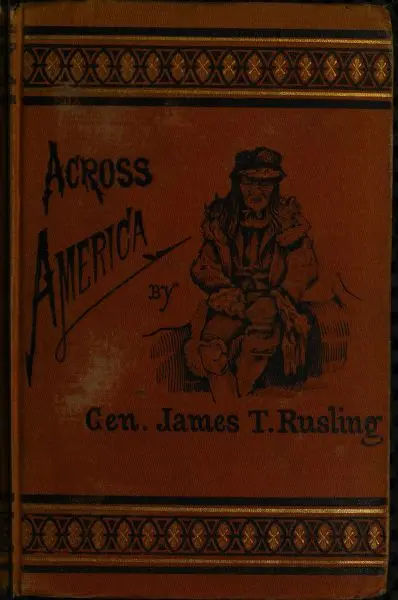
"Across America; Or, The Great West and the Pacific Coast" by James Fowler Rusling is a historical account written in the mid-19th century. The work details the author's extensive journey across America, specifically focusing on the exploration and inspection of military posts from Fort Leavenworth to the Pacific Coast, including his observations of the people, landscapes, and changing cultures he encounters along the way. At the start of the narrative, Rusling sets the stage for his journey with a description of his orders to inspect various military posts in the West following the Civil War. He describes the logistical aspects of his travels, including the modes of transportation, the people he travels with, and his initial impressions of the landscapes he traverses. The opening chapters cover his departure from New York, passage through multiple states, and his encounter with both settlers and Indigenous peoples, illustrating the rich and often challenging realities of the American frontier during that era. The author employs a vivid and engaging style, inviting readers into the world of 1866 America as he navigates varied terrains and unfamiliar cultures.
Introduction adapted from the source catalogue; source summaries may be automatically generated.
Free to read · English · 147,892 words · No account needed
MAKE TIME FOR A GOOD BOOK
On by default. Untick to stop anonymous reading totals. Each page counts after 10 seconds in view. How this works.
Anonymous counting is on unless you have switched it off.
Some days after the Banquet, we were driven out to the Mission Woolen Mills, where Donald McLennan, a Massachusetts Scotch-Yankee, was converting California wool into gold. The climate being so favorable to sheep, the wool-product of the coast was already large, and everywhere rapidly increasing. In 1867, California alone yielded ten million pounds, and the rest of the coast fully two millions more. Of this amount, about one-half was consumed on the Pacific Coast, and the balance exported to New York and Liverpool. The average price per pound in San Francisco was about seventeen cents, coin; but this was lower, than it had usually been.[16] There were several other Woolen Mills on the Coast; but the Mission-Mills were the largest, and had a great reputation for honest work. They were then doing a business of about a million dollars per year, coin, in cloths, cassimeres, blankets, flannels, shawls, etc., and the demand for their goods was constantly on the increase. Their work, on the whole, was of a superior character, and Californians were justly very proud of it. They were supplying all the Army blankets in use on the Coast, and what a contrast they were to the "shoddy" webs, issued to our Boys in Blue east during the war! The troops transferred from the east now threw their old Army blankets away, on arriving in San Francisco, and gladly furnished themselves with these Mission blankets, at their own expense, before leaving for the wilds of Washington and Arizona. Some extra specimens, intended for the Paris Exposition, as white as new-fallen snow and soft as satin, had the American and French coats of arms embroidered very handsomely on them. Another pair, meant for General Grant, were lustrous with the Stars and Stripes, and traditional eagle, and now no doubt help to furnish the White House. A pair sent to Gen. M. in the east, a noted connoisseur in blankets, he declared the finest he ever saw, and added, "My daughter would make one of them into an opera-cloak, they are so elegant, if she hadn't one already." I mention all these things thus particularly, in order to emphasize the fact, that out of the 450 persons then employed about these Mills, 350 were Chinamen. For the heavier work, Americans or Europeans were preferred; but the more delicate processes, we were assured, Chinamen learned more quickly and performed more deftly, besides never becoming drunk, or disorderly, or going on a "strike." We saw them at the looms, engaged in the most painstaking and superb pieces of workmanship, and they could not have been more attentive and exact, if they had been a part of the machinery itself. And yet, these one hundred Anglo-Saxons were paid $2,95 per day, coin, while the three hundred and fifty Chinamen received only $1,10 per day, coin, though the average work of each was about the same. Without this cheap labor of John Chinaman, these Mills would have had to close up; with it, they were run at a profit, and at the same time were a great blessing and credit to the Pacific Coast in every way. So, also, the Central Pacific Railroad was then being pushed through and over the Sierra Nevadas, by some ten thousand Chinamen, working for one dollar per day each, in coin, and finding themselves, when no other labor could be had for less than two dollars and a half per day, coin. It was simply a question with the Central directors, whether to build the road or not. Without John, it was useless to attempt it, as the expense would have bankrupted the company, even if other labor could have been had, which was problematical. With him, the road is already a fact accomplished; and in view of possible contingencies, nationally and politically, who shall say we have completed it an hour too soon? Here are practical results, not shadowy theories--of such a character, too, as should give one pause, however anti-Chinese, and ought to outweigh a world of prejudices.
Your reading position is saved on this browser. Take it to another device with a library code. Reading pages adapt to text, rather than matching a printed edition.
BEHIND THE BOOK
This eBook is for the use of anyone anywhere in the United States and most other parts of the world at no cost and with almost no restrictions whatsoever. You may copy it, give it away or re-use it under the terms of the Project Gutenberg License included with this eBook or online at www.gutenberg.org. If you are not located in the United States, you will have to check the laws of the country where you are located before using this eBook. Read the source licence.
The original source file, including credits and licence, is retained by this library. Request an original-format copy at no charge. Please include the book title and Project Gutenberg identifier #42706.
KEEP YOUR CURIOSITY GOING
Wilfrid Scawen Blunt
Wilfrid Scawen Blunt

E. W. (Edgar Watson) Howe
Cécile Tormay

Moritz Busch
John L. Ransom