THE CLASSIC COLLECTION✦My diaries, being a personal narrative of events 1888-1914, Part 2 (1900-1914)CLASSIC FREE BOOKS
My diaries, being a personal narrative of events 1888-1914, Part 2 (1900-1914)
Wilfrid Scawen Blunt
THE CLASSIC COLLECTION · 1874
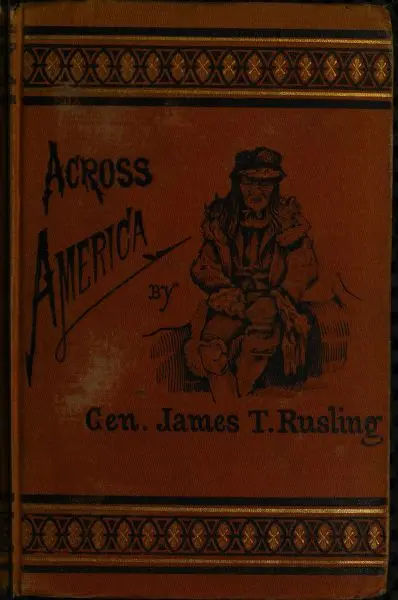
"Across America; Or, The Great West and the Pacific Coast" by James Fowler Rusling is a historical account written in the mid-19th century. The work details the author's extensive journey across America, specifically focusing on the exploration and inspection of military posts from Fort Leavenworth to the Pacific Coast, including his observations of the people, landscapes, and changing cultures he encounters along the way. At the start of the narrative, Rusling sets the stage for his journey with a description of his orders to inspect various military posts in the West following the Civil War. He describes the logistical aspects of his travels, including the modes of transportation, the people he travels with, and his initial impressions of the landscapes he traverses. The opening chapters cover his departure from New York, passage through multiple states, and his encounter with both settlers and Indigenous peoples, illustrating the rich and often challenging realities of the American frontier during that era. The author employs a vivid and engaging style, inviting readers into the world of 1866 America as he navigates varied terrains and unfamiliar cultures.
Introduction adapted from the source catalogue; source summaries may be automatically generated.
Free to read · English · 147,892 words · No account needed
MAKE TIME FOR A GOOD BOOK
On by default. Untick to stop anonymous reading totals. Each page counts after 10 seconds in view. How this works.
Anonymous counting is on unless you have switched it off.
Montgomery street repeats Broadway in all but its vista, but with something more perhaps of energy and dash. The representative New Yorker always has a trace of conservatism somewhere; but your true Californian laughs at precedent, and is embodied go-ahead-ativeness. In costume, he is careless, not to say reckless, insisting on comfort at all hazards, and running greatly to pockets. Stove-pipe hats are an abomination to him, and tight trowsers nowhere; but beneath his slouch-hat are a keen eye and nose, and his powers of locomotion are something prodigious. Cleaner-cut, more wide-awake, and energetic faces are nowhere to be seen. Few aged men appear, but most average from twenty-five to forty years. Resolute, alert, jaunty, bankrupt perhaps to-day, but to-morrow picking their flints and trying it again, such men mean business in all they undertake, and carry enterprise and empire in the palms of their hands. The proportion of ladies on Montgomery street, however, usually seemed small, and the quality inferior to that of the sterner sex. Given to jewelry and loud colors, and still louder manners, there was a fastness about them, that jarred upon one's Eastern sense, though some noble specimens of womanhood now and then appeared. Doubtless, the hotel and apartment-life of so many San Franciscans had something to do with this, as it is fatal to the more modest and domestic virtues; but it must be doubted, whether this will account for it entirely. Evidently, California is still "short" of women, at least of the worthier kind, and until she completes her supply will continue to over-estimate and spoil what she has. At least, this is the impression her Montgomery street dames make upon a stranger, and unfortunately there is much elsewhere to confirm it.
Respect for the Sabbath seemed to be a growing virtue, but there was still room for much improvement. Many of the stores and shops on Montgomery and Kearney streets were open on Sunday, the same as other days; and it seemed to be the favorite day for pic-nics and excursions, to Oakland and San Mateo. Processions, with bands of music, were not infrequent, and at Hayes' Park in the Southern suburbs the whole Teuton element seemed to concentrate on that day, for a general saturnalia. On the other hand, there was a goodly array of well-filled churches, and their pastors preached with much fervency and power. The Jewish Synagogue is a magnificent structure, one of the finest in America, and deserves more than a passing notice. It is on Sutter street, in a fine location overlooking the city, and cost nearly half a million of dollars. The gilding and decoration generally inside, viewed from the organ-loft, are superb. But few of the large choir were Jews, and scarcely any could read the old Hebrew songs and chants in the original; so these were printed in English, as the Hebrew sounds, and thus they maintained the ancient custom of singing and chanting only in Hebrew! Their music, nevertheless, was grand and inspiring, and it would be well, for our Gentile churches, to emulate it. This was called the Progressive Synagogue. The congregation had recently shortened the ancient service from three hours to an hour and a half, by leaving out some of the long prayers--"vain repetitions," it is presumed--and the consequence was, a split in this most conservative of churches. The good old conservative brethren, of course, could not stand the abbreviation. They were fully persuaded, they could never get to Paradise, with only an hour and a half's service. So, they seceded, and set up for themselves. Very prosperous and wealthy are the Jews of San Francisco; and, indeed, all over the Pacific Coast, our Hebrew friends enjoy a degree of respectability, that few attain East. They number in their ranks many of the leading bankers, merchants, lawyers, etc., of San Francisco; and more than one of them sits upon the Bench, gracing his seat. Poor Thomas Starr King's church is a model in its way, and the congregation that assembles there one of the most cultivated and refined on the Pacific Coast. Their pastor, Dr. Stebbins, though not equal to his great predecessor, in some respects, is a man of marked thought and eloquence; and, by his broad Christian charity, was doing a noble work in San Francisco. So, Dr. Stone, formerly of Boston, was preaching to large audiences, and declaring "the whole counsel of God," without fear or favor. His church is plain but large and commodious, and was always thronged with attentive worshippers. Dr. Wadsworth, lately of Philadelphia, was not attracting the attention he did East; but his church was usually well-filled, and he was exerting an influence and power for good much needed. The Methodists, our modern ecclesiastical sharp-shooters, did not seem as live and aggressive, as they usually do elsewhere; but we were told they were a great and growing power on the Coast, for all that, and everybody bade them God speed. The Episcopalians, as a rule, I regret to say, appeared to make but little impression, and were perhaps unfortunate in their chief official. The Catholics, embracing most of the old Spanish population and much of the foreign element, were vigorous and aggressive, and made no concealment of the fact, that they were aiming at supremacy. In this cosmopolitan city, the Chinese, too, have their Temples, or Josh-Houses; but they were much neglected, and John Chinaman, indeed, religiously considered, seemed well on the road to philosophic indifference.
Your reading position is saved on this browser. Take it to another device with a library code. Reading pages adapt to text, rather than matching a printed edition.
BEHIND THE BOOK
This eBook is for the use of anyone anywhere in the United States and most other parts of the world at no cost and with almost no restrictions whatsoever. You may copy it, give it away or re-use it under the terms of the Project Gutenberg License included with this eBook or online at www.gutenberg.org. If you are not located in the United States, you will have to check the laws of the country where you are located before using this eBook. Read the source licence.
The original source file, including credits and licence, is retained by this library. Request an original-format copy at no charge. Please include the book title and Project Gutenberg identifier #42706.
KEEP YOUR CURIOSITY GOING
Wilfrid Scawen Blunt
Wilfrid Scawen Blunt

E. W. (Edgar Watson) Howe
Cécile Tormay

Moritz Busch
John L. Ransom