THE CLASSIC COLLECTION✦My diaries, being a personal narrative of events 1888-1914, Part 2 (1900-1914)CLASSIC FREE BOOKS
My diaries, being a personal narrative of events 1888-1914, Part 2 (1900-1914)
Wilfrid Scawen Blunt
THE CLASSIC COLLECTION · 1874
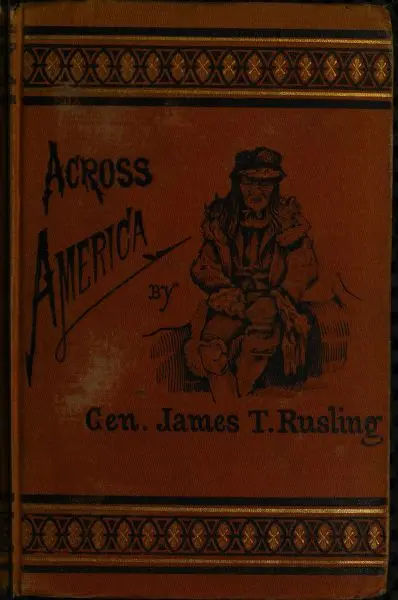
"Across America; Or, The Great West and the Pacific Coast" by James Fowler Rusling is a historical account written in the mid-19th century. The work details the author's extensive journey across America, specifically focusing on the exploration and inspection of military posts from Fort Leavenworth to the Pacific Coast, including his observations of the people, landscapes, and changing cultures he encounters along the way. At the start of the narrative, Rusling sets the stage for his journey with a description of his orders to inspect various military posts in the West following the Civil War. He describes the logistical aspects of his travels, including the modes of transportation, the people he travels with, and his initial impressions of the landscapes he traverses. The opening chapters cover his departure from New York, passage through multiple states, and his encounter with both settlers and Indigenous peoples, illustrating the rich and often challenging realities of the American frontier during that era. The author employs a vivid and engaging style, inviting readers into the world of 1866 America as he navigates varied terrains and unfamiliar cultures.
Introduction adapted from the source catalogue; source summaries may be automatically generated.
Free to read · English · 147,892 words · No account needed
MAKE TIME FOR A GOOD BOOK
On by default. Untick to stop anonymous reading totals. Each page counts after 10 seconds in view. How this works.
Anonymous counting is on unless you have switched it off.
Clark's Fork of the Columbia, or the Columbia proper, makes a sharp bend north at Wallula, and for 300 miles, he said, was unnavigable, until you reach Fort Colville near the British line, when it trends east and south, until it disappears in the far off wilds of Montana. Just above Fort Colville, it became navigable again, and a small boat was then running up to the Great Bend region, over 200 miles farther, where good placer mines had been discovered (Kootenay) and worked a little. This boat could connect with another, already plying on Lake Pond Oreille (a part of Clark's Fork), and this with still another then building, that it was believed with short portages would extend navigation some 200 miles more, or into the very heart of Montana, within two or three hundred miles only of Fort Benton--the head of navigation on the Missouri. These were weighty facts, marrying the Pacific to the Atlantic; but Captain Stump thought the O. S. N. company could accomplish them, or anything else, indeed, it seriously undertook. Just now it was bending its energies in that direction, and he said would beat the Northern Pacific Railroad yet. No doubt we have a fine country up there, near the British America line, abounding in lakes and threaded with rivers, and roomy enough for all enterprises, whether railroad or steamboat.
Puff! Puff! And so we were off down the Columbia, at last. How exquisitely pleasant, how cosy and delightful, our little steamer seemed, after 2,400 miles of jolting and banging by stage-coach and ambulance! The state-rooms were clean and tidy, the meals well-cooked and excellent, and we went steaming down the Columbia without thought or care, as on "summer seas." Occasionally rapids appeared, of a serious character; but as a rule the river was broad and deep, majestic in size and volume. On the banks were frequent Indian villages, with their hardy little ponies browsing around--apparently on nothing but sage-brush and cobble-stones. These Indians fancied spotted or "calico" horses, as the Oregonians called them, and very few of their ponies were of a single color. They spend the summer mostly in the Mountains, making long excursions in all directions; but as winter approaches, they return to the Columbia, and eke out a precarious subsistence by fishing, etc., till spring comes. Timber was scarce, and frequently we saw numbers of them in canoes, paddling up and down the river in search of drift-wood, for their winter's supply of fuel. Past Owyhee rapids and the seething caldron of Hell-Gate, we reached Celilo, eighty-five miles from Umatilla, with its long warehouse (935 feet), and its mosquito fleet of five or six pigmy steamers, that formed the up-river line. Here we disembarked, and took the Railroad around the "chutes" or rapids, some fourteen miles, to still water again below. The shrill whistle of the locomotive and the rattle of the cars were delightful sounds, after our long exile from them, and soon convinced us we were on the right road to civilization again. This portage had formerly been made by pack-mules, and then by wagons; but recently a railroad had been constructed, after much hard blasting and costly wall-work, and now "Riding on a rail," there, with the Columbia boiling and roaring at your side, like the Rapids above Niagara, was exhilarating and superb. At very high water, these "chutes" or rapids somewhat disappear, though they still continue very dangerous. No attempt had been made to ascend them with a steamer; but the spring before, Capt. Stump had safely descended them, much against his will. It was high water in the Columbia, with a strong current, and his boat drifting near the rapids was suddenly sucked in, before he knew it. Clearly, escape was impossible; so he put on all steam, to give her steerage-way, and then headed down stream--neck or nothing. There was a good deal of bumping and thumping--it was a toss and a plunge, for awhile--and everybody he feared was pretty badly scared; but his gallant little boat ran the rapids for all that, and reached still water below safely at last. It was a daring feat, and worthy of this brave Oregonian. Just now, the Columbia was very low, rocks and reefs showing all through the rapids--among, around, and over which the waters boiled and rushed like a mill-race.
Your reading position is saved on this browser. Take it to another device with a library code. Reading pages adapt to text, rather than matching a printed edition.
BEHIND THE BOOK
This eBook is for the use of anyone anywhere in the United States and most other parts of the world at no cost and with almost no restrictions whatsoever. You may copy it, give it away or re-use it under the terms of the Project Gutenberg License included with this eBook or online at www.gutenberg.org. If you are not located in the United States, you will have to check the laws of the country where you are located before using this eBook. Read the source licence.
The original source file, including credits and licence, is retained by this library. Request an original-format copy at no charge. Please include the book title and Project Gutenberg identifier #42706.
KEEP YOUR CURIOSITY GOING
Wilfrid Scawen Blunt
Wilfrid Scawen Blunt

E. W. (Edgar Watson) Howe
Cécile Tormay

Moritz Busch
John L. Ransom